Executive Summary
- Customer segmentation is the practice of dividing a customer base into distinct groups based on shared characteristics such as demographics, behavior, or psychographics.
- Advanced segmentation leverages machine learning and predictive analytics to uncover non-obvious clusters, enabling hyper-personalized marketing and optimized resource allocation.
- Effective segmentation drives higher customer lifetime value (CLV), reduces churn, and improves return on ad spend (ROAS) by targeting the right audience with tailored messaging.
What is Customer Segmentation?
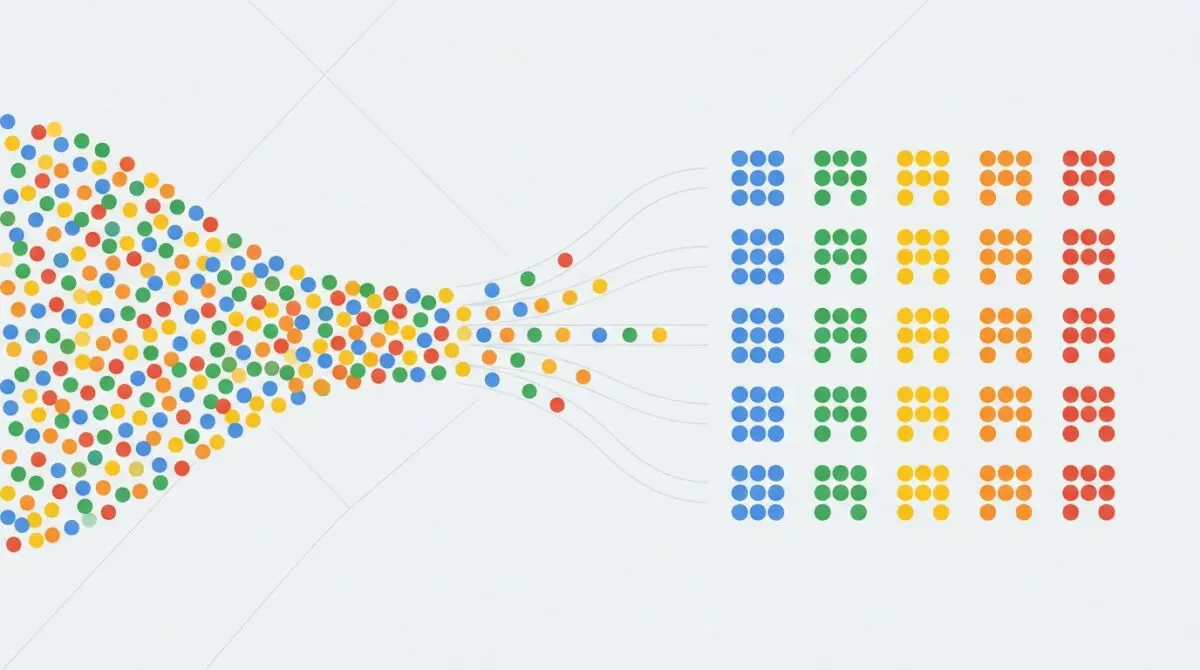
Customer segmentation is the systematic process of partitioning a heterogeneous customer base into homogeneous subsets based on predefined criteria. These criteria typically include demographic attributes (age, income, location), psychographic traits (lifestyle, values), behavioral patterns (purchase history, engagement frequency), or firmographic data (company size, industry for B2B).
In modern data-driven marketing, segmentation extends beyond simple rule-based grouping to include cluster analysis, latent class models, and neural network-based embeddings. These techniques automatically identify complex, non-linear relationships in high-dimensional data, revealing segments that may not be apparent manually.
Segmentation serves as the foundation for personalization, targeting, and customer lifecycle management. It enables organizations to treat customers not as a monolithic mass but as individuals with distinct needs, optimizing both customer experience and business outcomes.
The Real-World Analogy
Think of customer segmentation as organizing a music library. Without segmentation, you have a chaotic mix of genres, artists, and moods. By creating playlists based on genre, tempo, or listening habits, you can quickly deliver the right music for each moment—whether it’s a workout, study session, or party.
Similarly, segmentation allows a business to serve the right offer, message, or product to each customer group, improving relevance and engagement. Just as a curated playlist increases listening time, targeted campaigns boost conversion rates and loyalty.
How Customer Segmentation Drives Strategic Growth & Market Competitiveness?
Customer segmentation directly impacts key performance indicators (KPIs) such as customer acquisition cost (CAC), conversion rate, average order value (AOV), and customer lifetime value (CLV). By focusing resources on high-value segments, companies can lower CAC and increase ROAS.
Segmentation enables dynamic pricing, basket analysis, and cross-selling/upselling strategies. For example, identifying a segment of price-sensitive customers allows for targeted discounts without diluting margin for premium segments. Moreover, predictive segmentation identifies at-risk customers early, reducing churn through proactive retention campaigns.
From a competitive standpoint, segmentation reveals untapped niches and unmet needs. Firms that leverage deep segmentation can differentiate their value proposition and dominate specific market pockets. In the era of AI and algorithmic marketing, granular segmentation is a prerequisite for real-time personalization and omnichannel orchestration.
Strategic Implementation & Best Practices
- Define segmentation objectives upfront: Align segmentation criteria with business goals—whether it’s improving retention, increasing cross-sell, or optimizing media spend. Use a framework like RFM (Recency, Frequency, Monetary) for behavioral segmentation.
- Combine multiple data sources: Integrate transactional data, CRM records, web analytics, and third-party enrichments. Employ data normalization and feature engineering to create robust segment definitions.
- Validate segments statistically: Use cluster silhouette scores, ANOVA, or chi-square tests to ensure segments are distinct and actionable. Avoid over-segmentation; aim for 3–7 primary segments to maintain operational feasibility.
- Automate segment updates: Implement machine learning pipelines that reassign customers to segments dynamically as behaviors change. Use tools like customer data platforms (CDPs) to enable real-time segmentation triggers.
- Test and iterate: Run A/B tests comparing segment-specific campaigns vs. generic ones. Continuously refine segment definitions based on performance data and market shifts.
Common Pitfalls & Strategic Mistakes
One frequent error is using only demographic data, missing behavioral and psychographic drivers that actually influence purchase decisions. This leads to segments that are easy to name but poor at predicting behavior.
Another mistake is treating segments as static. Customer preferences evolve; failing to update segmentation models regularly results in stale, irrelevant targets. Over-segmentation (e.g., 50 micro-segments) can also dilute focus and increase operational complexity without measurable lift.
Finally, many organizations fail to bridge segmentation insights to execution. Beautiful segment visuals are useless if the marketing automation system cannot target segments at scale. Ensure seamless integration between segmentation analytics and campaign platforms.
Conclusion
Customer segmentation is not merely a marketing tactic but a strategic imperative for data-driven enterprises. When executed with rigorous analytics and operationalized through technology, it unlocks sustained competitive advantage and drives measurable growth.