
Key Takeaways
- Legacy applications can gain modern capabilities through well-designed adapter architectures without core redesign.
- AI-assisted development with human-in-the-loop feedback accelerates complex integration projects.
- The adapter pattern used in this project mirrors best practices in enterprise automation platforms like n8n.
Winamp Meets YouTube: A 1997 Player Gets a 2026 Automation Upgrade
In mid-2026, the engineering team at n8n Lab published a detailed account of a remarkable feat: restoring the iconic Winamp media player to relevance by giving it native YouTube search and playback. What began as a nostalgic experiment became a masterclass in legacy integration, adapter-based architecture, and AI-assisted development. The team demonstrated that old software does not need replacement—it needs the right automation bridges.
Table of Contents
Inside the Architecture: Three Components That Brought YouTube to Winamp
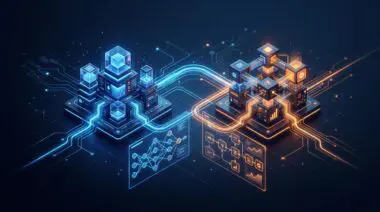
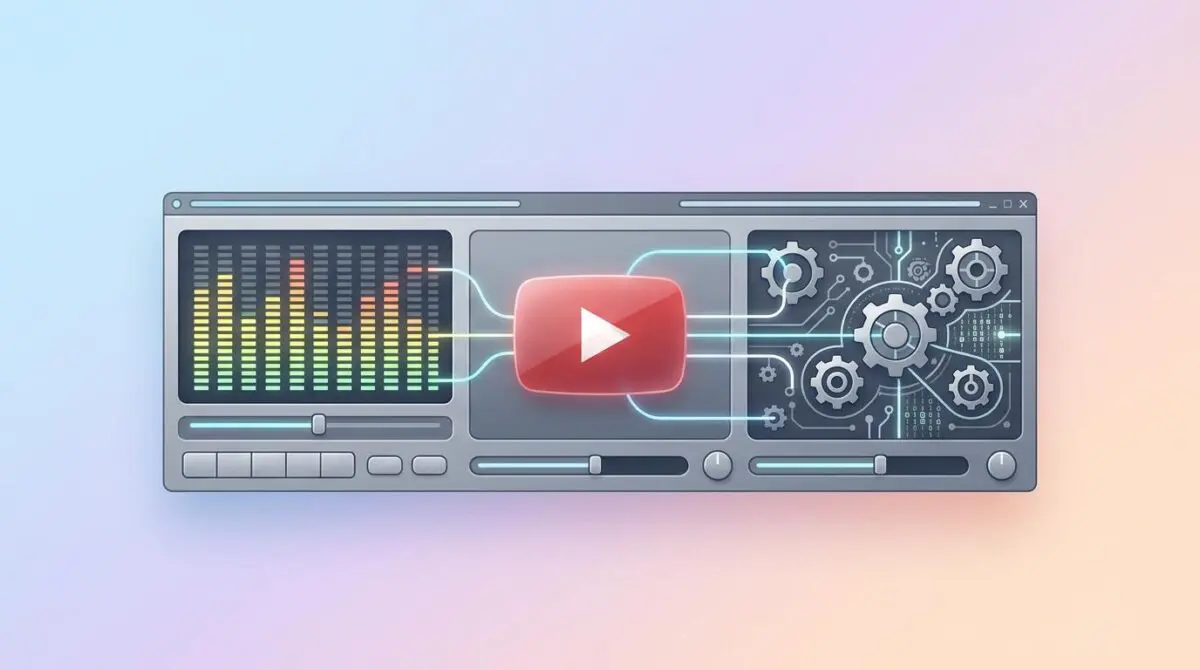
The n8n Lab team structured their integration around three specialized plugins. The first, gen_youtube, handled YouTube search and user interface. It used the YouTube Data API v3 to fetch video metadata and presented results inside Winamp’s native UI. The second, in_youtube, acted as a virtual input adapter that registered a custom protocol (youtube://VIDEO_ID) so Winamp treated YouTube items like local tracks. The third was a resolver—a local server built with yt-dlp and FFmpeg—that streamed YouTube content in formats compatible with Winamp’s legacy DirectShow pipeline.
This three-part architecture preserved Winamp’s original behavior while adding a completely new media source. The team deliberately avoided modifying the core player, instead building adapters that translated between modern YouTube APIs and Winamp’s aging plugin interface. As they noted, ‘the project succeeded because it respected the old software’s architecture instead of fighting it.’
As the n8n Lab report outlines, key challenges included playlist corruption, album art integration, and the final 10% of polish needed to make the plugin feel native. Each bug became a targeted fix: ensuring youtube:// entries remained canonical, fetching thumbnails asynchronously for the album art window, and overriding skin colors for a seamless visual experience.
Strategic Analysis: Why the Winamp Project Mirrors Enterprise Automation Best Practices
The Winamp revival is more than a nostalgia project—it’s a textbook example of the adapter pattern that powers modern enterprise automation. Platforms like n8n rely on similar principles: break complex integrations into modular nodes, use stable virtual IDs and temporary connections, and maintain backward compatibility through translation layers.
n8n Lab’s own research underscores these parallels. In ‘Inside n8n’s Confidence-Based Routing: The Safety Net Every AI Agent Needs,’ the team explores how automated workflows require fallback mechanisms when primary paths fail. The Winamp resolver’s use of FFmpeg to convert YouTube streams into MPEG PS for DirectShow is a real-world confidence-based routing: if the native stream fails, the adapter delivers a compatible format. Similarly, the ‘IT Ops Automation Blueprint: 8 n8n Workflows to Reclaim 50+ Hours Weekly’ emphasizes workflows that replace manual, repetitive tasks. The Winamp project reclaims not just time but cultural value—bringing a beloved interface into the modern streaming era.
Perhaps most telling is how the team built the extension: using AI agents (Codex, GPT-5 Luna, and GPT-5.6 Sol) in a human-directed feedback loop. Over four days, 46 commits, and 5,160 lines of code, the human provided taste and priorities while the AI accelerated execution. This hybrid approach mirrors the automation strategy n8n advocates in ‘Beyond the RAG vs Fine-Tuning Debate: The Hybrid Automation Playbook for 2026’—combining specialized tools for optimal outcomes rather than seeking a single monolithic solution.
The lesson for automation professionals is clear: adapters, AI assistance, and a modular mindset can extend the life and capability of any system, from a 1997 media player to a 2026 enterprise workflow.
Conclusion: Old Software Deserves New Power-Ups
The Winamp YouTube integration proves that ‘obsolete’ often means ‘untapped.’ By building smart adapters and leveraging AI-assisted engineering, the n8n Lab team expanded a legacy application’s capabilities without sacrificing its soul. The same approach applies to business automation: your existing tools and workflows can be supercharged with the right integration layers.
Staying ahead in the rapidly shifting landscape of Automations requires precision. To future-proof your digital strategy and scale effortlessly, you need a foundation built on precision. Optimize your site with advanced speed engineering, secure your infrastructure in high-performance hosting environments, and streamline your entire workflow through autonomous AI pipelines. If you are ready to elevate your systems, Connect with Andres at Andres SEO Expert to build your ultimate architecture.
Frequently Asked Questions
How did the n8n Lab integrate YouTube into Winamp?
The team built three specialized plugins: gen_youtube for search and UI, in_youtube as a virtual input adapter registering a custom protocol, and a resolver using yt-dlp and FFmpeg to stream YouTube content in a format compatible with Winamp’s legacy DirectShow pipeline.
What is the role of the adapter pattern in this integration?
The adapter pattern allowed translating between modern YouTube APIs and Winamp’s aging plugin interface without modifying the core player. This preserved Winamp’s original behavior while adding a new media source, mirroring enterprise automation practices where adapters serve as translation layers.
What challenges did the team face during the Winamp YouTube integration?
Key challenges included playlist corruption, album art integration, and ensuring a native feel. The team implemented fixes such as maintaining canonical youtube:// entries, fetching thumbnails asynchronously, and overriding skin colors for visual consistency.
How does the Winamp YouTube project mirror enterprise automation best practices?
The project exemplifies modular nodes, stable virtual IDs, temporary connections, and backward compatibility through translation layers. The resolver’s use of FFmpeg for format conversion is a real-world example of confidence-based routing, similar to fallback mechanisms in automated workflows.
What tools and methods did the n8n Lab team use to develop the Winamp extension?
They used AI agents (Codex, GPT-5 Luna, and GPT-5.6 Sol) in a human-directed feedback loop, completing the project over four days with 46 commits and 5,160 lines of code. The human provided taste and priorities while AI accelerated execution.
What lessons can automation professionals learn from the Winamp revival?
The project shows that adapters, AI assistance, and a modular mindset can extend the life of any system. Existing tools and workflows can be supercharged with smart integration layers rather than replaced, emphasizing the value of respecting legacy architectures.