Key Takeaways
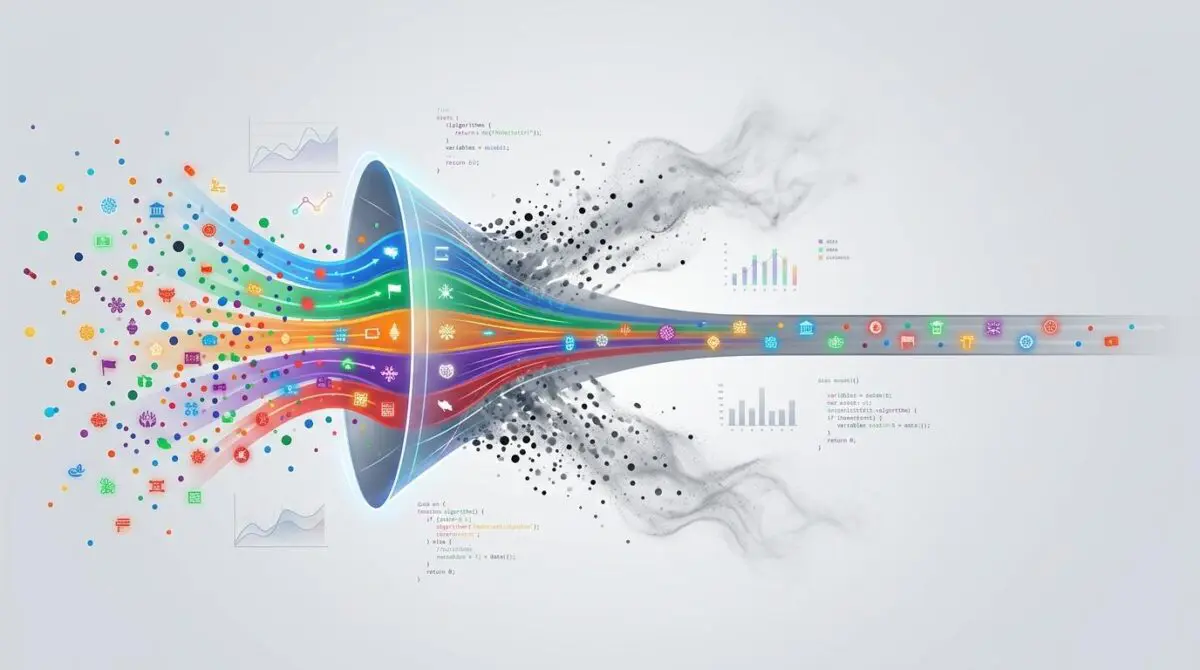
- A new ‘culture funnel’ shows cultural diversity drops sharply from pretraining to post-training, leaving AI weak on implicit norms despite strong trivia performance.
- Multilingual doesn’t mean multicultural: native-language models can sound fluent but lack socio-cultural reasoning, as shown in Japanese workplace tests.
- Adding cultural metadata to fine-tuning data boosted NormAd by 8 points without new data—making data curation the real alignment frontier.
Table of Contents
Five Million Samples Expose the Culture Funnel
5.6 million training samples reveal a widening gap between what large language models see in pretraining and what they are fine-tuned on later.
A new preprint from Cohere Labs, published today, introduces a measurable pattern it calls the ‘culture funnel’: cultural diversity narrows sharply as data moves from pretraining into post-training.
The research team tagged cultural signals across popular datasets used for pretraining, supervised fine-tuning, alignment, and reasoning.
As detailed in the Cohere preprint, the analysis tracked domains, task intent, language, geolocation, and cultural characteristics instead of treating language or geography as equal to culture.
The result is a direct challenge to the assumption that alignment-time prompting can recover cultural knowledge a model never properly learned.
Post-Training Data Is a Cultural Filter, Not Just a Performance Layer
The strongest cultural grounding appears in pretraining data, while post-training datasets show far lower percentages of cultural markers.
That drop is not random.
Post-training datasets are heavily weighted toward mathematical reasoning, code generation, and other technical tasks that carry comparatively little explicit cultural content.
What remains tends to concentrate in factual categories such as named entities, holidays, food, and translation contexts.
This imbalance explains why many models perform well on trivia-style cultural benchmarks but struggle with implicit norms, social expectations, and local pragmatics.
In task-level analysis, translation, local information requests, and message writing carried the strongest cultural signals, while coding and medical questions carried far fewer.
Users reported needing cultural awareness most in creative writing, translation, and email or message writing — the same tasks where training data carried the most culture.
The lab also found a long-tail distortion in geography.
India showed up most often in culturally tagged content, with Asian and European locations heavily concentrated around it.
In one examined dataset, the top 50 geolocations included just one South American nation, one African nation, and one North American nation.
That uneven distribution means a model may learn a lot about a few regions and almost nothing about others, even when the local language is well represented.
The most actionable experiment in the preprint points to a different mechanism.
The team tested a marker-based intervention: it added metadata labeling cultural dimensions to each fine-tuning sample while keeping the data distribution unchanged.
The TinyAya base model gained 8 percentage points on NormAd, 6 on BBQ, and 2.3 on GMMLU.
Training on more cultural data without those markers produced smaller gains and degraded general capabilities.
This suggests cultural content is already present but not learnable until it is made explicit.
The Multilingual Trap: Language Coverage Without Cultural Grounding
The broader research landscape reinforces why this narrowing cannot be solved by scaling language coverage alone.
An EMNLP 2026 tutorial on multilingual and multicultural LLMs warns that translating English datasets into other languages can introduce ‘translationese’ while leaving regional knowledge and cultural diversity thinly covered.
A peer-reviewed PLOS One study published on July 27, 2026, makes the risk concrete in Japanese workplace scenarios.
Researchers evaluated five LLMs with native Japanese raters using Hofstede’s six cultural dimensions and 42,950 Likert-scale data points.
Phi-4-14B posted the highest Japanese Workplace Cultural Alignment Score at 3.50, followed by GLM-4-9B at 3.47 and the native Japanese model LLM-jp-3-13B at 3.43.
The striking part is not the ranking but the diagnostic breakdown.
The native model was strong on linguistic politeness but weak on socio-cultural values and pragmatic decision-making.
Phi and GLM showed more balanced competence across all three layers.
That is the ‘illusion of fluency’ the study warns about: a model can sound local without reasoning like a local.
The same tutorial notes that existing cultural-awareness datasets rarely exceed 1,500 examples per language, and many contain only a few hundred.
Such sample sizes are too small to carry the long-tail cultural variation the lab’s research shows is already being filtered out upstream.
Why Data Curation Is the Next Alignment Frontier
The culture funnel makes one strategic point impossible to ignore: models cannot learn cultural competence that data pipelines have already filtered away.
For teams translating that rigor into automated content and search infrastructure, the programmatic SEO and AI automation service from Andres SEO Expert applies the same data-curation mindset — contact us.
Frequently Asked Questions
What is the culture funnel in large language models?
The culture funnel is a measurable pattern from Cohere Labs showing that cultural diversity in training data narrows sharply as data moves from pretraining into post-training stages. Pretraining data contains the strongest cultural grounding, but post-training datasets (like those for supervised fine-tuning, alignment, and reasoning) show far lower percentages of cultural markers because they are weighted toward technical tasks like math and code.
How does post-training data act as a cultural filter?
Post-training datasets are heavily weighted toward mathematical reasoning and code generation, which carry little explicit cultural content. The cultural signals that remain tend to concentrate in factual categories like named entities, holidays, food, and translation. This imbalance causes models to perform well on trivia-style cultural benchmarks but struggle with implicit norms, social expectations, and local pragmatics.
Why doesn’t multilingual training guarantee cultural competence?
The multilingual trap refers to the assumption that language coverage equals cultural grounding. Translating English datasets into other languages can introduce ‘translationese’ while leaving regional knowledge and cultural diversity thinly covered. Studies show that even native models can sound fluent without reasoning like a local, as seen in Japanese workplace evaluations where a native Japanese model was strong on linguistic politeness but weak on socio-cultural values and pragmatic decision-making.
What was the impact of adding cultural metadata markers in Cohere’s experiment?
In the marker-based intervention, researchers added metadata labeling cultural dimensions to each fine-tuning sample while keeping the data distribution unchanged. The TinyAya base model gained 8 points on NormAd, 6 on BBQ, and 2.3 on GMMLU. Training on more cultural data without those markers produced smaller gains and degraded general capabilities, suggesting cultural content is already present but not learnable until made explicit.
Which geographies are overrepresented or underrepresented in culturally tagged training data?
India appears most often in culturally tagged content, with Asian and European locations heavily concentrated around it. In one examined dataset, the top 50 geolocations included just one South American nation, one African nation, and one North American nation. This uneven distribution means a model may learn a lot about a few regions and almost nothing about others, even when the local language is well represented.
How does data curation factor into improving cultural alignment?
The culture funnel shows that models cannot learn cultural competence that data pipelines have already filtered away. Data curation is the next alignment frontier because simply scaling language coverage or adding alignment-time prompting cannot recover cultural knowledge a model never properly learned. Making cultural dimensions explicit through metadata and carefully curating post-training data to preserve cultural signals is essential for better cultural alignment.