Executive Summary
- Sitelinks are algorithmically generated sub-links that enhance SERP visibility and user navigation efficiency.
- They significantly improve organic Click-Through Rate (CTR) by occupying more vertical space and providing direct deep-link access.
- Optimization relies on clear site architecture, descriptive internal anchor text, and valid schema markup.
What is Sitelinks?
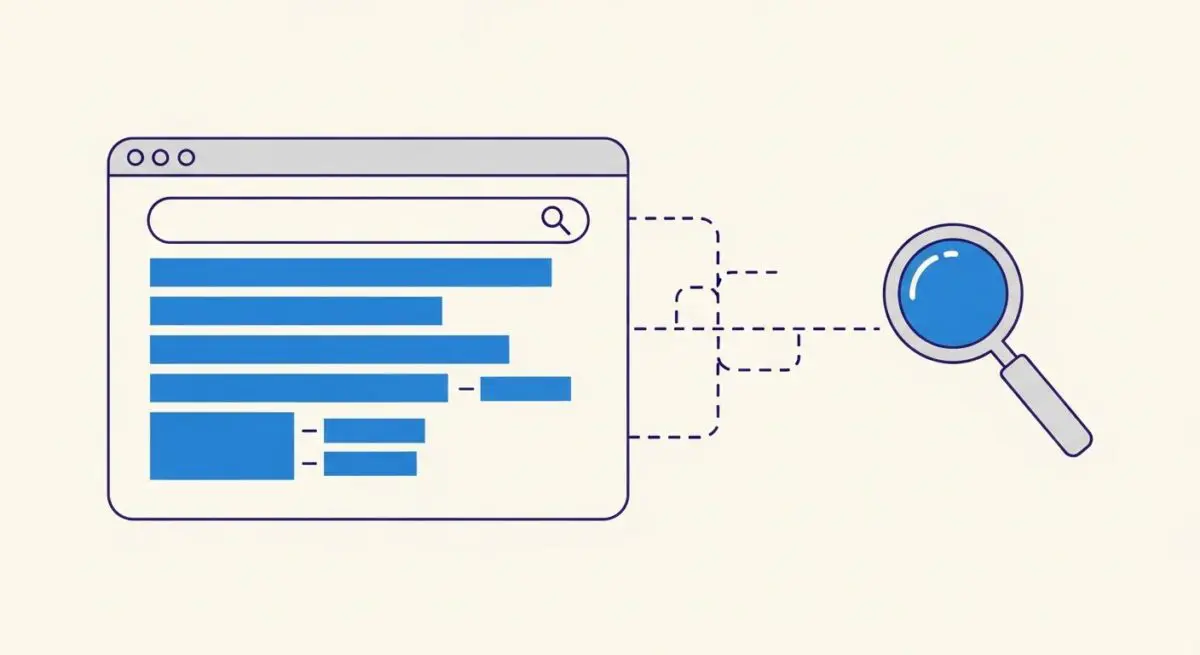
Sitelinks are supplementary hyperlinks that appear beneath a website’s primary listing in Search Engine Results Pages (SERPs). These links are algorithmically generated by Google to assist users in navigating directly to specific, high-value internal pages. While webmasters cannot manually assign which links appear, they can influence the selection through technical site architecture and internal linking signals.
These links typically manifest in two formats: the expanded multi-column layout for high-authority branded queries and the single-line format for more specific or informational queries. Their primary function is to reduce the number of clicks required for a user to reach their intended destination, thereby improving the overall search experience and site accessibility.
The Real-World Analogy
Imagine walking into a massive multi-story department store. The main search result is the building’s front door. Sitelinks are the directory board located right at the entrance, clearly listing “Men’s Apparel – 2nd Floor,” “Electronics – 3rd Floor,” and “Customer Service – Basement.” Instead of walking through every aisle to find what you need, the directory allows you to take the elevator directly to your specific destination, saving time and effort.
Why is Sitelinks Important for SEO?
Sitelinks provide a significant competitive advantage by increasing SERP real estate. For branded searches, an expanded sitelink block can occupy nearly the entire “above-the-fold” area on mobile devices, effectively pushing competitor results and ads further down the page. This dominance directly correlates with a higher Click-Through Rate (CTR), as users are presented with multiple relevant entry points into the domain.
Furthermore, the presence of sitelinks serves as a trust signal. Google only displays expanded sitelinks for results it deems authoritative and relevant to the user’s query. From a technical perspective, they also help distribute link equity to deeper pages and surface content that might otherwise be buried within the site hierarchy, improving the discoverability of secondary service pages or high-converting resources.
Best Practices & Implementation
- Logical Site Hierarchy: Maintain a clear, nested folder structure that reflects the importance of your pages. A shallow architecture ensures that crawlers can easily identify top-level categories and their relationship to the homepage.
- Descriptive Anchor Text: Use concise, keyword-rich anchor text for internal navigation links. Avoid generic terms like “Products” if a more specific term like “Cloud Security Solutions” accurately describes the destination.
- XML Sitemap Accuracy: Ensure your XML sitemap is up-to-date and prioritized, signaling to search engines which pages are most critical for indexing and display within the SERP features.
- Schema Markup: Implement SiteNavigationElement and BreadcrumbList structured data to provide explicit machine-readable clues about your site’s organization and hierarchy.
Common Mistakes to Avoid
A frequent error is the use of duplicate or non-descriptive anchor text in the primary navigation, which confuses the algorithm’s ability to distinguish the unique purpose of different pages. Another critical mistake is maintaining a flat site architecture where every page is located at the root level, preventing the search engine from understanding the relative importance of different sections. Finally, blocking essential navigational pages via robots.txt or using noindex tags on pages you wish to appear as sitelinks will result in their exclusion from the SERP.
Conclusion
Sitelinks are a powerful automated feature that enhances brand authority and user experience. By focusing on technical site structure and clear internal signals, SEO professionals can maximize their visibility and click-through efficiency in the SERPs.