



Executive Summary
- Semantic analysis transitions search from keyword matching to intent-based understanding using vector embeddings and high-dimensional space.
- It is the foundational layer for Retrieval-Augmented Generation (RAG), ensuring LLMs retrieve contextually relevant data from external sources.
- Optimization requires entity-dense content and structured data to facilitate accurate relationship mapping by AI agents and generative engines.
What is Semantic Analysis?
Semantic analysis is a fundamental process in Natural Language Processing (NLP) that enables computational systems to interpret the meaning and intent behind text, rather than relying solely on lexical keyword matching. By leveraging advanced machine learning models and high-dimensional vector embeddings, semantic analysis identifies the relationships between words, phrases, and entities. This allows AI to resolve polysemy (words with multiple meanings) and synonymy (different words with the same meaning) based on the surrounding context.
In the context of modern AI architectures, semantic analysis involves mapping text into a latent space where semantically similar concepts are positioned in close proximity. This mathematical representation allows Large Language Models (LLMs) and search engines to understand the underlying concept of a query, facilitating more accurate information retrieval and response generation. It serves as the critical bridge between raw syntax and human-like comprehension.
The Real-World Analogy
Imagine walking into a massive, unorganized warehouse and asking for “something to help me see better.” A basic system would look for items literally labeled “see better” and find nothing. A semantic system, however, functions like an expert consultant who understands your intent. It recognizes that “see better” could mean reading glasses, a high-powered flashlight, or even a telescope, depending on whether you are in the book section, the camping aisle, or the observatory. Semantic analysis provides the AI with this situational awareness, allowing it to look past the specific words to find the actual solution required by the user.
Why is Semantic Analysis Important for GEO and LLMs?
For Generative Engine Optimization (GEO), semantic analysis is the primary mechanism by which AI search engines like Perplexity or Google’s Search Generative Experience (SGE) evaluate source relevance. These systems do not just count keywords; they assess how well a piece of content fulfills the semantic requirements of a user’s prompt. High semantic relevance increases the probability of a site being cited as a primary source in an AI-generated response.
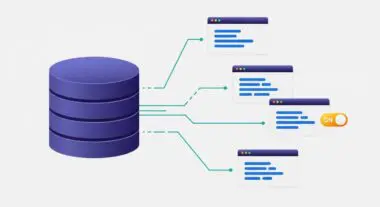
Furthermore, in Retrieval-Augmented Generation (RAG) systems, semantic analysis ensures that the most contextually appropriate data chunks are retrieved from a vector database. If the semantic mapping is imprecise, the LLM receives irrelevant context, leading to hallucinations or low-quality outputs. Establishing strong semantic signals through entity-rich content is therefore critical for maintaining visibility and authority in AI-driven ecosystems where source attribution is determined by conceptual alignment.
Best Practices & Implementation
- Leverage Linked Data and Schema: Use JSON-LD structured data to explicitly define entities and their relationships, providing a clear semantic roadmap for AI crawlers to parse.
- Optimize for Topical Authority: Instead of targeting isolated keywords, develop comprehensive content clusters that cover all facets of a specific subject to strengthen semantic associations in vector space.
- Align Content with User Intent: Structure information to directly answer the “who, what, where, why, and how” of a topic, mirroring the natural language patterns used in AI prompts.
- Maintain Semantic Cohesion: Ensure that headings, subheadings, and body text follow a logical thematic progression to prevent semantic drift within a single document.
Common Mistakes to Avoid
One frequent error is lexical over-optimization, where brands focus on keyword density at the expense of natural context, which can confuse modern semantic parsers. Another mistake is entity ambiguity, failing to provide enough context to distinguish between similar concepts (e.g., “Java” the programming language vs. “Java” the island). Finally, many organizations ignore internal linking structures, which are vital for helping AI understand the semantic hierarchy and relationship between different pages on a domain.
Conclusion
Semantic analysis is the cornerstone of the transition from keyword-based search to intent-based AI discovery. Mastering its technical nuances is essential for any GEO strategy aiming for long-term visibility in generative engines.