Key Points
- Cost-Effective Power: Alibaba’s open-weight strategy bypasses the traditional compute-cost wall, giving smaller businesses access to top-tier enterprise AI performance.
- Multimodal Integration: Qwen seamlessly merges vision, audio, and text processing into a single neural backbone to eliminate latency and translation errors.
- Corporate Automation: Custom AI agents can instantly query unstructured data and legacy ERP systems to generate highly actionable executive insights.
Table of Contents
Navigating the High-Stakes Tollbooth of Modern AI
Imagine commuting to work every day with only two options: renting a private jet or riding a rusted bicycle. For years, businesses looking to integrate artificial intelligence have faced a similar dilemma. This is the infamous compute-cost versus performance wall.
Enterprises are constantly forced to choose between expensive, high-latency proprietary models or efficient but severely limited local alternatives. Every day, brilliant business ideas are abandoned simply because the computing power required to run them is too expensive. The barrier to entry has historically been guarded by a handful of tech monopolies.
The compute-cost versus performance wall is the single greatest barrier to global enterprise AI adoption today.
Fortunately, a massive shift is happening with the rise of Alibaba Cloud Tongyi Qianwen (Qwen). This powerful AI framework is completely redesigning the digital highway. It offers enterprise-grade intelligence without the exorbitant toll fees, fundamentally changing how businesses operate globally.
Decoding the Numbers Behind the Engine

To truly understand the impact of this technology, we must look at the engine under the hood. The 2026 iteration of Qwen-Max maintains a massive 128,000-token context window. This means it can digest an entire textbook of data and recall a single, specific detail with flawless accuracy.
Alibaba Cloud’s internal benchmarks prove this retrieval capability is virtually perfect across vast datasets. For everyday users, this translates to feeding massive financial reports into the AI without it forgetting the first page by the time it reads the last. In fact, this architecture performs competitively against GPT-4o when handling complex, data-heavy inquiries.
The model is not just reading data; it is actively building and executing logic at an unprecedented scale. As of June 2026, Qwen-Coder has hit a staggering 90% pass rate on complex Python and C++ tasks, achieving state-of-the-art performance on the HumanEval benchmark. This level of coding proficiency empowers developers to build software faster and with fewer catastrophic bugs.
Democratizing Enterprise Automation
Small and medium enterprises often find themselves priced out of the modern AI revolution. Western LLM licensing fees and exorbitant token costs make high-volume automation tasks financially impossible for many independent developers. Every prompt and response used to carry a micro-transaction that quickly ballooned into massive monthly bills.
Alibaba’s Model-as-a-Service platform completely flips this restrictive narrative. By offering the Qwen-2.5-72B-Instruct and Qwen-Max APIs, they deliver top-tier performance at a fraction of the traditional inference cost. This democratization allows smaller teams to deploy world-class customer service bots and deep data analysis tools.
Suddenly, the digital playing field is entirely leveled. A local startup can now punch at the same weight class as a global tech giant without needing a massive venture capital investment. This shift transforms AI from a luxury corporate tool into a fundamental utility for everyday business growth.
The Open-Source Rebellion Against Vendor Lock-In
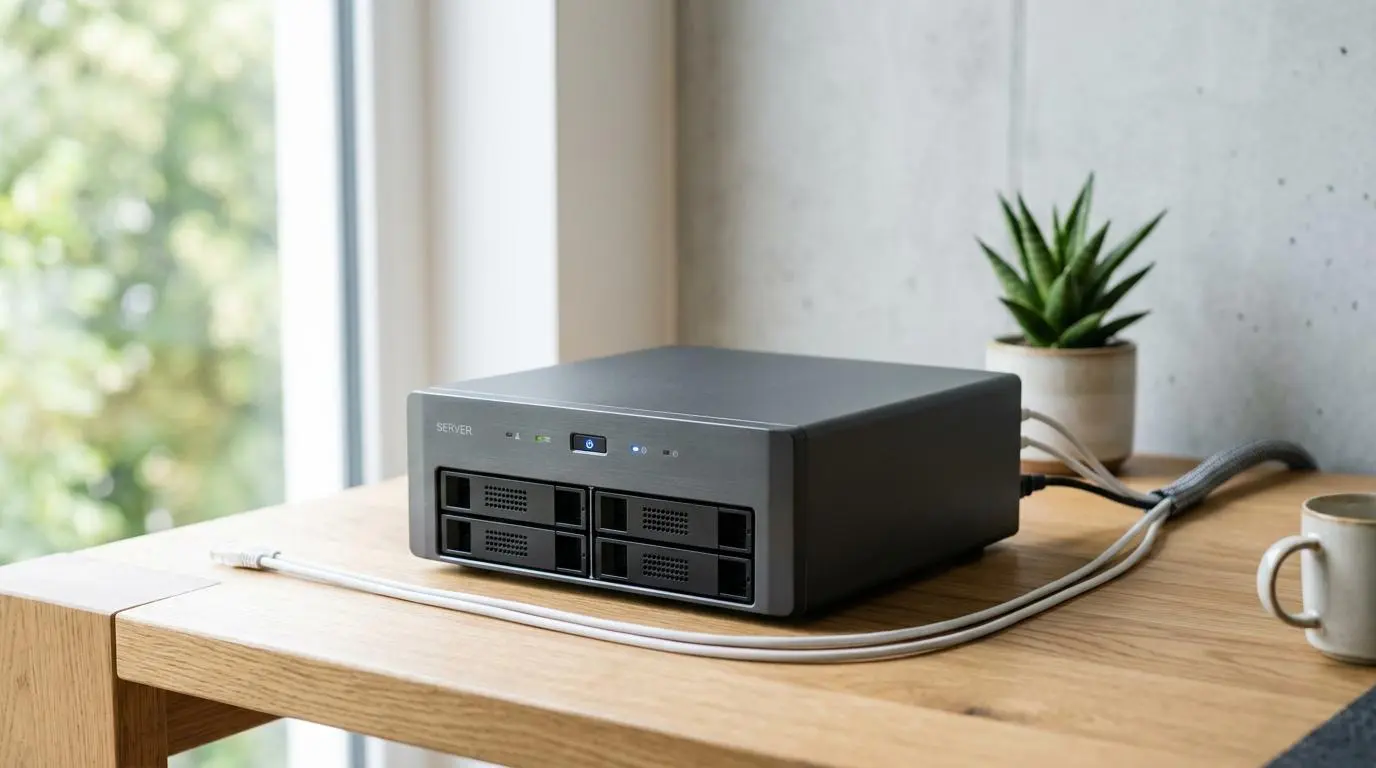
Global organizations face a terrifying reality when relying on proprietary AI models hosted exclusively in the United States. Vendor lock-in and strict data residency concerns make closed-source systems a massive corporate liability. When a company relies entirely on foreign cloud infrastructure, they surrender a degree of sovereignty over their own operations.
Alibaba’s open-weight strategy for the Qwen series offers a powerful and secure escape route. It has quickly become the primary global rival to Meta’s Llama, giving companies the ultimate freedom to host powerful AI on their own secure local servers. Regulatory compliance becomes manageable when sensitive customer data never has to cross international borders.
Furthermore, Qwen delivers superior performance in non-English linguistic benchmarks. This makes it an invaluable asset for international businesses that need native-level understanding across diverse global markets. It breaks down language barriers that traditional, English-centric models often stumble over.
Bridging the Gap Between Sight and Sound

Legacy AI systems are incredibly fragmented and notoriously clumsy. They require multiple disparate models to process different data types, leading to high latency and frustrating errors between text, images, and sound. It is like trying to hold a conversation through three different translators simultaneously.
Qwen-VL and Qwen-Audio solve this by integrating visual and auditory perception into a single, unified neural backbone. The AI can literally look at a complex manufacturing chart and listen to a spoken command at the exact same time. Think about a factory floor where a worker can show a broken machine part to a camera and simply ask the AI out loud how to fix it.
This seamless image-to-text and speech-to-intent processing perfectly mirrors how the human brain actually works. It allows for fluid, natural interactions that completely remove the friction of traditional typing and clicking. Multimodal magic turns everyday devices into highly perceptive digital assistants.
Awakening the Corporate Brain
Most modern enterprises are drowning in data but starving for actual insights. Unstructured formats like massive PDF reports, messy spreadsheets, and endless meeting transcripts are entirely inaccessible to traditional business intelligence tools. This valuable corporate data is essentially trapped in a digital graveyard.
Through deep integration with DingTalk and Alibaba Cloud’s Bailian platform, Qwen acts as a master key to unlock this hidden knowledge. Companies can now create custom AI agents tailored to their specific operational workflows. These agents can seamlessly query ancient ERP systems and generate crisp executive summaries in seconds.
What used to take a team of analysts weeks to compile is now available before your morning coffee gets cold. This efficiency is further boosted by a massive 2026 breakthrough known as Dynamic Token Pruning. As detailed in the Alibaba Cloud Technical Whitepaper, the model can ignore forty percent of redundant input tokens in real-time.
This dynamic pruning drastically reduces power consumption for mobile edge devices without sacrificing a single drop of accuracy. It allows highly complex corporate brains to run locally on standard smartphones, making powerful business intelligence entirely portable.
Predicting the Next Era of Physical AI
The trajectory of Alibaba Cloud Tongyi Qianwen points toward a fascinating and highly autonomous future. By 2027, experts predict Qwen will transition into a fully autonomous World Model capable of simulating complex industrial physics. This evolution moves artificial intelligence far beyond simple text and vision generation.
It will enable real-time predictive physical modeling for digital twin management. This allows smart factories and modern cities to test operational scenarios in a virtual space before pouring a single ounce of concrete. We are moving from chatbots that write emails to autonomous systems that design physical infrastructure.
Navigating the rapid evolution of Artificial Intelligence and digital innovation requires a sharp strategy. To future-proof your digital presence and scale your business with precision, connect with Andres at Andres SEO Expert.
Frequently Asked Questions
What is Alibaba Cloud Tongyi Qianwen (Qwen)?
Tongyi Qianwen, also known as Qwen, is a comprehensive AI framework developed by Alibaba Cloud to bridge the gap between high compute costs and enterprise performance. It includes a variety of models, such as Qwen-Max and Qwen-Coder, designed for tasks ranging from complex data analysis to autonomous software development.
How does Qwen-Max compare to proprietary models like GPT-4o?
Qwen-Max is highly competitive with GPT-4o, especially in data-heavy tasks. It features a massive 128,000-token context window, enabling it to digest and accurately recall information from large datasets, such as full financial reports or textbooks, while maintaining state-of-the-art performance benchmarks.
Why is the open-weight strategy of Qwen beneficial for global businesses?
The open-weight nature of the Qwen series allows companies to host powerful AI on their own local servers rather than relying on foreign cloud infrastructure. This helps organizations avoid vendor lock-in, manage regulatory compliance, and ensure that sensitive customer data remains within their own borders.
What are the multimodal capabilities of Qwen-VL and Qwen-Audio?
Qwen-VL and Qwen-Audio integrate visual and auditory processing into a single neural backbone. This enables the AI to perform complex tasks like analyzing a visual manufacturing chart while simultaneously processing spoken verbal commands, creating a more natural and fluid human-machine interaction.
What is Dynamic Token Pruning and how does it affect AI performance?
Dynamic Token Pruning is a technical breakthrough that allows the Qwen model to ignore up to 40% of redundant input tokens in real-time. This significantly reduces the power consumption required for mobile edge devices, allowing sophisticated AI logic to run on standard smartphones without sacrificing accuracy.
How does Qwen-Coder assist in software development?
Qwen-Coder is optimized for programming and has achieved a 90% pass rate on complex Python and C++ tasks in HumanEval benchmarks. It empowers developers to automate logic building and execute code faster, reducing the likelihood of bugs and lowering the barrier to entry for small development teams.