Key Points
- Cost Efficiency: The architecture radically reduces token generation costs, making frontier models highly accessible.
- Agentic Reasoning: Unified server racks now act as seamless reasoning engines without processing pauses.
- Physical AI: High-fidelity digital twins bridge the sim-to-real gap for advanced industrial robotics.
Table of Contents
Shattering the Digital Bottleneck
Imagine trying to force the roaring flow of Niagara Falls through a standard garden hose. For the past few years, the tech industry has attempted exactly that with artificial intelligence data.
As frontier models swelled to trillions of parameters, foundational infrastructure began cracking under the pressure. Data movement speeds between high-bandwidth memory and processing cores simply could not keep pace with massive compute requirements.
This interconnect bottleneck, known as the Memory Wall, caused agonizing latency and unsustainable energy costs for real-time inference. The system was fundamentally choking on its own brilliance.
Enter the NVIDIA Blackwell GPU Architecture. This breakthrough fundamentally redesigns the plumbing of modern computing, replacing restrictive pathways with a massive, frictionless canyon. It is not just an upgrade but a complete reimagining of how machines process information.
The New Economics of Intelligence
The true power of any technological leap is measured by how drastically it changes the cost of innovation. A recent report from SemiAnalysis InferenceX confirmed a staggering shift in these foundational economics.
Analysts found that Blackwell configurations lowered the cost-per-token for complex reasoning tasks by 35 times compared to previous standards. This means the digital thoughts generated by artificial intelligence are now exponentially cheaper to produce.
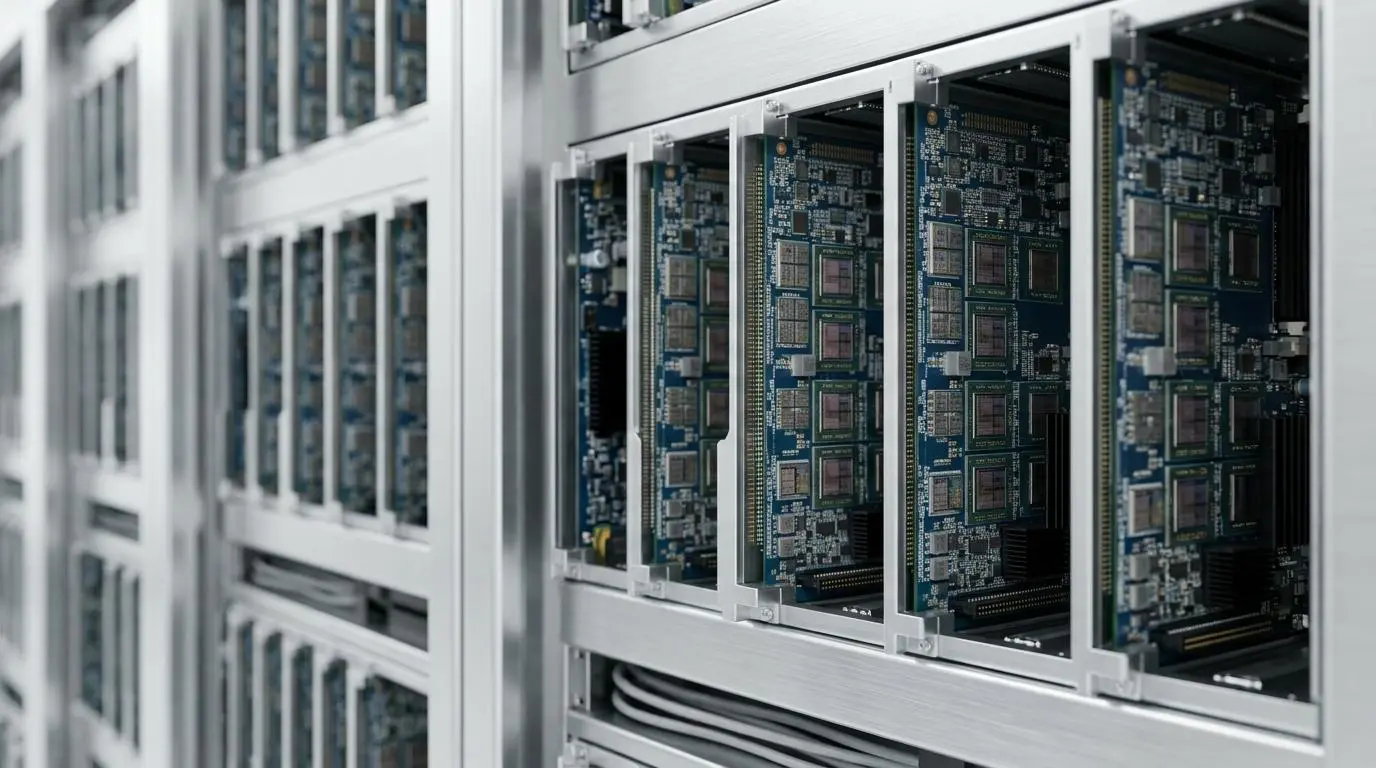
This massive reduction is largely driven by the sheer density of the silicon, boasting 208 billion transistors and 5th-generation Tensor Cores. The hardware is engineered to accomplish vastly more work in a fraction of the physical space.
Furthermore, recent AgentPerf benchmarks verified that these systems run 20 times more AI agents per megawatt than older infrastructure. This efficiency leap occurs because the NVFP4 precision enables 4-bit floating point inference.
By drastically reducing the power required to process complex logic, data centers can run continuous reasoning tasks without overwhelming local power grids. These financial and ecological savings are completely reshaping the business landscape.
Leveling the Playing Field for Startups

Not long ago, smaller enterprises faced an insurmountable barrier to entry when building advanced applications. They were effectively priced out of running massive Mixture-of-Experts models due to the need for multi-rack server clusters.
Only the biggest tech giants could afford the hardware footprint required to train and deploy these highly specialized digital brains. The Blackwell architecture completely democratizes this competitive landscape.
By shifting the economics of frontier-class models, startups can now run massive scale systems at a fraction of the traditional cost. This allows small teams of developers to compete directly with global corporations.
This breakthrough relies on a highly specialized two-level scaling architecture. It applies an FP8 scale to groups of values and a secondary FP32 scale across the entire tensor.
This brilliant engineering restores the dynamic range of 16-bit models to achieve exceptional accuracy while using only a quarter of the memory. It serves as the ultimate equalizer for the modern tech startup.
Turning Racks into Reasoning Engines
Traditional data centers used to struggle immensely with agentic workloads. These tasks require continuous, low-latency loops of reasoning and tool-calling, which often crashed under the sequential processing limits of earlier chips.
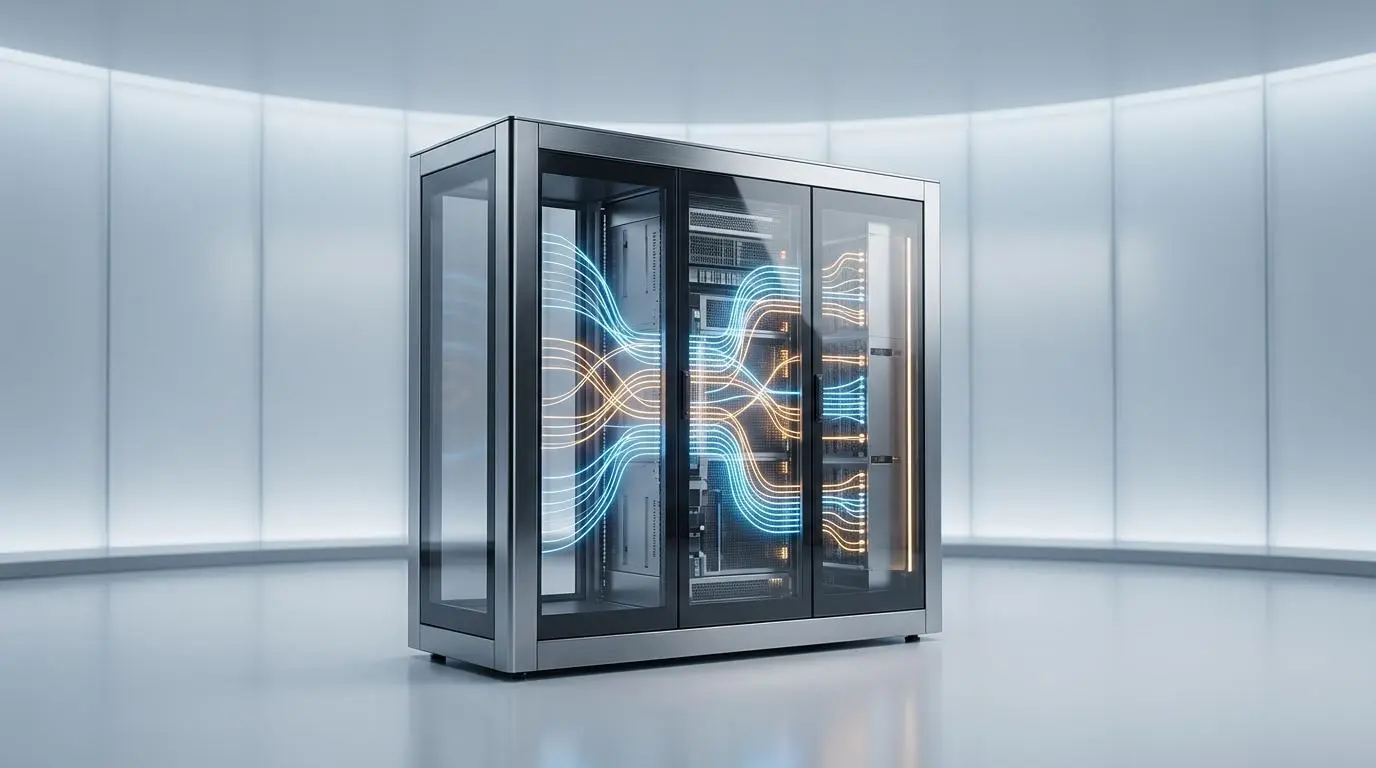
Older architectures required a frustrating processing pause between each step of a complex task. The GB200 NVL72 platform solves this bottleneck by acting as a single, unified, and massive GPU.
It boasts an incredible 1.8 terabytes per second of bandwidth, allowing data to flow instantly across the entire system. This capability turns entire server racks into real-time reasoning engines.
Businesses can now chain hundreds of complex logic calls together seamlessly. An AI agent can research a topic, write a report, verify facts, and email the final draft in a single, unbroken stream of thought.
This fundamentally changes how businesses deploy automation. Software no longer just answers questions; it actively executes complex, multi-step strategies on behalf of the user.
Bridging the Digital and Physical Divide
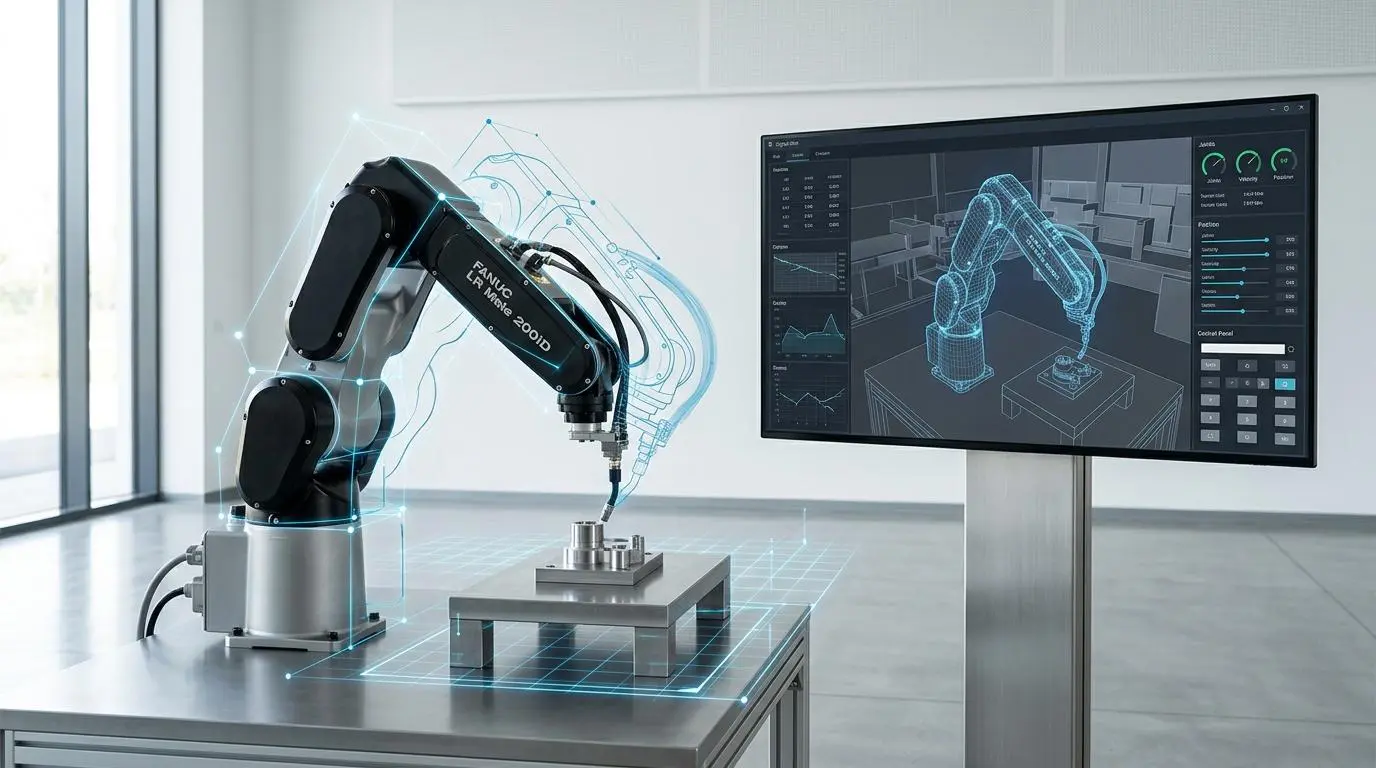
For years, robotics engineers faced a frustrating hurdle known as the sim-to-real gap. Robots trained in basic computer simulations would inevitably fail when encountering real-world physical nuances.
Simple variables like friction, varying lighting, and gravity would cause a robot to stumble on the factory floor. Blackwell-powered Physical AI factories are erasing this boundary entirely.
Utilizing highly advanced Cosmos models, these systems can create physically accurate synthetic data at an unprecedented scale. This means industrial robots can train inside high-fidelity digital twins that strictly obey the laws of physics.
Once deployed to real-world environments, they already know exactly how to interact with their surroundings. These robots have effectively experienced the physical world before ever leaving the digital realm.
This dramatically accelerates the deployment of autonomous machines in manufacturing and logistics. It takes robotics out of the laboratory and places them directly into our everyday economy.
Flawless Fluidity Across Senses
In the past, latency in multimodal applications forced a robotic stutter. Artificial intelligence had to process video frames in clunky chunks, losing the fluidity required for immersive augmented reality.
It felt like talking to a machine that constantly needed to pause and buffer. The new architecture is specifically optimized for transformer-based models requiring the simultaneous processing of text, vision, and audio streams.
It handles multiple senses at once, much like a human brain processing sight and sound simultaneously. This enables the real-time generation of high-resolution 3D environments and instant video-to-video translation.
The result is a seamless, conversational experience that feels entirely natural and deeply human. Users can now interact with digital assistants that see, hear, and respond in perfect real-time.
This fluidity is the missing link for true virtual reality integration. It paves the way for digital spaces that feel indistinguishable from physical reality.
The Dawn of Native Spatial Intelligence
Looking toward the future, the industry is preparing to fully transition to even more advanced frameworks. Upcoming architectures will feature next-generation memory and networking to push these boundaries even further.
This shift will move us beyond simple text and image generation. We are rapidly entering the era of Native Spatial Intelligence, where systems possess a foundational understanding of 3D space and time.
This profound spatial awareness will power global-scale humanoid robot fleets capable of navigating our world with absolute precision. The future of intelligence is no longer confined to a screen; it is stepping out into the physical world.
Navigating the rapid evolution of artificial intelligence and digital innovation requires a sharp strategy. To future-proof your digital presence and scale your business with precision, connect with Andres at Andres SEO Expert.
Frequently Asked Questions
What is the “Memory Wall” in artificial intelligence infrastructure?
The Memory Wall refers to the performance bottleneck where data movement speeds between high-bandwidth memory and processing cores cannot keep up with compute requirements. This leads to high latency and energy costs, which NVIDIA’s Blackwell architecture addresses by redesigning the interconnect plumbing for faster data flow.
How does the NVIDIA Blackwell architecture lower AI operation costs?
Blackwell reduces the cost-per-token for complex reasoning by up to 35 times and enables 20 times more AI agents per megawatt. This is achieved through high transistor density (208 billion) and NVFP4 precision, which allows for efficient 4-bit floating point inference.
How does Blackwell technology democratize AI for startups?
The architecture allows smaller teams to run frontier-class models like Llama-4 and Llama-5 at a fraction of traditional costs. It uses a specialized two-level scaling architecture (FP8 and FP32) to maintain high accuracy while using only a quarter of the memory, leveling the playing field against tech giants.
What are Blackwell-powered Physical AI factories?
Physical AI factories use advanced Cosmos models to generate physically accurate synthetic data. This allows robots to train in high-fidelity digital twins that simulate real-world physics, effectively bridging the “sim-to-real” gap before they are deployed in physical environments.
What is Native Spatial Intelligence in the context of future AI?
Native Spatial Intelligence refers to the ability of AI systems to possess a foundational understanding of 3D space and time. Expected to accelerate with the upcoming Rubin architecture, this shift will move intelligence beyond screens and into humanoid robot fleets that navigate the physical world with absolute precision.