
Key Points
- Eradicating Information Asymmetry: Stripping away corporate jargon reveals structural truths and accelerates real-time problem solving.
- Deploying AI Sentiment Audits: Leveraging advanced sentiment analysis prevents qualitative feedback from being ignored in favor of cold metrics.
- Mastering Trust Brokering: Leaders must translate harsh realities into hyper-direct, human-centric narratives to rebuild psychological safety.
Table of Contents
The Sincerity Gap
Corporate jargon is no longer a harmless boardroom annoyance. It has become a structural liability that masks deep operational failures. Whenever leaders lean on vague euphemisms to soften hard truths, they widen the sincerity gap plaguing modern enterprises.
This buzzword-buffering actively erodes psychological safety. It sets the stage for a catastrophic crisis of employee and investor trust.
To survive this crisis, organizations must adopt Strategic Corporate Linguistic Decoding. This framework strips away the semantic noise that causes cognitive overload. It allows teams to see the unvarnished reality of their daily operations.
By decoding corporate-speak, executives can transition from performative managers to highly effective leaders. Transparency becomes the foundation of their new management style.
The Financial Cost of Ambiguity
Market Intelligence & Data
Global Miscommunication Tax
The annual financial impact of ineffective workplace communication has reached a crisis level for U.S. companies according to Talaera research and SHRM data for 2025.
The Insularity Threshold
The 2026 Edelman Trust Barometer reports that 7 in 10 individuals are now unwilling to trust someone with differing values, highlighting the danger of using divisive or vague corporate-speak.
AI Drafting Dominance
Three-quarters of professionals in 2026 use Generative AI to draft or edit communication content, risking an increase in ‘robotic’ or hollow messaging if not carefully monitored, according to a 2026 industry survey.
Wasted Productivity Rate
A majority of employees cite wasted time as the single most detrimental consequence of poor communication in the 2026 Workplace Communication Report by Apollo Technical.
The staggering global miscommunication tax represents the ultimate hidden cost of vague leadership. When executives use words like synergy or optimization to obfuscate budget cuts, they create a massive cognitive load. This stalls real-time problem-solving across all departments.
This phenomenon was brilliantly exposed in a landmark 2026 Cornell University study. It revealed that susceptibility to corporate buzzwords correlates directly with lower fluid intelligence and poorer decision-making. Companies can no longer afford to let semantic ambiguity drain their financial resources.
Hitting the insularity threshold means your workforce will actively reject disconnected leadership. Corporate-speak often acts as a wedge, alienating employees who crave radical transparency over sanitized narratives.
Leaders who fail to bridge this divide risk losing top talent to competitors prioritizing genuine human connection. When core values are masked by impenetrable jargon, trust evaporates and team cohesion fractures.
Reversing this dangerous trend requires a fierce commitment to unvarnished, direct dialogue.
The AI drafting dominance highlights a dangerous new frontier in corporate communications. While Generative AI accelerates content creation, it threatens to flood internal channels with robotic messaging if left unchecked.
Companies must implement strict authenticity audits to ensure automated communications retain essential human empathy. Relying too heavily on algorithms to craft sensitive internal memos can easily backfire. This creates an even wider sincerity gap between the C-suite and the frontlines.
The wasted productivity rate exposes the operational paralysis caused by semantically empty directives. When project timelines are delayed because teams cannot decipher a manager’s true intent, the business engine grinds to a halt.
These findings are echoed heavily in the 2026 workplace communication statistics, proving that clarity drives corporate velocity. Stripping away jargon is not just about better writing. It is about reclaiming thousands of lost hours and redirecting energy toward actual market growth.
Eradicating Information Asymmetry

Traditional communication methods are collapsing under the weight of their own complexity. Corporate jargon has morphed from a convenient professional shorthand into a deliberate barrier.
This linguistic wall hides structural truths from the broader team. It creates a dangerous environment of information asymmetry across the entire organizational chart.
Leaders who rely on buzzwords to soften the blow of layoffs inadvertently breed suspicion. This lack of clarity paralyzes their teams during critical transitions.
The cognitive load required to decipher these messages prevents real-time problem solving. By applying Strategic Corporate Linguistic Decoding, executives can systematically dismantle these communication barriers.
This framework forces leadership to translate abstract corporate goals into hyper-direct directives. These actionable insights empower employees rather than confusing them.
This shift ultimately restores operational momentum across all departments. It eliminates the costly friction of misunderstanding and accelerates execution.
Linguistic Exclusion and Culture

The modern workplace is currently suffering from a Great Disconnect driven by jargon-heavy environments. Younger generations possess a zero-tolerance policy for insincere corporate language.
Gen Z and Zillenials demand radical transparency in their daily interactions. They prioritize direct feedback loops over sanitized corporate narratives.
This reliance on idioms and complex metaphors creates a systemic issue of linguistic exclusion. Non-native speakers and junior staff often find themselves alienated from core discussions.
This alienation leads to a documented and steep decline in collaborative innovation. To rebuild a cohesive culture, companies must pivot toward absolute clarity.
Establishing direct feedback loops and eliminating empty adjectives levels the playing field. It ensures that every team member has an equal voice regardless of their background.
This inclusive approach to communication actively repairs employee morale. It drives sustainable cultural growth and fosters a deeply connected workforce.
The Rise of Trust Brokering
In the current corporate landscape, Trust Brokering has emerged as the most critical leadership skill. Managers must learn to translate harsh corporate realities into human-centric narratives.
Unfortunately, a massive perception gap still exists across the enterprise. Bridging this divide is essential for long-term organizational stability.
While the majority of managers believe they are excellent communicators, the reality is quite different. Only a tiny fraction of employees actually agree with that optimistic assessment.
Bridging this gap requires leaders to stop broadcasting empty statements. They must start connecting with their teams on a genuine, empathetic level.
Strategic Corporate Linguistic Decoding helps executives align their intent with employee perception. It fosters a deeply rooted culture of psychological safety.
In this environment, team members feel respected enough to hear the unvarnished truth. Leaders who master this decoding process transform their organizational culture from skepticism to unwavering loyalty.
AI Sentiment Tracking

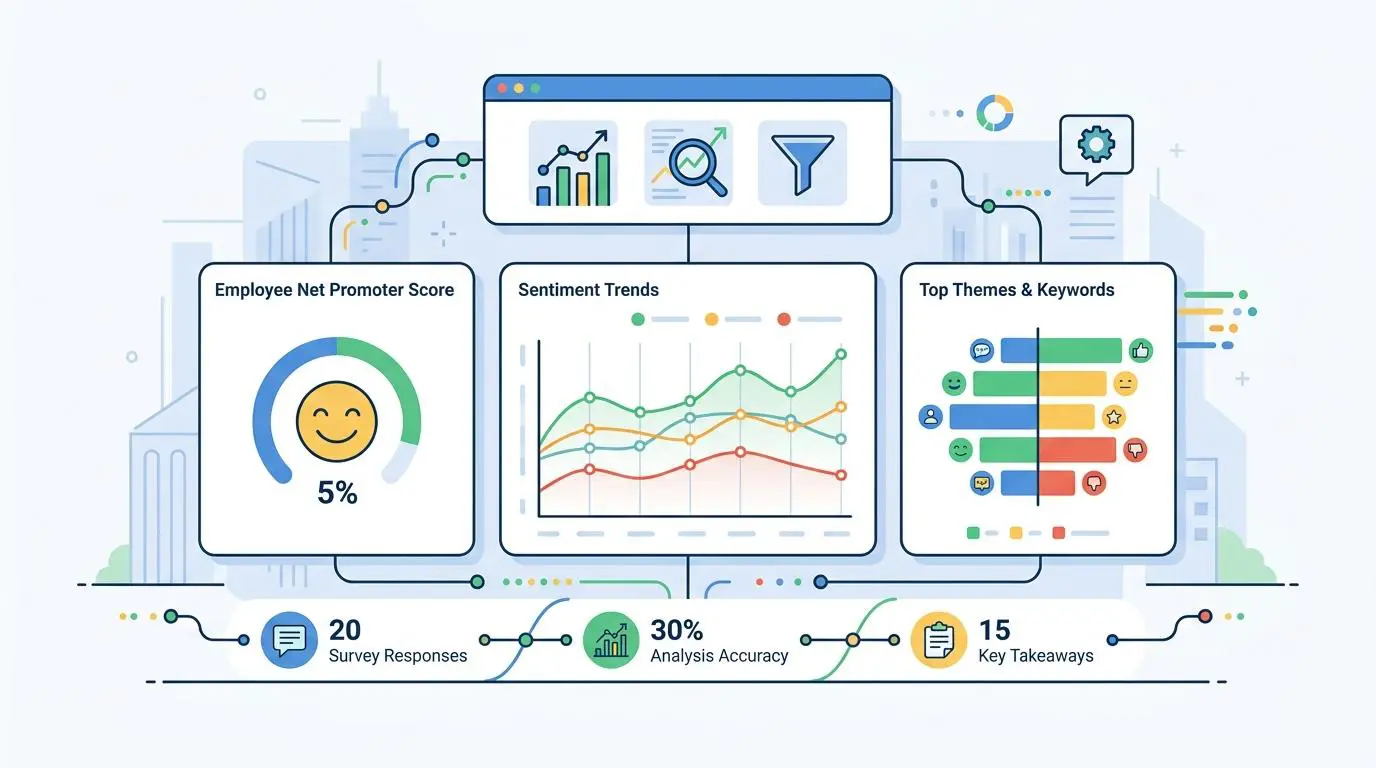
Forward-thinking organizations are no longer relying on gut feelings to gauge employee morale. They are deploying advanced AI-powered sentiment analysis tools to decode internal communications.
Platforms utilizing spaCy and Hugging Face Transformers move beyond literal interpretation. They track the actual emotional subtext of company memos and earnings calls.
This prevents sentiment distortion, where qualitative human feedback is dangerously ignored. Cold, quantitative metrics often fail to capture the true mood of the workforce.
By integrating these AI translation layers, leaders can spot the early warning signs of cultural rot. It eliminates the blind spots that traditionally lead to sudden waves of employee turnover.
The technology acts as an impartial auditor for corporate messaging. It ensures that executives remain tethered to the reality of their workforce’s daily experience.
This data-driven approach is a vital step toward building a responsive corporate infrastructure. It guarantees that empathy remains at the core of leadership decisions.
Authenticity Fatigue and Consumers
The demand for plain language extends far beyond the internal workforce. Consumers are currently suffering from severe authenticity fatigue.
They are actively ignoring brands that rely on empty-calorie adjectives. People are naturally drawn to unvarnished brand positioning and raw storytelling.
When marketing materials are stuffed with corporate jargon, they signal a lack of substance. This semantic noise rapidly erodes consumer trust in the marketplace.
Research suggests that individuals who find jargon persuasive often struggle with objective decision-making. Brands that master Strategic Corporate Linguistic Decoding gain a massive competitive edge.
These forward-thinking companies communicate their value proposition with a refreshing bluntness. This direct approach instantly resonates with a highly skeptical market.
This raw authenticity cuts through the digital noise. It ultimately transforms casual buyers into fiercely loyal brand advocates.
The Future of Hyper-Directness
As we look toward the future, Hyper-Directness will become the ultimate competitive advantage. Leading firms are already preparing to adopt strict Plain Language protocols.
These guidelines will be enforced across all internal and external channels. They will utilize AI to automatically strip unnecessary jargon from communications before they hit an employee’s inbox.
This technological shift will effectively cure the decision paralysis caused by meeting overload. It eliminates the confusion generated by vague leadership directives.
The next evolution is a complete recalibration to performance. AI-mediated communication will provide real-time authenticity audits for all corporate messaging.
These systems will flag performative statements instantly. They will force leaders to communicate with absolute clarity and purpose.
This technological safeguard ensures that corporate messaging remains an engine for growth. It prevents internal communications from becoming a barrier to execution.
Companies that embrace this shift will move significantly faster. They will adapt quicker and outperform their jargon-laden competitors.
A Visionary Recalibration
The era of hiding behind complex corporate euphemisms has officially come to an end. Businesses that refuse to adapt will find themselves isolated and bleeding top talent.
They risk losing significant market share to more transparent competitors. Embracing this linguistic shift is far more than just a standard HR initiative.
It is a fundamental restructuring of how a company operates. This clarity dictates how an organization innovates and scales in a modern economy.
True leadership is now defined by the courage to speak plainly. It requires the willingness to face operational realities head-on without semantic buffers.
By decoding the noise, organizations can unlock unprecedented levels of trust. This transparency ultimately drives maximum operational efficiency.
Navigating the complexities of business growth and team leadership requires a sharp strategy. Market positioning demands absolute clarity in every communication.
To scale your operations and build a resilient brand architecture, expert guidance is essential. Connect with Andres at Andres SEO Expert to transform your corporate narrative.
Frequently Asked Questions
What is the financial impact of corporate jargon on businesses?
According to 2026 research, ineffective workplace communication results in a $1.2 trillion annual global miscommunication tax. This hidden cost stems from wasted productivity and cognitive overload caused by semantic ambiguity in leadership directives.
What is Strategic Corporate Linguistic Decoding?
Strategic Corporate Linguistic Decoding is a leadership framework designed to strip away buzzwords and semantic noise. It focuses on translating abstract corporate goals into hyper-direct, actionable directives to improve operational transparency and trust.
How does corporate-speak affect employee psychological safety?
Using vague euphemisms to mask operational failures widens the sincerity gap, leading to a breakdown in trust. This environment of information asymmetry breeds suspicion and prevents real-time problem-solving by increasing the cognitive load on staff.
Why is there a zero-tolerance policy for jargon among Gen Z workers?
Gen Z and Zillenial generations demand radical transparency and direct feedback loops. They view sanitized corporate narratives and complex metaphors as insincere and exclusionary, often resulting in lower engagement and higher turnover rates.
How can AI sentiment analysis improve corporate communication?
Advanced tools like Hugging Face Transformers and spaCy allow leaders to track the emotional subtext of internal communications. This technology helps identify sentiment distortion and early warning signs of cultural rot that quantitative metrics might ignore.
What is authenticity fatigue in modern marketing?
Authenticity fatigue occurs when consumers ignore brands that rely on empty-calorie adjectives and jargon. Modern markets respond more effectively to unvarnished brand positioning and raw storytelling that avoids traditional corporate-speak.