
Key Points
- High-growth FinTech unicorns are replacing fragmented legacy banking with unified financial operating systems.
- Artificial intelligence is now autonomously managing expenses, categorizing transactions, and preventing fraud in real time.
- Global neobanks and integrated APIs are eliminating hidden fees and slashing cross-border payment delays.
Table of Contents
- The Chaos of the Disconnected Financial Cabinet
- The Billion-Dollar Shift in Modern Money
- Escaping the Weekly Spreadsheet Trap
- Building the Ultimate Financial Operating System
- Letting Smart AI Handle the Heavy Lifting
- Tearing Down the Borders of Global Money
- The Plug-and-Play Banking Revolution
- The Road to the Hundred-Billion-Dollar Centicorn
- Welcome to the Era of Self-Driving Money
The Chaos of the Disconnected Financial Cabinet
Picture this: you are running a growing business, and your financial life is scattered across a dozen different desks. You have one system for paying vendors, another completely separate portal for managing employee expenses, and a dusty old software program just for accounting.
This is the massive operational bottleneck caused by fragmented legacy banking infrastructure. Enterprises and everyday users alike are forced to manage separate, non-communicative silos for payments, treasury, and accounting.
Thankfully, a new wave of high-growth FinTech unicorns has emerged to rescue us from this administrative nightmare. These billion-dollar innovators are acting as the ultimate digital organizers, seamlessly tying together every aspect of your financial life.
The Billion-Dollar Shift in Modern Money
Market Intelligence & Data
Stripe’s Secondary Market Valuation
Crunchbase reported in February 2026 that Stripe achieved this valuation during a massive tender offer designed to provide liquidity to long-term employees.
Revolut’s Target Valuation
Bloomberg Intelligence confirmed in June 2026 that Revolut is seeking a secondary share sale at this level, signaling its transition into a global financial super-app.
Ramp’s Series F Milestone
According to investment reporting from June 2026, Ramp reached this valuation following a $750 million round led by ICONIQ, driven by its 54% year-over-year revenue growth.
Total Global FinTech Unicorns
A census by FintechLabs in April 2026 found that the total count of private billion-dollar fintechs grew by over 10% in the last year despite increased investor scrutiny.
The sheer scale of financial technology innovation is breathtaking, especially when looking at the payment processing giants. Recently, Stripe achieved a $159 billion valuation during a massive tender offer. This monumental liquidity event proves that foundational payment infrastructure is now as valuable as traditional Wall Street banking.
Meanwhile, the push toward consumer-friendly, all-in-one platforms is accelerating at breakneck speed. Revolut is currently targeting a $115 billion valuation as it aggressively transitions into a global financial super-app. This incredible growth highlights a massive consumer appetite for an application that handles everything from daily spending to international currency exchange.
On the corporate expense side, automation is driving unprecedented investor confidence. In a powerful demonstration of this trend, Ramp reached a $44 billion valuation following a $750 million round. This milestone, fueled by a staggering 54% year-over-year revenue growth, shows that businesses are desperate for tools that actively prevent overspending.
Zooming out, the broader financial ecosystem is thriving despite a cautious global economy. The total count of global private FinTech unicorns has swelled to 423, representing a 10% growth over the past year. This resilient expansion means more operational efficiency, better user experiences, and lower costs are on the horizon for everyday consumers.
Escaping the Weekly Spreadsheet Trap
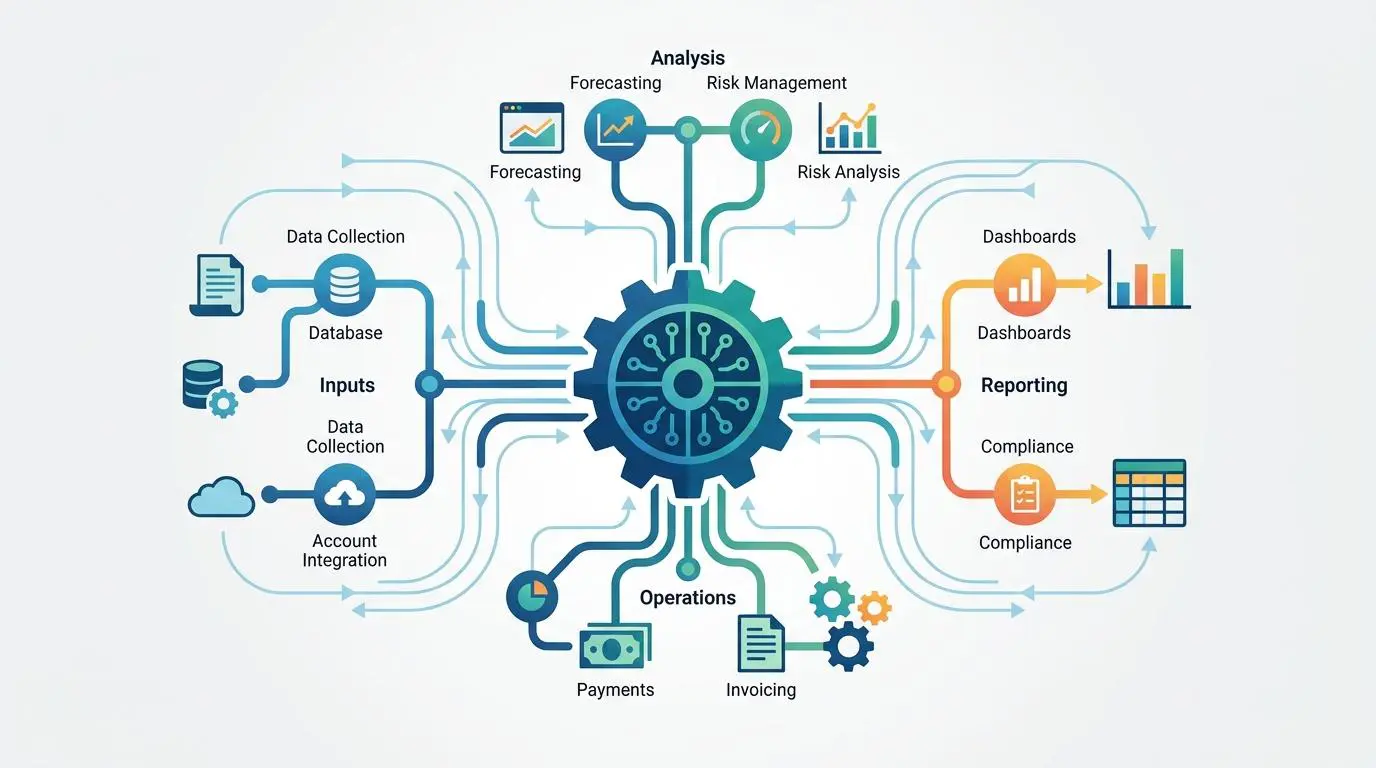
Small and medium enterprises currently lose an average of 14 hours every single week manually reconciling transactions. This tedious work involves matching receipts across disparate banking, card, and enterprise resource planning platforms.
Manual data entry and fragmented cash flow visibility inevitably lead to expensive overspending and frustrating accounting errors. It is like trying to balance a checkbook while blindfolded.
Fortunately, high-growth FinTech unicorns like Ramp and Revolut are stepping in to consolidate these chaotic workflows into a single, elegant interface. By automatically syncing every swipe and transfer, they give business owners their weekends back.
Building the Ultimate Financial Operating System

The financial technology industry is rapidly shifting away from clunky, single-purpose point solutions. Instead, we are entering the era of unified financial operating systems that handle multiple complex tasks simultaneously.
In the past, integrating multiple third-party tools increased security vulnerabilities and skyrocketed development costs. Businesses had to hire expensive engineers just to make their payment gateway talk to their tax software.
Now, platforms are bundling these services together beautifully. Stripe’s 2026 revenue suite, for example, covers tax calculation, recurring billing, and adaptive pricing in a single, secure API call.
Letting Smart AI Handle the Heavy Lifting

Human-led auditing and fraud detection are simply too slow for the real-time velocity of modern digital transactions. By the time a human spots a suspicious charge, the money is often already gone.
To combat this, the hottest FinTech unicorns are deploying sophisticated agentic artificial intelligence models. These smart systems act like tireless digital accountants that never sleep.
A prime example is Ramp’s new Stack accounting AI, which autonomously categorizes 98% of expenses. It can instantly flag procurement anomalies and policy violations without requiring any human intervention.
Tearing Down the Borders of Global Money

Sending money across international borders used to be a frustrating, expensive, and opaque process. Legacy cross-border payments typically involve three to five days of settlement time, alongside 3% to 5% in hidden currency conversion fees.
Global neobanks are completely bypassing these outdated traditional SWIFT rails. They are building proprietary networks that allow money to move as easily as sending a text message.
Innovators like Revolut now offer instant internal transfers across 160 countries. This borderless approach drastically reduces the cost of international payroll and makes global commerce accessible to anyone.
The Plug-and-Play Banking Revolution
Historically, the incredibly high barrier to entry in financial services protected incumbent banks from innovative competition. Building a bank from scratch required years of regulatory navigation and massive server infrastructure.
Today, the integration ecosystem has democratized financial creation. The FinTech Trinity, comprising Plaid, Stripe, and Ramp, has created a standardized financial data layer that serves as a foundation for new ideas.
Because of this shared infrastructure, new startups can launch fully functional banking services in weeks rather than years. We saw this momentum continue when Canadian neobank KOHO reached unicorn status on June 15, 2026, securing C$130 million to challenge the dominance of North America’s biggest banks.
The Road to the Hundred-Billion-Dollar Centicorn
The volatility of public markets and the heavy regulatory burden of compliance often stifle the rapid research and development cycles needed for true innovation. Going public too early can force a great company to focus on quarterly profits over long-term vision.
To avoid this trap, late-stage unicorns are increasingly utilizing private secondary markets to provide liquidity to their employees and early investors. This allows them to stay private longer and maintain their creative agility.
These companies are intentionally delaying their IPOs until they reach the elusive Centicorn status, representing a $100 billion valuation. Analysts are now forecasting a massive, highly anticipated public offering wave for these mature giants in 2027.
Welcome to the Era of Self-Driving Money
The financial market is rapidly entering the Autonomous Finance era, forever changing how we interact with our wealth. The next generation of high-growth FinTech unicorns will not just be simple smartphone apps or digital wallets.
Instead, they will function as self-optimizing ledgers that use predictive AI to autonomously move corporate cash into high-yield assets. These visionary platforms will even negotiate vendor contracts automatically, saving time and money behind the scenes.
Navigating the intersection of modern FinTech, digital banking, and financial growth requires a sharp strategy. To future-proof your financial tech stack and scale your wealth or business with precision, connect with Andres at Andres SEO Expert.
Frequently Asked Questions
What is a FinTech Centicorn?
A Centicorn is a private company that has reached a valuation of $100 billion or more. High-growth FinTech giants like Stripe and Revolut are targeting this status by staying private longer and utilizing secondary markets to provide liquidity to stakeholders.
How does agentic AI automate corporate expense management?
Agentic AI systems, such as Ramp’s Stack AI, autonomously categorize the vast majority of business expenses, flag procurement anomalies, and detect policy violations in real-time without the need for manual human auditing.
Why are businesses moving away from fragmented banking infrastructure?
Legacy banking creates operational bottlenecks where companies lose an average of 14 hours per week on manual reconciliation. Moving to a unified financial operating system consolidates payments, treasury, and accounting into one interface.
How do neobanks simplify international money transfers?
Modern neobanks bypass traditional SWIFT rails in favor of proprietary networks, allowing for instant transfers across over 160 countries and eliminating the standard 3% to 5% hidden fees associated with legacy cross-border payments.
What is the definition of autonomous finance or ‘self-driving money’?
Autonomous finance refers to self-optimizing ledgers that use predictive AI to move corporate cash into high-yield assets and automatically negotiate vendor contracts, fundamentally changing how businesses interact with their wealth.
How has the FinTech unicorn landscape changed recently?
Despite global economic caution, the count of private billion-dollar FinTech unicorns grew by 10% in the last year to a total of 423, driven by a demand for operational efficiency and lower costs for consumers.