



Executive Summary
- Definition: Micro-fulfillment is a decentralized logistics model using small-scale, automated warehouses located near urban demand centers to enable rapid order processing and last-mile delivery.
- Strategic Value: It reduces delivery times to under two hours, lowers last-mile costs by up to 30%, and enhances inventory turnover through data-driven demand forecasting.
- Implementation: Success requires integration with existing e-commerce platforms, robotics automation, and real-time inventory management systems to maintain operational efficiency.
What is Micro-Fulfillment?
Micro-fulfillment is a logistics strategy that leverages small-scale, highly automated warehouses—typically under 10,000 square feet—situated in dense urban areas. These facilities are designed to process online orders rapidly, often within minutes, enabling same-day or two-hour delivery windows.
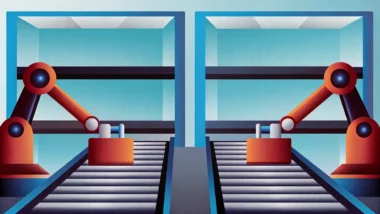
Unlike traditional fulfillment centers that are large and centralized, micro-fulfillment centers (MFCs) operate as decentralized nodes in a supply chain network. They rely on robotics, automated storage and retrieval systems (ASRS), and advanced warehouse management software to achieve high throughput with minimal labor.
This model is particularly effective for grocery, convenience, and high-turnover e-commerce segments where speed and proximity to customers are critical competitive differentiators.
The Real-World Analogy
Think of micro-fulfillment as a network of local bakeries versus a single central bakery serving an entire city. The central bakery can produce in bulk but requires longer delivery routes, risking stale bread. Local bakeries, though smaller, can deliver fresh bread within minutes to nearby customers.
Similarly, micro-fulfillment centers act as local hubs that keep inventory close to demand, reducing transit time and ensuring product freshness. This decentralized approach mirrors how data centers evolved from centralized mainframes to edge computing for lower latency.
How Micro-Fulfillment Drives Strategic Growth & Market Competitiveness?
Micro-fulfillment directly impacts customer acquisition costs (CAC) and lifetime value (LTV) by enabling faster, more reliable delivery. A study by McKinsey found that 25% of consumers abandon carts due to slow delivery options; micro-fulfillment mitigates this by offering expedited shipping at lower operational cost.
From a cost perspective, last-mile delivery accounts for 53% of total shipping costs. By positioning inventory closer to end customers, micro-fulfillment reduces the distance traveled per order, cutting last-mile expenses by up to 30%. Additionally, the automation within MFCs reduces labor costs by 40-60% compared to manual picking in traditional warehouses.
Strategically, micro-fulfillment enables retailers to compete with Amazon’s delivery speed without massive capital expenditure. It also supports omnichannel fulfillment—serving both online orders and in-store replenishment from the same facility, optimizing inventory turnover and reducing stockouts.
Strategic Implementation & Best Practices
- Site Selection: Use geospatial analytics to identify urban areas with high order density and proximity to target demographics. Ideal locations are within 5-10 miles of 80% of customers.
- Technology Stack Integration: Integrate MFC software with your e-commerce platform, order management system (OMS), and transportation management system (TMS) for real-time inventory visibility and dynamic routing.
- Automation Investment: Deploy goods-to-person systems, autonomous mobile robots (AMRs), and automated packing solutions to achieve throughput of 600+ orders per hour per facility.
- Inventory Optimization: Use machine learning algorithms to forecast demand at the micro-hub level, ensuring high-velocity SKUs are stocked while minimizing dead stock.
- Scalable Network Design: Start with a pilot in one dense metro area, then expand by adding MFCs in concentric rings, each serving a 30-minute delivery radius.
Common Pitfalls & Strategic Mistakes
One frequent error is underestimating the complexity of real-time inventory synchronization across multiple micro-hubs. Without a unified OMS, stockouts and overselling occur, eroding customer trust. Another mistake is over-automating without considering SKU variability; high-mix, low-volume items may require manual handling, reducing efficiency.
Additionally, failing to negotiate favorable real estate leases in urban areas can erode margins. MFCs require 5,000-15,000 sq ft spaces with high ceilings and loading docks, which are scarce and expensive. A common oversight is ignoring labor availability for maintenance and exception handling, as automated systems still require skilled technicians.
Conclusion
Micro-fulfillment is a transformative logistics model that enables retailers to meet rising consumer expectations for speed while controlling costs. When executed with precise site selection, robust technology integration, and data-driven inventory management, it provides a sustainable competitive advantage in the era of instant commerce.