Executive Summary
- 3D Secure is a three-domain authentication protocol (Acquirer, Issuer, and Interoperability) that adds a critical verification layer to online card transactions.
- The transition to EMV 3DS (2.0) enables risk-based authentication, allowing for a frictionless user experience by analyzing over 100 distinct data points in real-time.
- Implementation provides a legal liability shift, protecting merchants from fraud-related chargebacks and ensuring compliance with PSD2 SCA mandates.
What is 3D Secure?
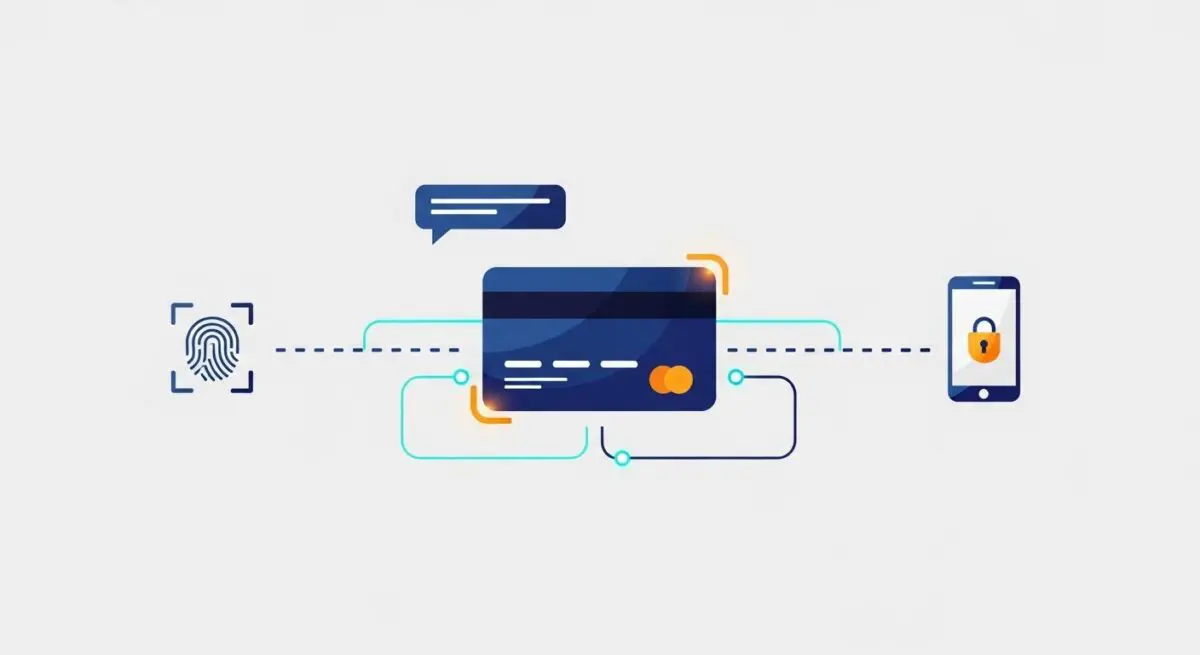
3D Secure (Three-Domain Secure) is a technical messaging protocol designed to verify the identity of a cardholder during Card-Not-Present (CNP) transactions. Originally developed by Arcot Systems and first implemented by Visa as Verified by Visa, the protocol has since been standardized by EMVCo. It functions by creating a secure communication channel between three distinct domains: the Acquirer Domain (the merchant and their acquiring bank), the Issuer Domain (the cardholder’s issuing bank), and the Interoperability Domain (the payment network infrastructure, such as Visa’s Directory Server). This architecture allows for the exchange of authentication data before a transaction is submitted for authorization, significantly reducing the risk of unauthorized card use. The protocol uses XML or JSON-based messaging to facilitate this exchange, ensuring that the entity attempting the purchase is the legitimate owner of the payment instrument.
The evolution from the legacy 3DS 1.0 to the modern EMV 3-D Secure (often referred to as 3DS 2.0) represents a paradigm shift in payment security. While 1.0 relied heavily on static passwords and browser-based redirects—often leading to high cart abandonment rates—3DS 2.0 utilizes a data-rich, risk-based authentication (RBA) approach. It supports mobile-native SDKs and allows for the transmission of over 100 distinct data points, including device fingerprints, geolocation, and transaction history. This enables a frictionless flow where the majority of transactions are authenticated in the background without requiring active user intervention, while only high-risk transactions are routed through a challenge flow involving biometrics or one-time passcodes (OTP). This modern iteration is designed to be device-agnostic, supporting browsers, mobile apps, and even connected devices, ensuring a consistent security posture across the entire digital commerce ecosystem.
The Real-World Analogy
Think of 3D Secure as a digital passport control at an international airport. In a standard transaction without 3DS, a traveler (the transaction) simply presents a ticket (card details) to enter the country. With 3D Secure, the traveler must stop at a dedicated checkpoint where an official (the Issuing Bank) verifies their identity against a secure database. In the legacy version (1.0), this was like a slow, manual interrogation that frustrated travelers and caused many to miss their flights. In the modern version (2.0), it is more like a high-tech biometric gate that recognizes the traveler’s face and gait as they walk by, only stopping them for a manual check if something looks suspicious. This ensures that only legitimate travelers pass through quickly, while potential imposters are identified and stopped before they can enter.
How 3D Secure Drives Strategic Growth & Market Competitiveness?
From a strategic perspective, 3D Secure is not merely a security checkbox but a critical driver of conversion and financial stability. The primary benefit for enterprise merchants is the liability shift. In a standard CNP transaction, the merchant typically bears the cost of fraudulent chargebacks. However, when a transaction is successfully authenticated via 3DS, the financial liability for fraud-related disputes shifts to the card issuer. This protection is vital for high-volume retailers and industries with thin margins, as it directly preserves revenue and reduces the overhead associated with fraud management. Furthermore, in jurisdictions governed by the Revised Payment Services Directive (PSD2) in the European Economic Area, 3D Secure is the industry standard for meeting Strong Customer Authentication (SCA) requirements. Failure to implement 3DS in these markets results in mandatory transaction declines, making it a prerequisite for market access and international expansion.
The transition to 3DS 2.0 has also addressed the historical conflict between security and user experience. By facilitating frictionless authentication, 2.0 reduces the cognitive load on the consumer, thereby lowering abandonment rates and increasing the Customer Lifetime Value (CLV). By providing a seamless checkout experience across devices, including mobile apps and IoT platforms, businesses can maintain high conversion rates while simultaneously lowering their fraud profile. This dual benefit allows marketing and sales teams to scale customer acquisition efforts with the confidence that the underlying payment infrastructure is both secure and optimized for the modern, mobile-first consumer. In the era of AI-driven commerce, 3DS data also provides a clean signal of transaction legitimacy, which is essential for training fraud detection models and optimizing automated checkout flows.
Strategic Implementation & Best Practices
- Implement EMV 3DS (2.0+) to support mobile-native SDKs and take advantage of risk-based authentication, which minimizes friction for low-risk customers.
- Leverage Soft Decline handling by configuring your payment gateway to automatically trigger a 3DS flow if an issuer declines a transaction with a code indicating that authentication is required.
- Ensure data enrichment by passing as much metadata as possible—such as billing address, device ID, and transaction history—to the issuer’s Access Control Server (ACS) to maximize frictionless approval rates.
- Regularly audit your 3DS integration to ensure compatibility with the latest EMVCo specifications (e.g., 2.2 or 2.3) to utilize features like delegated authentication and improved out-of-band (OOB) flows.
- Monitor issuer-specific performance to identify banks with high failure rates for 3DS challenges, allowing for better routing logic and troubleshooting with payment partners.
Common Pitfalls & Strategic Mistakes
One of the most common pitfalls is the continued reliance on 3DS 1.0 or a one-size-fits-all approach to authentication. 3DS 1.0 was designed for a desktop-centric web and often fails in mobile environments due to pop-up blockers or non-responsive iframes, leading to significant friction and lost sales. Another strategic mistake is the failure to optimize the Challenge Flow. If the issuer requires a challenge, the merchant must ensure that the UI is consistent with their brand to prevent user mistrust and abandonment. Furthermore, many enterprises suffer from data silos where the fraud prevention team and the UX team do not collaborate. This leads to over-aggressive 3DS triggers that block legitimate customers or, conversely, a lack of 3DS on high-risk transactions that results in excessive chargebacks in non-regulated markets.
Conclusion
3D Secure is a foundational component of a secure and scalable digital commerce architecture. By balancing robust identity verification with a frictionless user experience, it enables enterprises at Andres SEO Expert to mitigate fraud risk while maximizing conversion and regulatory compliance in a data-driven market.