


Key Takeaways
- DeepSeek founder’s quant fund suffers 16% decline amid China’s quantitative hedge fund rout.
- The rout follows a global selloff in chip stocks, deepening local market turmoil.
- DeepSeek simultaneously pursues a $74B pre-IPO valuation, signaling contrasting dynamics in AI investment.
China’s Quant Crash Hits Home: DeepSeek Founder’s Strategy Fund Down 16%
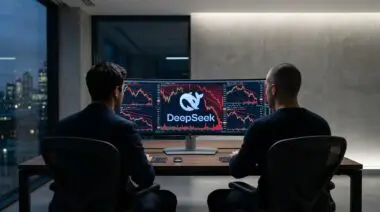
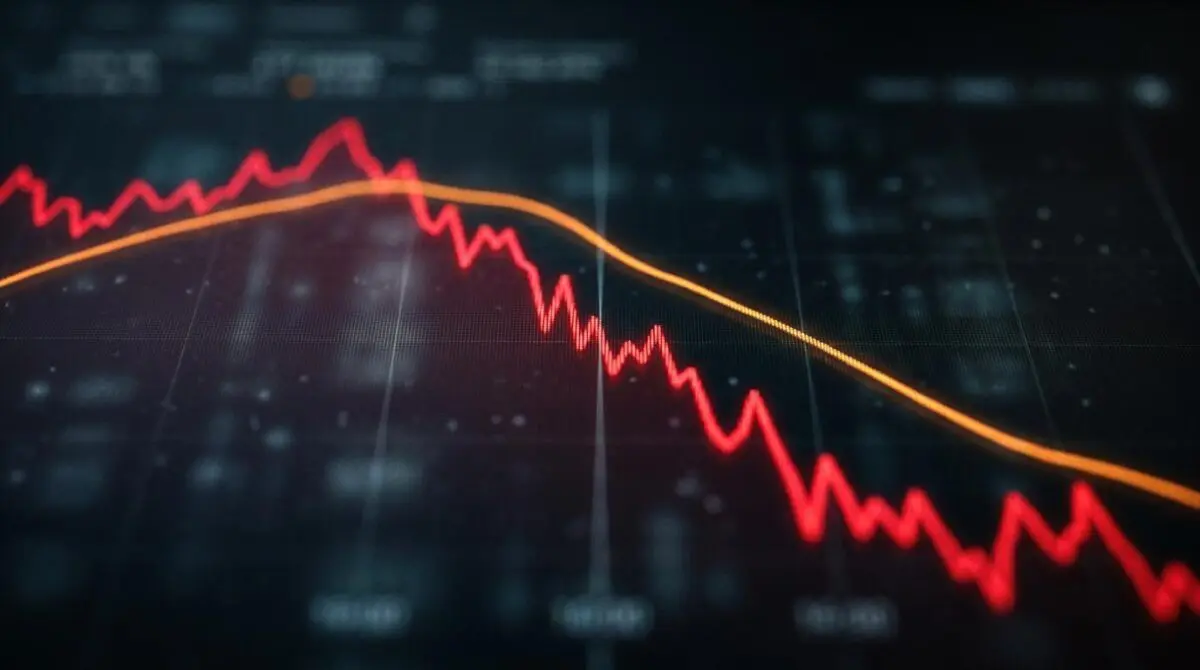
DeepSeek founder’s quantitative hedge fund suffered a 16% decline last week as China’s hedge fund industry faced one of its steepest drawdowns. The selloff deepened amid a global rout in chip stocks, with the CSI 1000 Index also coming under pressure. The fund, which aims to beat the CSI 1000, was caught in the crossfire of a broad market downturn.
Table of Contents
The Mechanics of the Quant Rout
China’s quantitative hedge funds employ complex algorithms to exploit market inefficiencies. The recent drawdown highlights their vulnerability to sudden, macro-driven selloffs. The global chip stock decline, triggered by shifts in AI demand expectations, rippled through Chinese markets.
DeepSeek’s fund, specifically designed to outperform the CSI 1000 Index, relies on systematic trading strategies. The broad-based rout overwhelmed its models, leading to double-digit losses. This event underscores the risks inherent in high-leverage quant strategies during periods of correlated market stress.
Market Implications and the AI Valuation Paradox
The 16% drop in DeepSeek’s fund comes at a time when the AI startup itself is targeting a massive $74 billion pre-IPO valuation, according to a Seeking Alpha report. This juxtaposition reveals a complex landscape: while AI model developers like DeepSeek attract hefty valuations, the financial instruments tied to the sector are experiencing severe volatility.
Interestingly, the global chip sell-off that exacerbated the quant rout was partially sparked by Moonshot AI’s release of their Kimi K3 model, which shattered benchmarks. The so-called ‘DeepSeek Effect’ continues to influence market dynamics, with new AI breakthroughs causing rapid revaluations of semiconductor stocks. For institutional investors, this means that the same AI innovations driving long-term opportunity are also introducing short-term unpredictability.
DeepSeek’s cost leadership strategy, which aims to disrupt the AI market with lower operational costs, may buffer it against some of these fluctuations. However, the quant fund’s performance reminds investors that even the most promising tech narratives are not immune to market mechanics.
Navigating the New Normal in AI Finance
The simultaneous occurrence of a quant fund drawdown and a massive pre-IPO valuation at DeepSeek illustrates the dual nature of today’s AI market. On one hand, there is immense enthusiasm for foundational AI companies. On the other, the financial products and indices tied to the sector remain highly reactive to news and sentiment shifts.
Investors must remain vigilant, balancing the potential of AI disruptors with the inherent volatility of tech-driven markets. The quant rout serves as a cautionary tale about the dangers of over-reliance on algorithmic strategies in a fast-changing environment.
Staying ahead in the rapidly shifting landscape of Business requires precision. To future-proof your digital strategy and scale effortlessly, you need a foundation built on precision. Optimize your site with advanced speed engineering, secure your infrastructure in high-performance hosting environments, and streamline your entire workflow through autonomous AI pipelines. If you are ready to elevate your systems, Connect with Andres at Andres SEO Expert to build your ultimate architecture.
Frequently Asked Questions
What caused the 16% drop in DeepSeek’s quantitative hedge fund?
The fund suffered a 16% decline due to a broad market rout triggered by a global selloff in chip stocks, which overwhelmed its systematic trading strategies. The CSI 1000 Index also came under pressure, and high leverage in quant strategies amplified losses during correlated market stress.
How do Chinese quantitative hedge funds like DeepSeek’s work?
These funds employ complex algorithms to exploit market inefficiencies. DeepSeek’s fund aims to outperform the CSI 1000 Index using systematic trading strategies, but sudden macro-driven selloffs can overwhelm their models, especially when leverage is high.
What role did the global chip stock decline play in the quant rout?
The global chip selloff, partly sparked by Moonshot AI’s Kimi K3 model release, rippled into Chinese markets. This external shock exacerbated the downturn in quant funds, as the broad-based selloff overrode model predictions and led to double-digit losses.
How does DeepSeek’s massive pre-IPO valuation contrast with its quant fund’s losses?
DeepSeek targets a $74 billion pre-IPO valuation, reflecting enthusiasm for AI disruptors, while its quant fund’s 16% drop shows the high volatility in financial instruments tied to the tech sector. This reveals a paradox where long-term opportunity meets short-term unpredictability.
What is the ‘DeepSeek Effect’ mentioned in the article?
The ‘DeepSeek Effect’ refers to the market impact of AI breakthroughs from DeepSeek and competitors like Moonshot AI, which cause rapid revaluations of semiconductor stocks and increase volatility. It highlights how AI innovation influences not just tech companies but also financial products tied to them.
What lessons can investors learn from this quant fund rout?
Investors should be cautious about over-reliance on algorithmic strategies in fast-changing environments. The event underscores the risks of high leverage during correlated market stress and the need to balance AI enthusiasm with the inherent volatility of tech-driven markets.
How can investors navigate volatility in AI-related financial products?
Investors must stay vigilant, diversify strategies, and recognize that AI innovations driving long-term growth also introduce short-term unpredictability. Understanding market mechanics and avoiding overexposure to leveraged quant funds can help manage risk during sentiment shifts.