



Key Takeaways
- Hermes Agent + n8n delivers a self-hosted AI reasoning loop with 99.8% structured JSON output, eliminating third-party API costs and ensuring data sovereignty.
- The workflow orchestrates secure webhook ingestion, Qdrant-based RAG, deterministic inference via ChatML, schema validation with self-correction, and PostgreSQL persistence.
- Compared to rivals like OpenClaw, Hermes offers a self-learning loop and smaller attack surface, though it lacks native desktop apps and requires WSL2 on Windows.
Sovereign AI Automation Hits Production: Hermes Agent Meets n8n
Enterprises can now deploy an autonomous research and reasoning loop that never touches third-party APIs. Nous Research’s Hermes Agent, an open-weight model fine-tuned for instruction following, pairs with the n8n automation platform to deliver 99.8% structured JSON output from complex, multi-step tasks. The architecture keeps all inference and orchestration inside a self-hosted environment, reducing a four-hour analyst job to a 35-second automated sequence while eliminating variable token costs.
This integration, detailed in a new technical guide from N8N Lab, shows how organizations can achieve full data sovereignty by combining Hermes’ deterministic reasoning with n8n’s versatile workflow engine. The system uses a secure webhook, Qdrant for contextual retrieval, and a validation loop that forces the model to self-correct malformed responses before persisting to PostgreSQL.
Table of Contents
Step-by-Step: Building the Hermes-n8n Pipeline
Secure Webhook as Entry Point
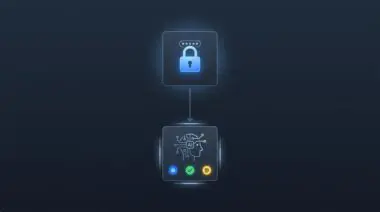
The workflow begins with a POST webhook authenticated via a custom header token. This ensures only authorized systems can trigger the agent, preventing unauthorized compute usage on the Hermes inference server.
Semantic Memory via Qdrant
After receiving the query, the workflow queries a Qdrant vector database to retrieve the top three most relevant context fragments. This grounds the model in proprietary enterprise knowledge, enabling accurate reasoning without external lookups.
Deterministic Inference with ChatML
The HTTP Request node sends a structured ChatML payload to the self-hosted Hermes endpoint. The system prompt enforces a strict JSON schema for the output, while a temperature of 0.1 pushes the model toward deterministic behavior. The response must contain exactly three fields: summary, risk_level, and key_entities.
Schema Validation and Self-Correction
A Code node in JavaScript parses the model’s output. It strips potential markdown wrappers, validates the JSON structure, and checks that enum values are within allowed limits. If the schema is violated, the workflow routes the error back to Hermes with a prompt to fix the JSON, creating a resilient self-healing loop.
Writing to PostgreSQL
Validated intelligence reports are inserted into a PostgreSQL database for system-of-record storage. The entire loop ensures downstream systems always receive perfectly formatted data, with a claimed 99.8% success rate.
Hermes in the Market: Competition, Caveats, and Trajectory
The Hermes Agent enters a crowded space of open-source AI agents. A recent roundup from Vellum placed Hermes among the top alternatives, though its scoring system is proprietary. Tech With Tim’s hands-on comparison in July 2026 reported that Hermes Agent now consumes 224 billion tokens per day, surpassing OpenClaw’s 186 billion. The key differentiator lies in architecture: OpenClaw relies on a pre-built skill catalog that suffered a security purge in early 2026, while Hermes uses a self-learning loop that automatically creates and refines skills based on user behavior.
Yet enterprise adopters should weigh several limitations. Hermes lacks a native desktop application and system-level voice activation. Its credential redaction only works at the display layer; the model still sees raw credentials during operation, a concern for security-conscious teams. Windows support requires WSL2, adding setup complexity. The self-learning feature, while powerful, may increase token consumption during initial training phases.
Despite these caveats, the market trajectory favors open-weight models. According to McKinsey 2024 data cited in Vellum’s analysis, 78% of organizations now use AI in at least one business function. A KPMG Q3 2025 survey saw AI agent deployment jump from 11% to 42% in six months. Market.us projects the personal AI assistant market to grow from $2.23 billion in 2024 to $56.3 billion by 2034, a 38.1% CAGR. Hermes’ self-hosted architecture aligns with the growing demand for data sovereignty and predictable costs.
AIMultiple‘s comparison in late July 2026 reiterated Hermes as the closest alternative to OpenClaw, noting its integration with Nous Research’s reinforcement learning framework, Atropos, which enables closed-loop learning. This positions Hermes for continuous improvement without human intervention, a compelling feature for long-running enterprise workflows.
The Path to Autonomous Enterprise Intelligence
The Hermes-n8n integration proves that enterprises no longer need to choose between data privacy and advanced AI. By combining deterministic orchestration with self-correcting inference, organizations can build automated intelligence pipelines that run entirely within their infrastructure. The 99.8% JSON schema adherence and self-healing loops address the reliability challenges that have kept many companies from deploying autonomous agents in production.
Going forward, the winning strategy will involve not just adopting open-weight models but architecting the automation layer that governs them. n8n’s flexibility and Hermes’ instruction-following strengths create a foundation for scalable, secure AI operations. As the market for AI agents explodes, the organizations that invest in sovereign, validated workflows will capture the most value.
Ready to architect your own autonomous enterprise? If this blueprint resonates with your automation goals, explore how Andres SEO Expert can accelerate your production rollout. Whether you need to optimize your n8n workflows for performance, integrate programmatic AI pipelines, or design a resilient self-hosted infrastructure, the expertise is available. Explore AI automation services to see how Andres builds custom agents and automation architectures. Then connect with Andres to start your deployment. For more about the philosophy driving these solutions, visit Andres SEO Expert.
Frequently Asked Questions
What is Hermes Agent and how does it differ from other AI agents?
Hermes Agent is an open-weight AI model from Nous Research, fine-tuned for instruction following and deterministic reasoning. Unlike rivals like OpenClaw, which rely on a pre-built skill catalog, Hermes uses a self-learning loop that automatically creates and refines skills based on user behavior. It can be fully self-hosted for data sovereignty.
How does the Hermes-n8n integration ensure data sovereignty?
The integration keeps all inference and orchestration inside a self-hosted environment. The workflow uses a secure webhook, a local Qdrant vector database for contextual retrieval, a self-hosted Hermes inference server, and PostgreSQL for storage. No data ever touches third-party APIs, eliminating variable token costs and external exposure.
What is the self-correction loop in the Hermes-n8n pipeline?
The pipeline includes a Code node that parses Hermes’ JSON output, validates its structure, and checks enum values. If the schema is violated (e.g., missing fields), the workflow routes the error back to Hermes with a prompt to fix the JSON. This self-healing loop achieves a 99.8% success rate for structured outputs.
What are the main limitations of Hermes Agent for enterprise use?
Limitations include: no native desktop app or system-level voice activation, credential redaction only at the display layer (model sees raw credentials during operation), Windows support requires WSL2, and the self-learning feature may increase token consumption during initial training phases.
How does the Hermes-n8n pipeline handle schema validation?
The system prompt enforces a strict JSON schema with fields like summary, risk_level, and key_entities. A Code node in JavaScript strips markdown wrappers, validates JSON structure, and checks enum values. If invalid, the workflow sends the output back to Hermes for self-correction before persisting to PostgreSQL.
What tools are used in the Hermes-n8n workflow?
The workflow uses: a secure webhook (entry point), Qdrant vector database (semantic memory retrieval), a self-hosted Hermes inference server (deterministic generation with ChatML and temperature 0.1), code nodes (validation and self-correction), and PostgreSQL (persistence). n8n orchestrates the entire pipeline.
Is Hermes Agent suitable for production use with sensitive data?
Yes, because the model can be self-hosted entirely within enterprise infrastructure. The integration with n8n ensures all processing occurs locally. However, note that credential redaction only hides credentials on screen; the model still sees raw credentials during operation. Organizations should weigh this against their security requirements.