Key Takeaways
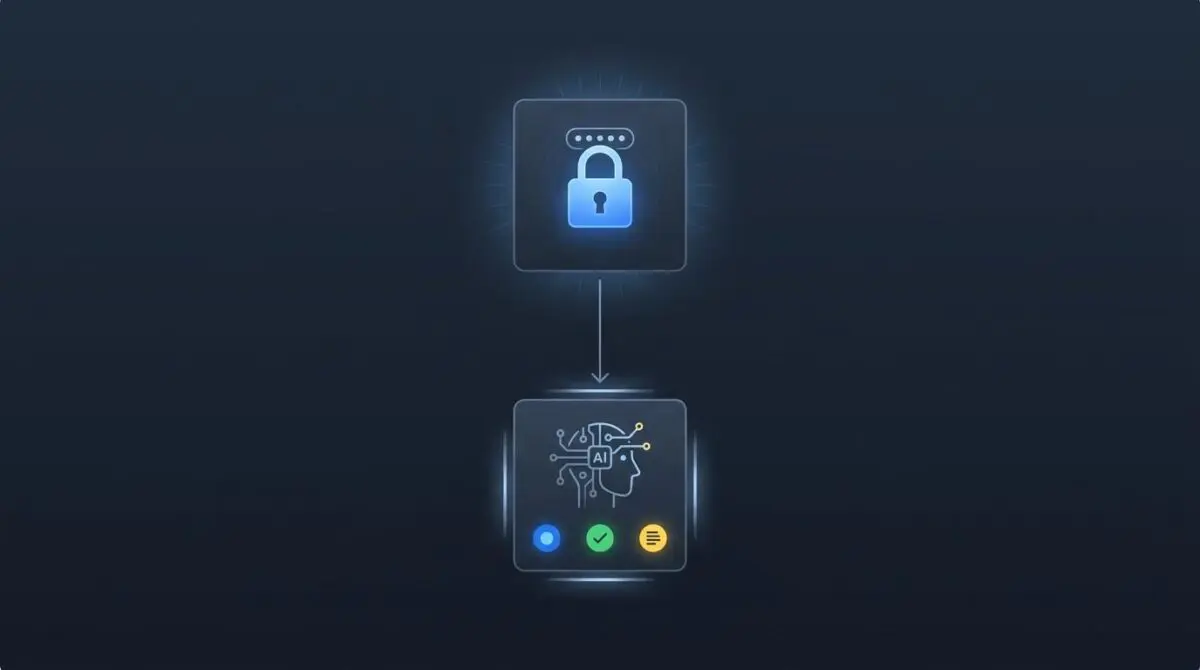
- AI agent governance must be treated as architecture embedded in the workflow layer, not as a separate policy document.
- Using governance as code with tools like Open Policy Agent enables automated, auditable enforcement of permissions, data access, and logging.
- The EU AI Act’s August 2026 deadline and exploding market spend ($15.8B by 2030) make governance a strategic imperative for automation teams.
The Governance Gap: Why Production Agents Need Hard Wired Controls
AI agents are no longer experiments. They authenticate as real users, call internal APIs, and execute multi-step workflows autonomously. But this autonomy creates a governance gap: most organizations deploy agents without defining authority boundaries, leading to excessive permissions and runaway behavior. According to n8n’s engineering team, published in July 2026, the shift from prototype to production happens so fast that weekend experiments become customer-facing workflows before any review ticket is filed. This article explains how to treat AI agent governance as architecture — not policy — and why the workflow layer is the right enforcement point.
Table of Contents
The Core Pillars of Agent Governance
AI agent governance rests on five pillars that must be defined before deployment, not bolted on after an incident. Identity and access control binds every agent action to a known user’s scope rather than a shared service account. Runtime guardrails validate inputs and outputs as the agent runs, blocking prompt injection and redacting sensitive data. Observability and evaluation log every tool call and decision for replay and anomaly detection. Decision boundaries specify which operations require human approval, such as irreversible writes or external sends. Finally, inventory and ownership ensures every agent is catalogued with its owner, permissions, and audit hooks.
n8n implements these controls directly in the workflow canvas. The company’s platform enforces governance decisions where the agent actually runs — inside the execution path — rather than in a separate policy layer. This architectural choice means that guardrails, logging, and approval gates are part of the build phase, not retrofitted.
Identity and Access Control
Every agent action should execute with the original user’s permission scope. n8n ties each agent to a known identity, stores secrets in a vault rather than workflow parameters, and scopes credentials to the minimum needed. OWASP explicitly flags excessive permissions as one of three root causes of excessive agency. n8n’s roles-based access controls (RBAC) allow projects and user roles to narrow permissions. On Enterprise plans, custom roles separate the right to run a workflow from the right to edit it — a strong control for sensitive automations.
Runtime Guardrails and Logging
Guardrails that only exist in design docs cannot stop misfires at 2 a.m. n8n’s Guardrails node validates text as it flows through a workflow, catching jailbreak attempts, blocking keywords, and sanitizing PII before it reaches a downstream system. In check mode, it splits the workflow into pass and fail branches; in sanitize mode, it redacts and continues. For teams wanting a hard ceiling, a Code node can wrap tool calls with runtime limits on expiry and execution time, so an injected prompt cannot turn a quick lookup into a runaway process.
Log streaming sends execution events to the team’s SIEM, placing agent activity alongside the rest of security telemetry. Encrypted syslog over TLS keeps the pipeline audit-ready. n8n also supports OpenTelemetry on self-hosted instances, emitting OTLP traces to any compatible backend like Jaeger or Datadog.
Human Oversight and Decision Boundaries
Not every action should be autonomous. n8n’s human-in-the-loop (HITL) feature pauses the AI Agent node before a specific tool runs and routes an approval request to Slack, email, or chat. The reviewer sees the exact tool and parameters before approving or denying. For lower-risk actions, human-on-the-loop (HOTL) allows asynchronous monitoring: the agent acts autonomously while a human reviews results after the fact and intervenes only on exceptions. Decision boundaries map to compliance requirements, including the EU AI Act’s expectation of a human-accountable record for automated decisions.
Market Imperative and Regulatory Clock
The urgency for AI agent governance is amplified by market growth and regulatory deadlines. Forrester projects spending on off-the-shelf AI governance software will reach $15.8 billion by 2030, a more than fourfold increase from 2024, as reported by TechTarget. The SNS Insider market report values the AI Agent Security Market at $18.72 billion in 2025 and projects it to reach $507.56 billion by 2035, with a CAGR of 39.12%. Simultaneously, many new EU AI Act provisions take effect August 2, 2026, including requirements for risk management, data governance, recordkeeping, and human oversight for high-risk systems. These deadlines mean automation teams cannot afford to delay implementing governance controls.
Governance as code (GaC) expresses rules in a machine-readable language such as Rego/Open Policy Agent and enforces them at the agent’s tool-calling layer. TechTarget notes that GaC enables automated, auditable control over permissions, data access, logging, documentation, exception handling, and control reviews. However, GaC cannot replace human judgment for risk classification, fundamental rights impact assessments, or the human oversight required by Article 14 of the EU AI Act. The line between what can be automated and what requires human decision must be clearly drawn and enforced.
ITSM.tools research from SailPoint shows that while 82% of enterprises are running AI agents, only 44% have considered governance. Extending IT service management practices — risk classification, change management, access governance, incident response — to AI agents provides a familiar framework. Incident management for agents may differ from traditional IT incidents: failures can manifest as subtly wrong recommendations or unintended actions without obvious service degradation.
Conclusion: Governance as Infrastructure
Governance is not the audit you run after something breaks. It is the infrastructure that determines what your agents can do in the first place — identity, guardrails, logging, and approval gates wired into the workflow where the agent executes. Teams that treat AI agent governance as part of the build — rather than a separate policy layer — will be better positioned to scale safely under the upcoming EU AI Act regime.
For automation teams looking to embed governance into their workflows from day one, the practice of governance as code and platforms like n8n that enforce controls at the execution layer provide a clear path forward. To learn more about building secure, governed automation pipelines using programmatic SEO and AI automation, or to discuss tailored strategies, get in touch with Andres. Discover how Andres SEO Expert helps enterprises align automation velocity with governance and compliance.
Frequently Asked Questions
What are the five core pillars of AI agent governance?
The five pillars are identity and access control, runtime guardrails, observability and evaluation, decision boundaries (human oversight), and inventory and ownership. These must be defined before deployment, not retrofitted after an incident.
How does n8n enforce identity and access control for AI agents?
n8n ties each agent to a known user’s identity, stores secrets in a vault, and scopes credentials to minimum permissions. It uses roles-based access controls (RBAC) and supports custom roles on Enterprise plans to separate run and edit permissions.
What runtime guardrails does n8n provide for AI agents?
n8n’s Guardrails node validates text in real time, catching jailbreak attempts, blocking keywords, and sanitizing PII. It offers check mode (split into pass/fail branches) and sanitize mode (redact and continue). Code nodes can enforce execution time and expiry limits. Log streaming sends events to SIEM, and OpenTelemetry is supported for self-hosted instances.
How does human oversight work in n8n workflows?
n8n supports human-in-the-loop (HITL) where the AI Agent pauses before a tool runs and sends an approval request to Slack, email, or chat. Human-on-the-loop (HOTL) allows asynchronous monitoring: the agent acts autonomously while a human reviews after the fact and intervenes on exceptions.
What is governance as code (GaC) and how does it relate to the EU AI Act?
Governance as code expresses rules in machine-readable languages like Rego/Open Policy Agent and enforces them at the agent’s tool-calling layer. It enables automated, auditable control over permissions and logging but cannot replace human judgment for risk classification or the human oversight required by Article 14 of the EU AI Act.
Why is governance as infrastructure important for AI agents?
Governance as infrastructure means embedding identity, guardrails, logging, and approval gates directly into the workflow execution layer, not as a separate policy overlay. This architectural choice prevents runaway behavior and ensures compliance, especially with the EU AI Act’s upcoming provisions taking effect August 2, 2026.