Key Takeaways
- Frameworks like n8n, OpenClaw, and Hermes occupy different stack layers—none is universally best.
- n8n’s $5.2B valuation and enterprise adoption show layer alignment trumps feature checklists.
- Security sandboxing and integration tax are the real decision drivers, not model hype.
Table of Contents
The $5.2 Billion Valuation That Reshuffles the Agent Market
The AI agent framework debate just absorbed a $5.2 billion data point. n8n, the visual workflow orchestration platform long treated as a utility layer, has crossed $100 million in annual recurring revenue at that valuation, CEO Jan Oberhauser confirmed in a Jul 2026 Product School interview.
Meta, Nvidia, Dell, Accenture, Vodafone, Deutsche Telekom, and Mercedes-Benz all run the self-hosted version inside their walls. One enterprise routes 75 percent of customer support traffic through an n8n AI agent — with satisfaction scores outpacing human agents.
That single statistic collapses the false choice that has plagued technical decision-makers for two years. The question was never which AI agent framework wins. The question is which layer of the stack your business problem actually occupies.
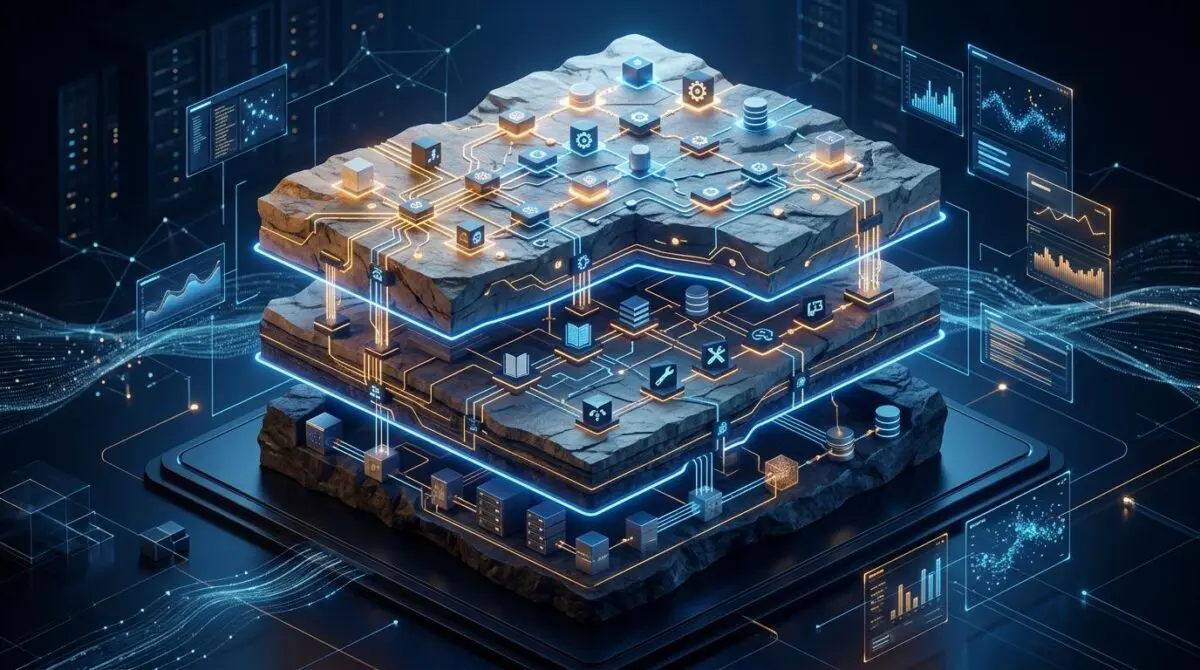
N8N Lab broke down the architectural distinctions in a recent analysis, mapping n8n against OpenClaw and Hermes across stack layer, customization ceiling, and total cost of ownership. The three are not competitors. They are adjacent strata in a coherent enterprise agent architecture — and forward-leaning teams are already combining them in production.
Stack Layers, Not Competing Tools
n8n occupies the orchestration layer. Its 500-plus native integrations and visual workflow builder treat AI reasoning as one embedded component inside a broader, auditable business process. The platform offers complete model-provider flexibility, self-hosted deployment, and a credential vault that speaks directly to compliance teams.
Its ceiling: the visual canvas excels at deterministic logic with cognitive waypoints, not unbounded autonomous reasoning architectures built from scratch. That ceiling is exactly where OpenClaw enters.
OpenClaw is the custom-build layer — a developer-first framework for engineering bespoke tool-calling agents. It offers no visual audit trail, no pre-wired business connectors, and no memory scaffolding out of the box. What it offers is an effectively infinite customization ceiling.
Permission boundaries, human-in-the-loop checkpoints, vector database routing — all are coded to exact specification. The tradeoff is steep: months of engineering investment before the agent executes a single real-world operation.
Hermes, built by Nous Research, occupies the packaged product layer. Persistent memory, security hardening, skill configurations, and over 300 models via the Nous Portal come pre-architected. It is the fastest path to a production-grade autonomous agent with guardrails already in place.
The constraint is configurability, not code. Organizations requiring agent behaviors that fall outside Hermes’ intended memory or reasoning architecture will collide with the product boundary.
These positions clarify the evaluation framework that matters: stack layer occupancy, customization ceiling, time-to-first-value, model flexibility, business-system connectivity, and memory architecture. Not feature checklists. Layer alignment.
The Sandboxing Imperative When Security Blocks Speed
Enterprise procurement stalls on AI agents for one reason above all others: the fear of tool access without boundaries. n8n’s architecture addresses this directly by enforcing a permission model where agents can only perform explicitly permitted actions. No implicit scope. No runtime freedom beyond what the workflow designer deliberately grants.
The n8n blog published a detailed sandboxing guide on Aug 6, 2026, mapping three isolation layers critical to production deployment: execution environment isolation, tool and credential boundary enforcement, and state and memory isolation. Encrypted credential storage lives separate from the agent runtime. Execution history logs capture every node’s input and output.
A reference to CVE-2026-25049 — a sandbox escape in a JavaScript evaluator patched in versions 1.123.17 and 2.5.2 — underscores why runtime isolation alone is not enough. The blog emphasizes that workflow-level governance — scoped credentials, tool limitations, audit logging — provides the boundary layer that makes AI agent execution genuinely auditable.
This posture is what Oberhauser described as n8n functioning as the ‘connective tissue’ — the language model is the engine, but n8n is the car, supplying the steering, brakes, and guardrails that enterprise security teams demand, as demonstrated in the Product School interview:
Version control, environment segmentation across development, staging, and production, and Git-based promotion of agent workflows are now table stakes for any platform claiming enterprise readiness. n8n ships all three on its higher tiers.
AIMultiple’s hands-on evaluation of no-code AI agent builders, published Jul 30, 2026, found n8n to be the most developer-oriented and code-driven tool among tested alternatives, with deeper agent orchestration capabilities than cloud-only rivals. The evaluators noted full step data views for transparency, Git-based version control, and a pricing model that charges per workflow execution rather than per operation — a structural advantage as agent chains grow longer.
The Integration Tax No Team Can Afford to Ignore
The most expensive line item in any AI agent deployment is not the software license. It is the custom integration engineering required to connect reasoning to actual business systems. n8n’s 500-plus native connectors compress that tax. OpenClaw pushes it entirely onto the engineering team. Hermes defers it to the orchestration layer — which is why the Hermes plus n8n pattern has become the dominant enterprise stack.
For teams evaluating where to place their first bet: start with the business outcome, not the technology. Define what the agent must remember, which systems it must securely touch, and how genuinely novel its behavior needs to be. The layer choice will follow with clarity that feature matrices alone cannot provide.
For teams architecting multi-layer agent systems that demand both orchestration precision and security rigor, the programmatic SEO and AI automation engineering at Andres SEO Expert provides the integration backbone for production-scale deployment — assess your stack here or get in touch directly.
Frequently Asked Questions
What is n8n and why is it significant in the AI agent market?
n8n is a visual workflow orchestration platform with over 500 native integrations, now exceeding $100M in annual recurring revenue at a $5.2 billion valuation. It serves as the orchestration layer in enterprise AI agent architectures, offering self-hosted deployment, model flexibility, and a credential vault, enabling companies like Meta and Mercedes-Benz to run AI agents at scale.
What are the key differences between n8n, OpenClaw, and Hermes?
n8n is the orchestration layer for deterministic workflows with visual audit trails, OpenClaw is a developer-first custom-build layer offering infinite customization but requiring months of engineering, and Hermes is a packaged product layer with pre-architected memory and security but limited configurability. They occupy adjacent strata in an agent stack rather than competing directly.
What security measures does n8n provide for enterprise AI agents?
n8n enforces a permission model where agents only perform explicitly permitted actions, along with execution environment isolation, tool and credential boundary enforcement, and state and memory isolation. It also offers encrypted credential storage, audit logging, version control, and Git-based promotion of agent workflows for enterprise readiness.
How should I choose between n8n, OpenClaw, and Hermes for my AI agent use case?
Start with the business outcome, not the technology. Define what the agent must remember, which systems it must securely touch, and how novel its behavior needs to be. n8n suits connected business processes, Hermes suits fast production deployment with guardrails, and OpenClaw suits fully custom, high-complexity agent behaviors.
What is the integration tax in AI agent deployments and how can I reduce it?
The integration tax is the custom engineering cost required to connect AI reasoning to business systems. n8n’s 500+ native connectors compress this tax, while OpenClaw pushes it onto the engineering team. The Hermes plus n8n pattern is a dominant enterprise stack because Hermes defers integration to the orchestration layer, reducing the burden.
What is a sandbox escape vulnerability in AI agent platforms?
Sandbox escape vulnerabilities, like CVE-2026-25049 in n8n’s JavaScript evaluator, allow code to break out of its isolated runtime environment. n8n patched this in versions 1.123.17 and 2.5.2, emphasizing that workflow-level governance—scoped credentials, tool limitations, and audit logging—is essential for auditable AI agent execution.