Key Takeaways
- A POC is an engineered evidence instrument, not a scaled-down project — it converts real business data into commitment.
- A five-node architecture (ingestion, filtering, mapping, LLM, validation) delivers transparent, evaluable output from actual business data.
- A scoped POC surfaces data quality gaps, authentication issues, and rate limits — cheaply, before they become production catastrophes.
Table of Contents
When Decision Paralysis Costs More Than the Wrong Decision
Most enterprise teams sitting on AI workflow automation budgets are not skeptics. They are stuck in a far more expensive position: they have seen enough to believe the technology works in principle, but lack direct evidence that it will work against their specific systems, their specific data, and their specific edge cases.
The result is an operational deadlock where the decision gets deferred quarter after quarter — not because anyone said ‘no,’ but because nobody can justify saying ‘yes’ without proof.
A technical breakdown published by n8nlab.io maps the exact mechanism that breaks this stalemate: a deliberately bounded proof of concept architecture built on n8n, Google Sheets, OpenAI, and Slack.
The core insight is that a POC is not a smaller version of a production system. It is an engineered instrument for converting uncertainty into commitment by producing evaluable output from real business data within a tightly scoped, low-cost window.
A Proof of Concept (POC) is not a smaller, less serious version of your final project. It is the specific, engineered mechanism that converts uncertain interest into confident, fast-moving commitment.
The architecture documented in the breakdown is the exact Phase 1 pipeline that launched n8n Lab’s own automated content production infrastructure — a system that began as a single LLM node and scaled into a multi-agent orchestration layer.
What makes this approach distinct is that it replaces hypothetical ROI projections with hard, evaluable evidence before significant capital is allocated.
The Five-Node Architecture That Proves AI Viability Before the Big Bet
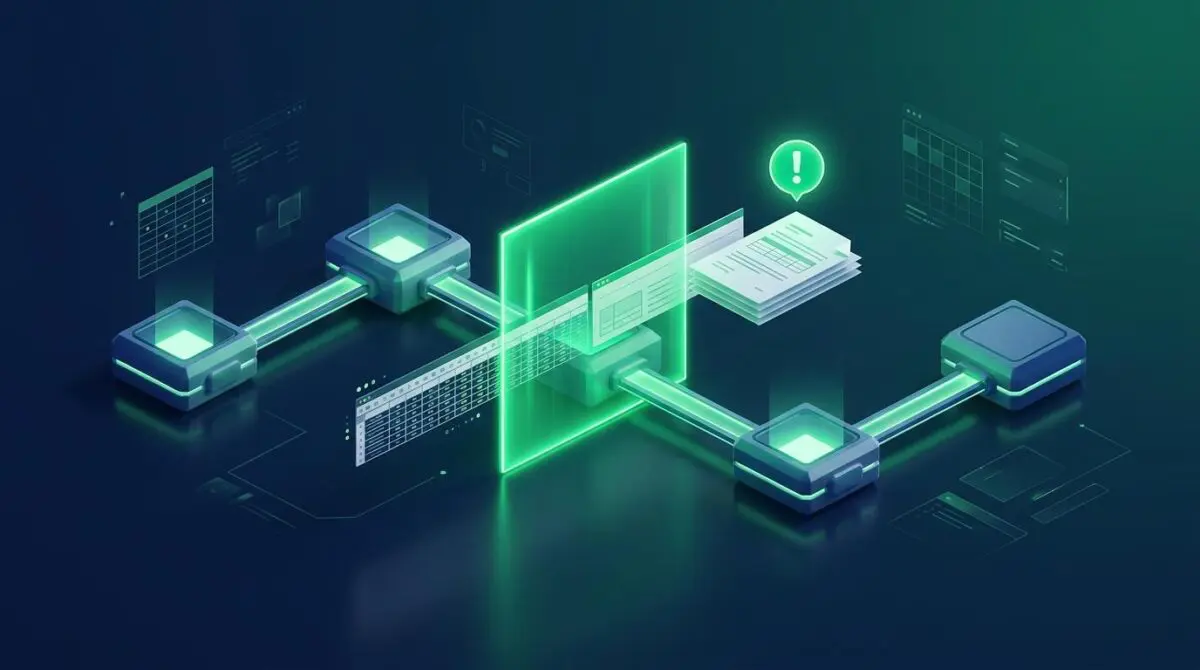
The POC workflow follows a linear, highly transparent pipeline designed for stakeholder visibility rather than production throughput.
An ingestion trigger polls a Google Sheet every five minutes, watching for rows where a status column has been explicitly marked ‘Run_POC.’
A filtering node immediately validates that the status matches exactly — preventing incomplete rows from consuming expensive AI tokens.
Structured context mapping follows, where raw spreadsheet columns are transformed into strongly-typed variables: topic name, target audience, and core argument.
This mapping step is critical because flat spreadsheet data rarely provides enough contextual depth for a large language model to produce production-grade output without structured framing.
The AI processing engine — a Basic LLM Chain node connected to GPT-4o — consumes the structured payload alongside a system prompt that enforces strict editorial rules: no filler words, authoritative tone, and semantic HTML formatting.
Temperature is set to 0.3, prioritizing analytical precision over creative variance.
Output flows into a validation and write-back layer that updates the original Google Sheet row with the generated draft and changes the status to ‘Review_Pending.’
A Slack notification fires simultaneously, pushing an alert to the editorial team with the topic name and row reference — eliminating the need for manual system checking and forcing immediate stakeholder feedback.
The entire architecture deliberately excludes the complex multi-agent routing, image generation, and direct-to-production publishing features that came later.
Error handling at the POC stage focuses on capturing API timeouts and flagging malformed prompts, surfacing those alerts directly to the team rather than attempting automated silent retries.
This is a deliberate design choice: the POC is an evidence-generation instrument, not a scaled system, and its failures are as informative as its successes.
Why the POC Mindset Separates Automation Leaders from the Perpetually Curious
The difference between a demo and a POC is the axis on which enterprise automation initiatives either accelerate or stall permanently.
A demo uses sanitized, hypothetical data to showcase what a tool can do in general. A POC runs real, messy business data through actual infrastructure to validate a specific outcome.
This distinction explains why organizations that adopt a POC-first discipline consistently outpace those that attempt full-scale deployments from the starting line.
The n8nlab.io breakdown identifies three failure modes that a properly scoped POC surfaces before they become catastrophic: data quality gaps that corrupt AI output, authentication incompatibilities with legacy systems, and rate-limiting thresholds that would silently break a production pipeline.
Each of these is exponentially cheaper to discover during a two-week, single-workflow test than during month four of an enterprise-wide rollout.
The scaling trajectory documented in the case study is instructive. Once the single LLM node proved it could reliably produce usable output against real requirements, the expansion followed a systematic, evidence-driven path.
An orchestrator pattern replaced the monolithic AI call, routing tasks to specialized agents based on content type — listicle generation, technical comparison, and instructional guide production each handled by purpose-built prompts.
Cost optimization followed through conditional model routing: complex reasoning tasks directed to GPT-4o, while straightforward formatting and parsing tasks shifted to cheaper models, cutting API costs by an estimated 65 percent at scale without degrading output quality.
Reliability hardening came last — retry logic with exponential backoff, structured batch processing to avoid rate limits, and dedicated error-trigger workflows routing failures to a DevOps channel rather than leaving them buried in execution logs.
The architectural lesson is unambiguous: the POC proved the engine. Production built the vehicle. Skipping the first step would have meant debugging architectural assumptions while simultaneously scaling them — a recipe for compounding technical debt.
The Evidence Threshold Has a Technical Solution
The fastest way to move from ‘Will AI work for us?’ to ‘How do we scale this result?’ is a bounded, measurable proof of concept that replaces projected ROI with evaluated output.
For teams building proof-of-concept automation pipelines that need to graduate into production-grade infrastructure, Andres SEO Expert’s programmatic SEO and AI automation engineering is how the transition gets built — reach out here to define your POC scope.
Frequently Asked Questions
What is an AI workflow automation proof of concept (POC)?
An AI workflow automation POC is a deliberately bounded, low-cost pipeline that converts real business data into evaluable output through AI tools like n8n, OpenAI, and Slack. It is not a smaller version of a production system; it is an engineered instrument for proving that AI will work against your specific systems, data, and edge cases before committing significant capital.
How does a POC differ from a demo in AI automation?
A demo uses sanitized, hypothetical data to showcase general capabilities, while a POC runs real, messy business data through actual infrastructure to validate a specific outcome. A POC forces stakeholder feedback and surfaces real integration issues, making it the key difference between teams that accelerate automation and those that stall permanently.
What are the key components of a five-node AI workflow POC architecture?
The documented POC architecture includes an ingestion trigger that polls a Google Sheet every five minutes for rows marked ‘Run_POC’, a filtering node to prevent incomplete rows from consuming AI tokens, structured context mapping that turns spreadsheet columns into typed variables, a Basic LLM Chain node connected to GPT-4o with a strict editorial prompt and temperature set to 0.3, and a validation and write-back layer that updates the sheet, sets status to ‘Review_Pending’, and fires a Slack notification to the team.
What common failure modes does an AI workflow POC surface early?
A properly scoped POC surfaces data quality gaps that corrupt AI output, authentication incompatibilities with legacy systems, and rate-limiting thresholds that would silently break a production pipeline. Discovering these during a two-week single-workflow test is exponentially cheaper than finding them during an enterprise-wide rollout.
How does a successful POC scale into a production AI automation system?
Once the single LLM node proves reliable output production, expansion follows an evidence-driven path: an orchestrator pattern replaces the monolithic AI call, routing tasks to specialized agents by content type; conditional model routing sends complex reasoning to GPT-4o and simpler tasks to cheaper models; and reliability hardening adds retry logic, batch processing, and dedicated error-trigger workflows.
How can teams reduce AI API costs when scaling from POC to production?
Teams can cut API costs by an estimated 65 percent at scale by using conditional model routing. Complex reasoning tasks are directed to more capable models like GPT-4o, while straightforward formatting and parsing tasks are shifted to cheaper models, preserving output quality while significantly reducing spend.
Why is a POC important before committing to enterprise AI workflow automation?
A POC replaces hypothetical ROI projections with hard, evaluable evidence from real business data, breaking the decision deadlock that keeps teams deferring ‘yes’ or ‘no’. Skipping the POC means debugging architectural assumptions while scaling them, which leads to compounding technical debt. The POC proves the engine; production builds the vehicle.