Key Takeaways
- Self-hosted AI agents eliminate per-token cloud API charges.
- n8n orchestrates and Ollama serves models locally inside your perimeter.
- Hybrid routing cuts costs 60-80% while preserving data sovereignty.
Table of Contents
Local Agents Cross the Production Threshold
Autonomous AI agents that run entirely on an organization’s own infrastructure have moved from architectural theory to production practice in 2026. n8nlab.io published a technical implementation guide that pairs n8n’s orchestration engine with Ollama’s local model serving to create a closed environment that keeps every request inside the server perimeter.
Open-weight models including Llama 3.1, Mistral, Qwen, and DeepSeek execute locally under this design. The immediate effect is the elimination of metered cloud API charges for workloads routed through the stack.
The architecture answers two operational pressures.
Under the implementation documented by n8nlab.io, high-volume classification and extraction tasks stop accumulating per-token fees. Regulated or proprietary information no longer passes through a third-party model provider.
The Closed-Loop Orchestration Stack, Layer by Layer
In this deployment model, n8n acts as the control plane while Ollama operates as the local inference layer. The data flow moves through five stages: n8n catches inbound payloads, structures the system prompt, calls the local model, evaluates the returned response, and updates downstream systems.
The execution path is deliberately linear, but the routing logic around it is where the architecture earns its production credentials.
- Trigger: A webhook, schedule, or application event starts the workflow.
- Orchestration: n8n structures the inbound data and prepares the exact system prompt.
- Model serving: n8n calls the Ollama API, either through its native integration or an OpenAI-compatible shim.
- Token generation: Ollama processes the prompt locally against the loaded open-weight model.
- Response routing: n8n applies conditional logic and writes the output back to internal systems such as Slack, a database, or a CRM.
Two Paths to the Ollama API
The native Ollama Chat Model node is the recommended path for new builds. It maps directly to Ollama’s API structure and supports AI Agent and Basic LLM Chain configurations without translation layers.
For teams migrating existing OpenAI-based workflows, the second path matters more. Ollama exposes an OpenAI-compatible endpoint at the /v1 suffix, allowing the standard OpenAI Chat Model node to treat the local server as a drop-in replacement.
Both paths require precise configuration. The base URL must point to the correct Ollama port, the model string must match the exact pulled tag, and the temperature should sit low enough to keep structured business tasks deterministic.
- Base URL: Typically localhost:11434 for same-host deployments, or a server IP when n8n runs in a separate container.
- Model: Must match the exact pulled tag, such as llama3.1.
- Temperature: Set at 0.1 to 0.2 for deterministic output in structured automation tasks.
Matching Model Tier to Task Reality
Hardware provisioning is the silent failure point of self-hosted AI. The sizing matrix maps model classes to RAM requirements, warning that oversized models on undersized machines trigger memory swapping, latency spikes, and deployment failure.
- 7B to 8B models: 8 to 16GB of RAM, suited for classification, routing, and summarization.
- 14B models: 16 to 32GB of RAM for advanced extraction and structured formatting.
- 70B-plus models: 64GB or more of RAM, or dedicated GPU, for multi-step agentic reasoning.
The capability trade-off is explicit. Cloud frontier models still hold an edge in complex logic, advanced tool calling, and strict adherence to nested JSON schemas.
Local models win on bounded, repeatable work: categorical classification, unstructured data extraction, summarization, and processing highly sensitive material.
Hybrid Routing Eliminates the Either-Or Mentality
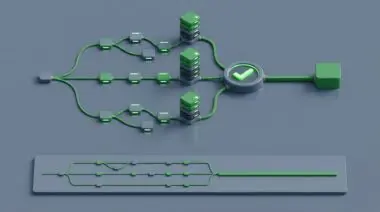
The most operationally valuable pattern is the hybrid routing architecture. A Switch node immediately downstream of the trigger evaluates the payload along two dimensions: data sensitivity and task complexity.
Payloads flagged as sensitive or classified as simple route to the local Ollama branch. Complex multi-step analysis routes to the cloud tier, where Claude or GPT handles the reasoning load.
This is not a migration strategy; it is a standing architecture. High-volume basic tasks avoid per-token charges, sensitive data stays inside the perimeter, and frontier compute is reserved for the work that genuinely needs it.
Economic and Sovereignty Pressures Rewrite the Automation Playbook
The vendor-reported estimate puts typical monthly AI API cost reduction at 60 to 80 percent for organizations routing 10,000 or more basic operations per day to local infrastructure. That range has not been independently audited at production scale, but it reflects the structural economics of moving token generation from metered cloud APIs to fixed-cost local hardware.
The deeper shift is in cost architecture. Once classification and extraction workloads leave per-token pricing, the marginal cost of high-volume automations collapses toward infrastructure depreciation rather than usage metering.
Data sovereignty carries equal weight. Compliance frameworks including HIPAA, SOC 2, and GDPR impose hard boundaries on where regulated data can transit. Local execution removes the third-party model provider from the sensitive path entirely.
The framework is unusually candid about where local models fall short. It treats cloud frontier models as necessary complements for reasoning-heavy loops, not as a universal substitute.
That combined posture changes how automation teams evaluate infrastructure. The relevant question is no longer whether a workflow can be self-hosted, but which tier each payload belongs in.
Infrastructure Control Becomes the Default Posture
Self-hosted AI is no longer an experimental corner of automation. It is the default baseline for teams that handle regulated data or high-volume structured automations.
For teams building n8n and Ollama automation pipelines that need to scale without losing infrastructure control, programmatic SEO AI automation is how Andres SEO Expert approaches production-grade orchestration — contact Andres SEO Expert.
Frequently Asked Questions
How do n8n and Ollama work together for local AI automation?
n8n serves as the control plane and Ollama as the local inference layer. n8n triggers workflows via webhook, schedule, or event; structures inbound data and system prompts; calls the Ollama API; evaluates the generated tokens; and routes results to internal systems. This keeps all request processing inside the server perimeter.
What are the hardware requirements for running local open-weight models in n8n workflows?
The sizing matrix maps 7B to 8B models to 8 to 16GB of RAM for classification, routing, and summarization; 14B models to 16 to 32GB of RAM for advanced extraction; and 70B-plus models to 64GB or more RAM or a dedicated GPU for multi-step agentic reasoning. Oversized models on undersized machines cause memory swapping, latency spikes, and deployment failure.
How can I migrate existing OpenAI-based n8n workflows to Ollama?
Ollama exposes an OpenAI-compatible endpoint at the /v1 suffix. You can point the standard OpenAI Chat Model node to the local Ollama base URL and use the exact pulled model tag. The native Ollama Chat Model node is the recommended path for new builds because it maps directly to the Ollama API structure and supports AI Agent and Basic LLM Chain configurations without translation layers.
What is hybrid routing in an n8n and Ollama architecture?
Hybrid routing adds a Switch node downstream of the trigger that evaluates each payload by data sensitivity and task complexity. Sensitive or simple tasks route to the local Ollama branch, while complex multi-step analysis routes to cloud frontier models. This standing architecture minimizes per-token costs and keeps sensitive data inside the perimeter while reserving frontier compute for work that actually needs it.
How much can self-hosted AI reduce monthly AI API costs?
Vendor-reported estimates put typical monthly AI API cost reduction at 60 to 80 percent for organizations routing 10,000 or more basic operations per day to local infrastructure. The range has not been independently audited, but classification and extraction workloads leave per-token pricing, so marginal costs shift from usage metering to infrastructure depreciation.
Why does local execution matter for data sovereignty and compliance?
Compliance frameworks such as HIPAA, SOC 2, and GDPR impose boundaries on where regulated data can transit. Running models locally removes the third-party model provider from the sensitive data path entirely. This makes self-hosted AI the default baseline for teams handling regulated data or high-volume structured automations.
When should local models be preferred over cloud frontier models?
Local models win on bounded, repeatable work such as categorical classification, unstructured data extraction, summarization, and processing highly sensitive material. Cloud frontier models still hold an edge in complex logic, advanced tool calling, and strict adherence to nested JSON schemas. The relevant question is not whether a workflow can be self-hosted, but which tier each payload belongs in.