



Key Takeaways
- BotBase for Operators adds a submission history tab with clear statuses and rejection reasons, ending the one-way black box.
- The new intake form collects behavior, content use, and operator model, enabling more accurate bot classification.
- Automated review processes the sevenfold surge in submissions, validating IP lists, reverse DNS, and Web Bot Auth signatures.
Table of Contents
Bot Operators Get a Real-Time Scoreboard for Cloudflare’s Bot Directory
Cloudflare has now launched BotBase for Operators, a dedicated console that gives bot creators a permanent, checkable record of every submission instead of a one-way black box.
The new console sits under Protect & Connect → Application Security → BotBase in the Cloudflare dashboard, splitting the experience into browsing, submission, and submission history.
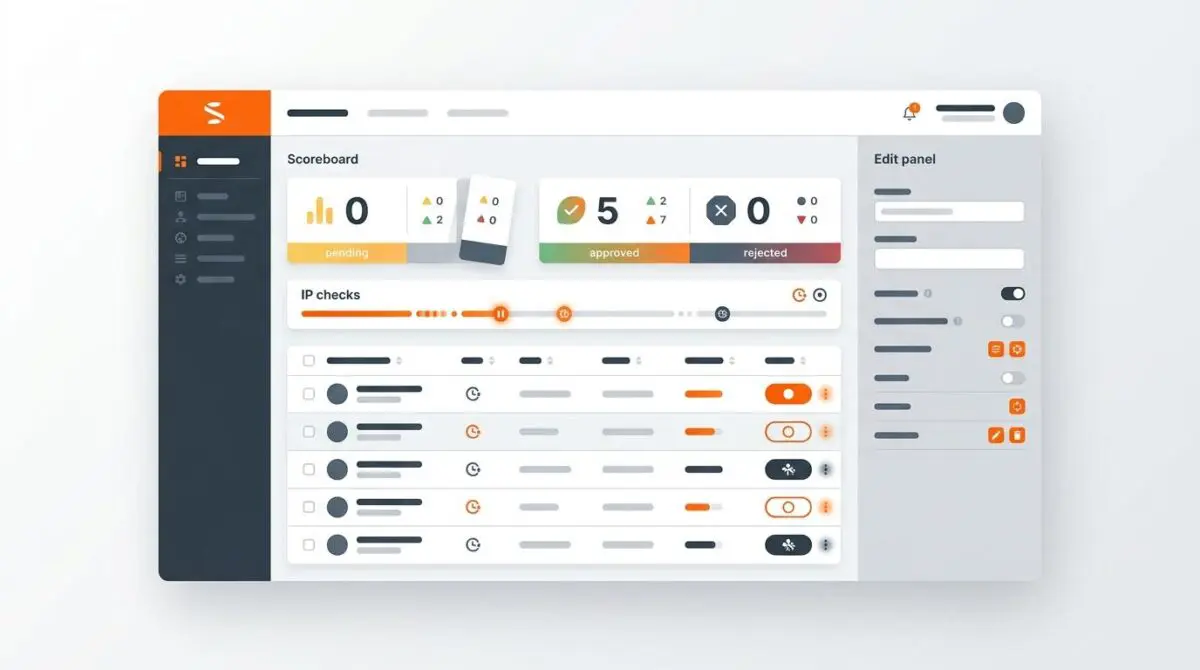
For the first time, operators can see whether a bot is waiting for review, accepted, or rejected, with clear reasons for any decision and an actionable path to fix it.
Inside the Operator Console: Status, Edits, and Behavioral Signals
Before this update, submitting a bot to BotBase meant filling out a form under Manage Account → Configurations and then waiting without any visibility into what happened next.
In Cloudflare’s blog post, the engineering team points out that operators often had to email support simply to learn whether a submission had been reviewed.
The new Submission history tab changes that by showing every bot submitted from an account with one of three explicit statuses: waiting for review, accepted, or rejected.
Rejected entries display the specific reason and actionable steps, while accepted entries reveal any classification adjustments made during review.
Operators can now edit an existing submission or cancel one that is still waiting for review, replacing the old workflow of resubmitting a brand-new form for every small change.
Accurate entry data feeds into Verified status, which influences whether websites on the network allow a bot based on its behavior.
The new intake form also replaces the single-label squeeze with a three-part declaration: what the bot does, how it uses content, and who actually operates it.
- Behavior: what the bot does, from search indexing and SEO support to model training and agentic action.
- Content use: how it uses what it reads, aligned to the Content Signals model already used by site owners.
- Operator model: direct operation or intermediary, depending on whether the bot owner or a third party decided to send the request.
Content use declarations are checked against rules like a robots.txt preference that permits search indexing and reference use but disallows AI training.
The intermediary distinction matters for general-purpose assistants that fetch a page because another company’s app invoked their API.
Automated Review Meets the Sevenfold Surge in Bot Submissions
New bot submissions have grown roughly sevenfold since 2023, a pace that made fully manual review unsustainable.
The new process runs every submission through automated checks: duplicate detection, user-agent specificity, and validation of the claimed verification method.
The system fetches IP lists, confirms reverse DNS, or validates Web Bot Auth signatures automatically, and routes only edge cases to the team with the specific issue already flagged.
Operators can expect most submissions to move faster than before, though no independent review-time benchmarks have been published.
The shift from manual judgment to automated verification mirrors a broader market reality: as AI agents become production infrastructure, the advantage lies in execution and governance, not just model access.
Some general-purpose assistants now book hotels and track flight prices inside chat interfaces, which makes the distinction between direct crawlers and intermediaries more than a taxonomy detail.
Without transparent, standardized bot identity, website owners cannot make precise allow or block decisions, and legitimate AI agents risk being caught in overly broad crawler rules.
Bot Transparency Is Now an AI Infrastructure Requirement
The operator console turns a one-way submission into a governance loop, giving bot operators the visibility and edit control they need to stay accurately classified.
That shift matters now because the agentic web is already arriving, and trust surfaces are becoming as important as model outputs.
For teams building AI crawler or agent pipelines that need to scale, programmatic SEO AI automation is how Andres SEO Expert approaches it — contact us.
Frequently Asked Questions
What is Cloudflare BotBase for Operators?
BotBase for Operators is a dedicated console that gives bot creators a permanent, checkable record of every submission, allowing them to see whether a bot is waiting for review, accepted, or rejected, with clear reasons and actionable steps.
How do bot operators access the BotBase console?
Operators can access it under Protect & Connect → Application Security → BotBase in the Cloudflare dashboard, where they get browsing, submission, and submission history tabs.
What statuses can a bot submission have in BotBase?
Submissions have one of three statuses: waiting for review, accepted, or rejected. Rejected entries show the specific reason and actionable steps, while accepted entries reveal any classification adjustments made during review.
What are the three parts of the new BotBase intake form?
The new form asks for the bot’s behavior (what it does), content use (how it uses what it reads), and operator model (direct operation or intermediary).
Why did Cloudflare automate the bot review process?
New bot submissions have grown roughly sevenfold since 2023, making fully manual review unsustainable. Automated checks now handle duplicate detection, user-agent specificity, and validation of claimed verification methods.
Why is bot transparency important for AI infrastructure?
As AI agents become production infrastructure, transparent and standardized bot identity is critical for website owners to make precise allow or block decisions. Without it, legitimate AI agents risk being caught in overly broad crawler rules.