


Executive Summary
- Programmatic distribution via RESTful API endpoints and OAuth 2.0 authentication protocols.
- Stateless execution of content pipelines using serverless triggers and cron-based orchestration.
- Optimization of payload delivery to manage platform-specific rate limits and data synchronization.
What is Social Media Scheduling?
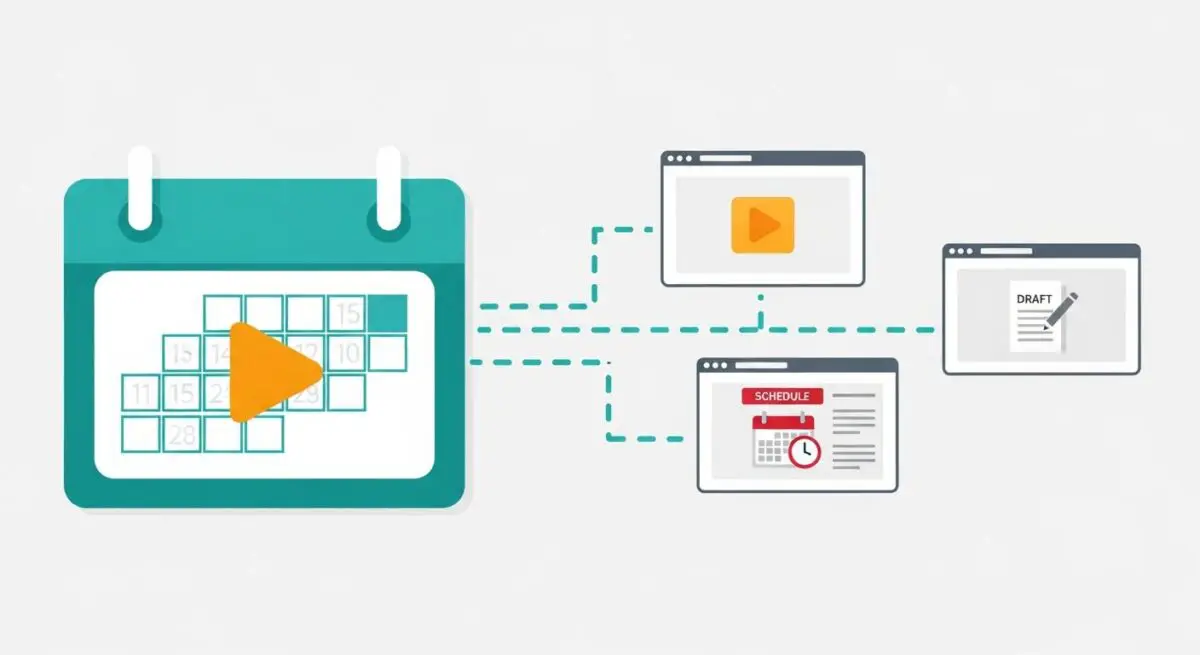
Social media scheduling is the programmatic orchestration of content distribution across social networking platforms via Application Programming Interfaces (APIs). In the context of AI automations, it represents a shift from manual interface interaction to stateless, event-driven workflows. By utilizing endpoints such as the Meta Graph API, LinkedIn API, or X (formerly Twitter) API v2, developers can automate the transmission of JSON payloads containing media assets, metadata, and text strings to specific destination nodes at predetermined timestamps.
This process involves the use of scheduling engines—often built on serverless architectures or containerized cron jobs—that manage the lifecycle of a post from creation in a CMS to final publication. These systems handle authentication via OAuth tokens, manage media upload sessions, and process asynchronous callbacks or webhooks to confirm successful delivery or log execution errors.
The Real-World Analogy
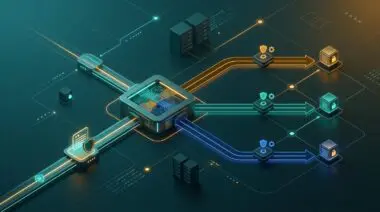
Think of social media scheduling as an automated logistics hub for a global shipping company. Instead of a person manually loading a single truck and driving it to a destination, the hub uses a centralized computer system to pre-load thousands of packages into containers. Each container is programmed with a precise departure time and a specific route. The system ensures that the trucks leave the warehouse at the exact moment traffic is lowest and the destination is most ready to receive them, all without the warehouse manager needing to be present for every individual departure.
Why is Social Media Scheduling Critical for Autonomous Workflows and AI Content Ops?
In high-scale AI content operations, manual posting is a bottleneck that prevents the realization of programmatic SEO and content generation. Social media scheduling allows for the decoupling of content production from content distribution. This decoupling is essential for stateless automation, where an AI agent can generate hundreds of localized content variations and queue them for delivery without maintaining a persistent server connection.
Furthermore, scheduling engines provide a layer of abstraction that manages API rate limits and payload optimization. By batching requests or implementing intelligent queuing, organizations can maintain a consistent digital presence across multiple time zones and platforms simultaneously. This ensures that the high-velocity output of AI-driven pipelines is distributed efficiently, maximizing the reach of programmatic assets while minimizing infrastructure overhead.
Best Practices & Implementation
- Implement Exponential Backoff: When an API request fails due to rate limiting or transient server errors, use an exponential backoff algorithm to retry the request at increasing intervals to ensure delivery without triggering security blocks.
- Centralized Metadata Management: Store platform-specific requirements (e.g., aspect ratios, character limits) in a centralized schema to ensure that the scheduling engine validates payloads before transmission.
- Use Webhooks for Status Updates: Instead of polling the API to check if a post is live, configure webhooks to receive real-time notifications of publication status, which can then trigger downstream automation tasks.
- Time Zone Normalization: Always store and process scheduling timestamps in UTC to avoid synchronization issues across distributed server environments and global audiences.
Common Mistakes to Avoid
One frequent error is the failure to account for platform-specific API rate limits, leading to temporary IP bans or token revocation. Another common mistake is hardcoding post parameters within the automation script rather than using a dynamic configuration file, which makes the system brittle and difficult to update as platform requirements evolve. Finally, many organizations neglect to implement robust error-logging for failed payloads, resulting in silent failures where content is generated but never reaches the target audience.
Conclusion
Social media scheduling is a foundational component of modern AI content operations, enabling the scalable, programmatic distribution of assets through robust API orchestration and stateless automation architectures.