Executive Summary
- Standardization of lead states to enable predictable, API-driven workflow transitions.
- Integration of event-based triggers and webhooks to automate CRM data hygiene and lead routing.
- Optimization of conversion velocity through stateless automation logic and AI-driven scoring.
What is Sales Pipeline?
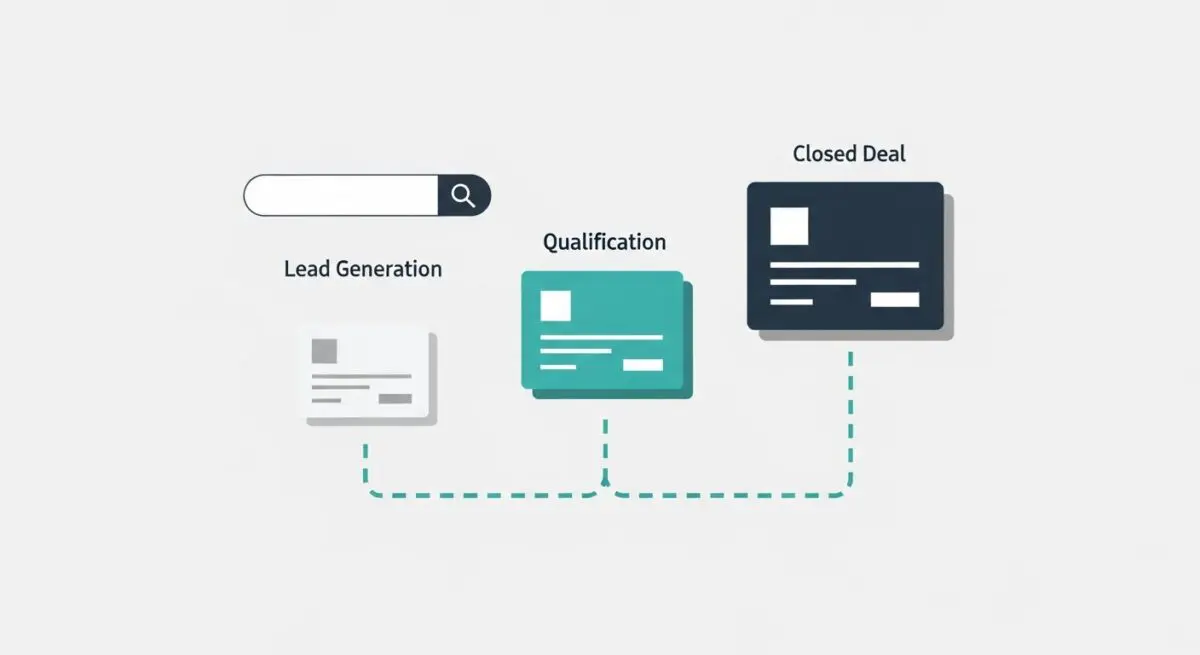
A Sales Pipeline is a systematic, visual, and data-driven representation of the distinct stages a prospect traverses from initial lead generation to final conversion. In high-level automation architecture, the pipeline serves as a state machine, where each stage represents a specific data status within a CRM or relational database. This structure allows for the granular tracking of lead velocity, conversion rates at specific bottlenecks, and the overall health of the revenue engine.
From an engineering perspective, a sales pipeline is more than a visual board; it is a sequence of data-driven milestones. Each transition between stages is typically governed by specific criteria or “entry requirements” that can be validated through automated scripts or AI-driven lead scoring models. This ensures that only high-quality data persists through the system, maintaining the integrity of the downstream sales operations and ensuring that API payloads are optimized for the current state of the prospect.
The Real-World Analogy
Imagine a high-speed automated manufacturing assembly line. Raw materials (leads) enter the facility and move through various specialized stations. At the first station, they are inspected for quality (qualification); at the second, they are shaped into a specific form (discovery); at the third, they are polished and packaged (proposal). If a component fails an inspection at any station, it is automatically diverted off the main line. The sales pipeline is the blueprint for this entire conveyor system, ensuring every “unit” is processed identically and efficiently until it reaches the shipping dock as a finished product.
Why is Sales Pipeline Critical for Autonomous Workflows and AI Content Ops?
The Sales Pipeline is the foundational framework for stateless automation and event-driven architectures. By defining clear stages, developers can deploy webhooks that trigger specific AI agents or serverless functions the moment a lead changes state. For example, moving a lead to the “Proposal” stage can automatically trigger an API call to a generative AI model to draft a customized contract based on previous interaction logs stored in the CRM.
Furthermore, in programmatic SEO and AI content operations, the pipeline data informs the content strategy. If the pipeline shows a high drop-off rate at the “Technical Evaluation” stage, AI-driven content systems can automatically generate and distribute technical whitepapers or documentation to address those specific friction points, effectively using the pipeline as a feedback loop for autonomous content deployment and lead nurturing.
Best Practices & Implementation
- Standardize Schema: Ensure all pipeline stages have a 1:1 mapping with CRM API values to prevent data fragmentation during automated synchronizations across the tech stack.
- Implement Webhook Triggers: Use real-time listeners for stage transitions to initiate immediate follow-up sequences, data enrichment tasks, or internal notifications.
- Enforce Data Validation: Use automated checks to ensure mandatory fields are populated and validated before a lead can transition to a subsequent stage in the pipeline.
- Monitor Pipeline Velocity: Track the time-to-transition between stages to identify latency in the automation stack or human-led processes that require optimization.
- Automate Lead Scoring: Integrate machine learning models to dynamically adjust lead priority based on real-time engagement data and historical conversion patterns within the pipeline.
Common Mistakes to Avoid
One frequent error is stage over-complication, where too many granular steps lead to data entry fatigue and broken automation logic. Another critical mistake is failing to automate data hygiene; without automated cleanup, the pipeline becomes cluttered with stale leads that skew conversion metrics. Finally, many organizations neglect to synchronize their pipeline states across the entire tech stack, leading to silos where marketing and sales automations operate on conflicting data points.
Conclusion
A well-engineered Sales Pipeline is the backbone of scalable AI automations, providing the necessary structure for event-driven workflows and data-centric revenue growth.