



Executive Summary
- Standardizes heterogeneous data from disparate API sources into a uniform schema for consistent processing.
- Reduces computational overhead and token consumption in LLM-driven automation by eliminating redundant data.
- Ensures data integrity and prevents logic failures in stateless autonomous workflows and programmatic SEO.
What is Data Normalization?
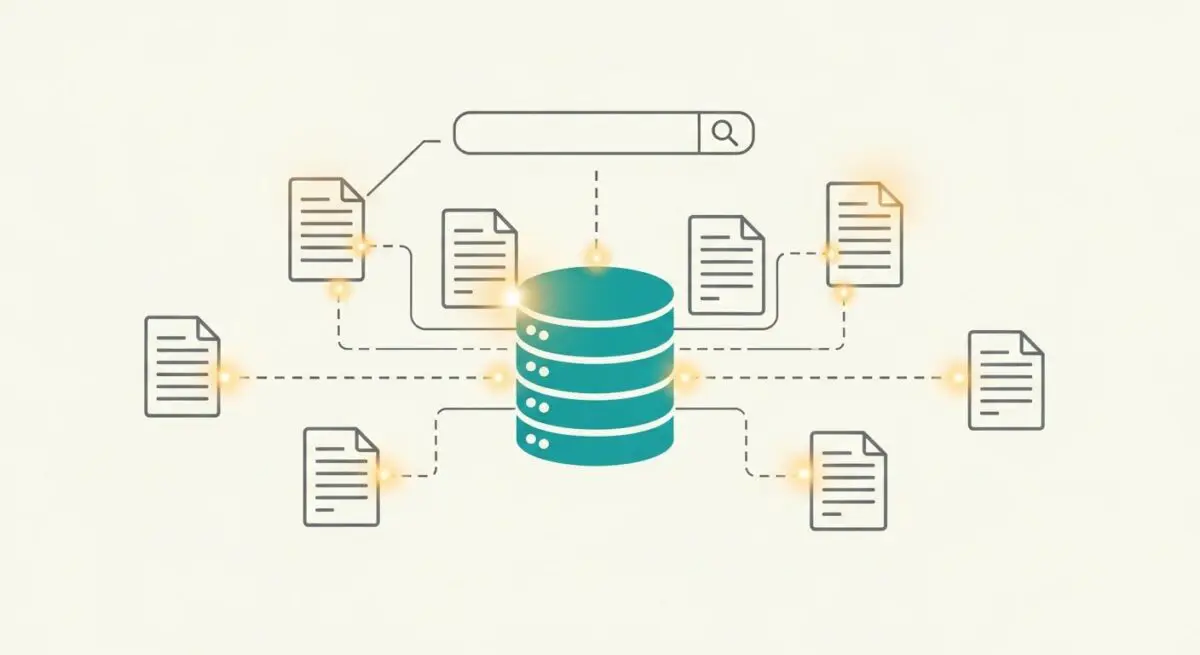
Data normalization is the systematic process of structuring a database or data stream to reduce redundancy and improve data integrity. In the context of AI automations and modern data pipelines, it involves transforming raw, unstructured, or semi-structured data from various sources—such as webhooks, CRM exports, and third-party APIs—into a standardized format. This process ensures that every data point adheres to a predefined schema, consistent data types, and uniform scaling, which is a prerequisite for high-performance algorithmic processing.
At its core, normalization involves decomposing complex data structures into smaller, logical components. This minimizes the risk of data anomalies during update, insertion, or deletion operations. For engineers building AI-search and automation systems, normalization acts as the translation layer that converts chaotic external inputs into a clean, predictable internal state, allowing for seamless integration between different software modules and Large Language Models (LLMs).
The Real-World Analogy
Consider a global logistics hub that receives shipments from thousands of international suppliers. Some suppliers use metric measurements, others use imperial; some label their boxes in English, others in German; and some use barcodes while others use handwritten notes. Without a standardization process, the hub’s automated sorting robots would fail to recognize the packages. Data normalization is the automated intake facility that intercepts every package, converts all weights to kilograms, translates all labels into a universal code, and repacks the contents into identical, stackable containers. This allows the entire facility to operate at peak efficiency using a single, unified set of instructions.
Why is Data Normalization Critical for Autonomous Workflows and AI Content Ops?
In autonomous workflows, data normalization is the primary safeguard against stateless execution failures. When an automation script fetches data from multiple APIs—such as Google Search Console for traffic data and Ahrefs for backlink profiles—the data formats are rarely identical. Normalization ensures that these disparate payloads are merged into a single, coherent dataset. This is particularly vital for programmatic SEO, where thousands of pages are generated based on data inputs; any inconsistency in the source data can lead to broken templates or incorrect information being published at scale.
Furthermore, normalization significantly impacts the efficiency of AI Content Ops. LLMs are sensitive to the structure of the input prompt. By normalizing data before it is injected into a prompt, developers can reduce token usage and improve the accuracy of the AI’s output. Clean, normalized data prevents the “garbage in, garbage out” phenomenon, ensuring that automated decision-making processes are based on high-signal, low-noise information.
Best Practices & Implementation
- Enforce Schema Validation: Utilize tools like JSON Schema or Pydantic to validate data types and structures at the entry point of your automation pipeline.
- Standardize Temporal Data: Convert all timestamps to ISO 8601 format and UTC to prevent logic errors in time-sensitive automated triggers.
- Implement String Sanitization: Apply consistent casing (e.g., lowercase) and strip non-standard whitespace or HTML tags to ensure text data is ready for LLM processing.
- Use Unique Identifiers: Map categorical data to standardized IDs or slugs to maintain relational integrity across different platforms and databases.
- Deduplicate at Source: Integrate hashing algorithms to identify and remove duplicate records before they enter the processing stage, saving storage and compute costs.
Common Mistakes to Avoid
One frequent error is over-normalization, where data is fragmented into so many tables or objects that the latency required to join them back together degrades the performance of real-time automations. Another critical mistake is ignoring character encoding; failing to normalize strings to UTF-8 can result in corrupted data when passing payloads between different web services. Finally, many organizations fail to account for unit consistency, leading to catastrophic errors when an automation script mixes different currencies or measurement systems without a conversion layer.
Conclusion
Data normalization is a fundamental engineering requirement for scalable AI automations, ensuring that disparate data streams are converted into a reliable, high-integrity fuel for autonomous systems.