



Executive Summary
- Agentic Orchestration Layers: The shift from traditional UIs to Small Language Models (SLMs) has enabled intent-based execution, bypassing legacy interfaces to capture Gen Alpha and Z market share.
- Unit Economic Transformation: AI-integrated stacks have reduced the Cost-to-Serve (CTS) from ~$200 to $9.40 per account annually, while driving LTV/CAC ratios to an unprecedented 5.8:1.
- Tokenized Liquidity Integration: The convergence of ISO 20022 messaging and Layer-2 settlement rails allows for real-time movement between idle cash and tokenized high-yield assets like T-bills.
The Great Decoupling of Consumer Finance
The financial services landscape is undergoing a fundamental structural realignment. We are moving away from the era of the ‘Neo-bank’—which was largely a cosmetic layer over legacy rails—toward a fully integrated, autonomous consumer stack. In the current market landscape of 2026, the primary differentiator for financial institutions is no longer the breadth of their product suite, but the intelligence of their orchestration layer. The goal is no longer just to hold deposits, but to act as a programmatic engine for value optimization.
This evolution is driven by a pivot in capital allocation. Institutional investors have moved beyond ‘Growth-at-all-Costs’ metrics, focusing instead on infrastructural resilience and the ability to tokenize real-world assets (RWA). As we observe the market in 2026, the winners are those who have successfully transitioned from being simple transaction processors to becoming ‘Custodians of Identity’ and ‘Orchestrators of Intent.’
The Core Architecture: Event-Driven Microservices
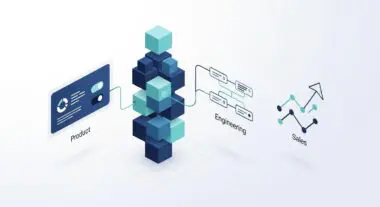
To understand the strategic shift, one must first grasp the transition from monolithic core banking systems to event-driven microservices. In traditional banking, data is processed in batches, creating inherent latency and reconciliation friction. An event-driven architecture, powered by providers like Thought Machine or Mambu, treats every financial action as a discrete, real-time signal. This allows the consumer stack to react instantaneously to market changes, such as shifting interest rates or liquidity requirements, without manual intervention.
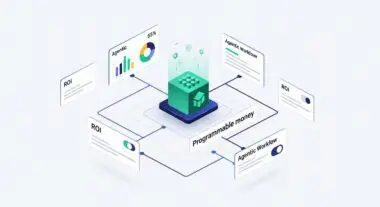
This architectural shift is the prerequisite for ‘Agentic FinTech.’ By utilizing Small Language Models (SLMs) that reside on the orchestration layer, institutions can now offer voice or intent-based execution. A consumer no longer needs to navigate a complex UI to move funds; they simply express an intent, and the stack executes the most capital-efficient path across various liquidity pools and yield-bearing instruments.
The Efficiency Index: Redefining Unit Economics
The most compelling argument for the modern consumer stack lies in its impact on the bottom line. Legacy banking institutions continue to struggle with a Cost-to-Serve (CTS) that ranges between $140 and $210 per account annually. This overhead is a byproduct of manual reconciliation, fragmented data silos, and heavy physical infrastructure. In contrast, the AI-integrated stack has collapsed these costs to approximately $9.40 per account per year.
- Autonomous Support: AI agents handle 95% of routine inquiries and credit decisions, drastically reducing OpEx.
- Hyper-Personalization: Real-time telemetry allows for cross-selling products that are contextually relevant, driving the LTV/CAC ratio to 5.8:1.
- Straight-Through Processing (STP): By automating the lifecycle of a transaction from initiation to settlement, institutions are seeing a 15-basis-point improvement in non-performing loan (NPL) ratios.
This efficiency is further bolstered by the adoption of ISO 20022 native messaging. This global standard for financial messaging reduces reconciliation failures by nearly half, ensuring that data moves as fast as the value it represents.
Liquidity Orchestration and Settlement Rails
The modern stack bypasses the traditional two-day SWIFT lag by utilizing unified ledgers and Layer-2/3 rollups. Through initiatives like the BIS Project Agorá, tokenized deposits and central bank money can now be settled instantly. For the consumer, this means their ‘stack’ is no longer a static bucket of cash but a dynamic portfolio. Idle balances are programmatically swept into tokenized T-bills or high-yield liquidity pools, maximizing yield without sacrificing liquidity.
The modern financial stack functions less like a static vault and more like a high-performance hydraulic system. In this model, value is the fluid, and the orchestration layer acts as a series of intelligent valves and sensors that automatically redirect pressure—capital—to where it generates the highest return, all while maintaining the structural integrity of the entire network.
This ‘Yield-Optimization’ engine is the new battleground for consumer loyalty. As interest rates remain high, the preference has shifted from platforms that simply facilitate spending to those that actively manage wealth through automated, high-frequency rebalancing across on-chain and off-chain environments.
Governance as a Competitive Advantage
While technical debt remains a hurdle for 60% of Tier-2 banks, the regulatory environment is actually accelerating the adoption of modern stacks. Frameworks like FIDA (Financial Data Access) in the EU have mandated that institutions provide standardized API access to all customer data, including insurance and pensions. This effectively destroys the data silo moat that traditional banks relied upon for decades.
Furthermore, the requirement for ‘Explainability Logs’ under the AI Act means that institutions must be able to audit every automated decision. While this adds a layer of compliance cost, it also forces a level of data hygiene that legacy systems cannot match. Entities that implement automated regulatory reporting (RegTech) are finding they can achieve ‘fast-track’ licensing in high-growth jurisdictions like Singapore and the UAE, turning compliance from a cost center into a market-entry weapon.
The FinTech Lens: Infrastructure & Governance
The transition we are witnessing is the final decoupling of financial utility from the traditional banking license. The ‘stack’ has become modular; identity, liquidity, and execution are now separate layers that can be optimized independently. The hidden signal in the current market is the rise of ‘Agentic Trust.’ While there is a temporary deficit in consumer confidence regarding full autonomy for large transactions, the institutions that solve for ‘Explainable AI’ will capture the next decade of wealth management. The friction between off-chain and on-chain liquidity is a temporary arbitrage opportunity that will be closed by the maturation of regulated stablecoin issuers under MiCA.
For the strategic decision-maker, the mandate is clear: capital must be allocated toward the orchestration layer. The ROI is no longer found in the transaction fee, which is racing toward zero, but in the spread captured through automated liquidity management and the massive reduction in CTS. Those who fail to migrate from legacy COBOL systems to event-driven architectures will find themselves holding the most expensive, and least intelligent, deposits in the market. The future belongs to the ‘Custodian of Identity’ who can execute at the speed of intent.
The Path Toward Autonomous Wealth
The ultimate consumer fintech stack is not a single app, but a seamless infrastructure that prioritizes efficiency, yield, and autonomy. As the barriers between traditional finance and tokenized assets continue to dissolve, the ability to orchestrate value in real-time will define the next generation of market leaders.
In a landscape defined by rapid technical shifts, strategy is the only sustainable defense. Whether you are architecting for the generative search era or optimizing for operational ROI, the right partnership defines your success. Connect with Andres at Andres SEO Expert to build a future-proof foundation for your enterprise.