



Executive Summary
- Agentic Orchestration: The market is abandoning linear models for the Supply Mesh, utilizing autonomous agents to independently reroute freight and manage labor.
- Gainshare Economics: Automated Negotiation Platforms are shifting enterprise software from per-seat SaaS licensing to performance-based gainshare models.
- Algorithmic Nearshoring: Advanced SCM suites are enabling a massive re-industrialization strategy by calculating the exact landed costs of localized robotic manufacturing.
The Death of the Linear Chain and the Rise of the Supply Mesh
The global supply chain was once a predictable, linear machine. You pulled a lever in manufacturing, and a product arrived on a retail shelf weeks later. That era of linear predictability is completely dead.
Today, the most successful enterprises are abandoning legacy models in favor of dynamic, self-healing networks. The conversation in boardrooms has shifted entirely away from predictive analytics. We have entered the era of agentic orchestration.
Legacy software platforms are rapidly being hollowed out by autonomous supply chain agents. These are not simple alert systems that ping a dashboard when a ship is delayed. These are artificial intelligence entities capable of independent, high-stakes decision-making.
When a major global shipping lane is blocked, these agents do not wait for human intervention. They independently reroute freight, renegotiate contracts with secondary carriers, and update warehouse labor schedules in real time. This is the foundation of the best SCM suites for planning, procurement, and logistics in the modern market.
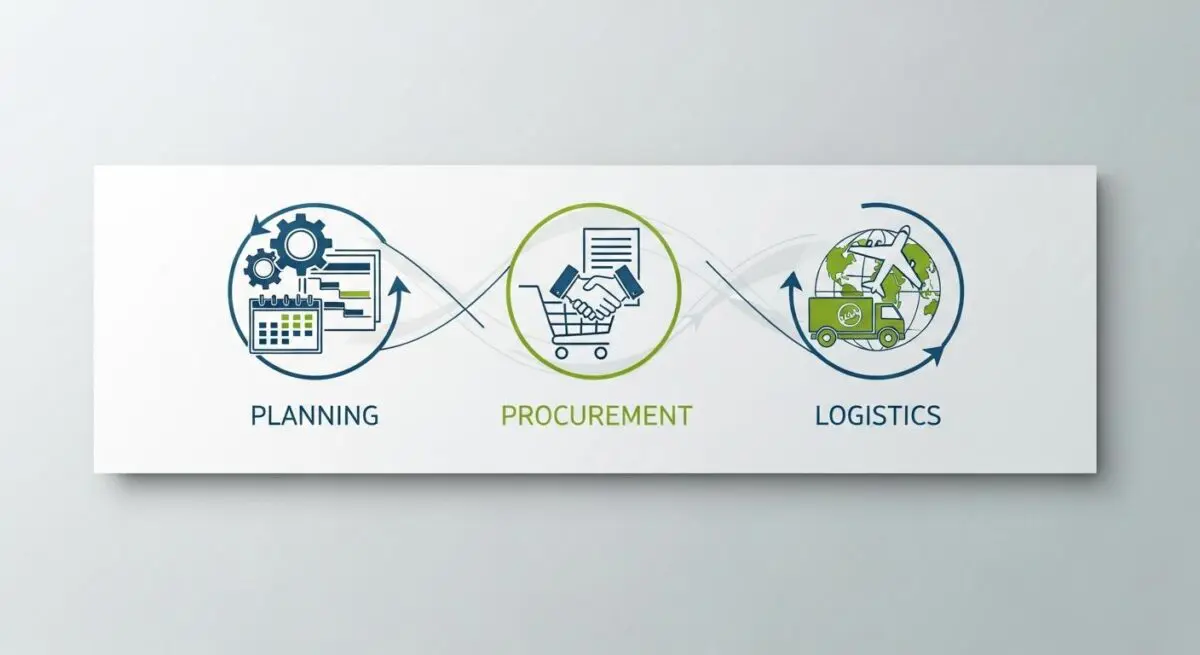
The killer strategy defining this era is the transition from the traditional supply chain to the multi-dimensional supply mesh. Enterprises are fusing procurement, planning, and logistics into a single, real-time digital twin of the global economy. This allows for unprecedented visibility and instantaneous course correction.
Enterprise adoption is currently peaking around multi-echelon inventory optimization, commonly referred to as MEIO 2.0. This technology utilizes quantum-classical hybrid algorithms to manage inventory across thousands of global nodes simultaneously. By doing so, it effectively eliminates the bullwhip effect that plagued the early part of the decade.
Companies like Tesla and Shein have pioneered the demand-to-design loop within these new suites. In this model, real-time social sentiment and consumption data trigger immediate shifts in raw material procurement. This aggressive synchronization shrinks the product lifecycle from months to mere days.
The Cognitive Logistics Gold Rush
Venture capital has recognized this massive paradigm shift and is pivoting sharply. Smart money is flowing aggressively toward hard-tech orchestration and circular economy infrastructure. The battle lines for enterprise software dominance are being redrawn.
Legacy giants like SAP and Oracle remain deeply entrenched as the ultimate system of record for global enterprises. However, the highly lucrative system of intelligence is being captured by a new breed of agile disruptors. Companies like Altana are utilizing value chain artificial intelligence to map global trade networks with terrifying accuracy.
Meanwhile, platforms like Project44 have evolved far beyond simple visibility tools. They are now functioning as transactional clearinghouses for global freight, managing the digital handshakes of international commerce. Flexport is taking an even more aggressive stance, positioning itself as the foundational cloud infrastructure of physical trade.
AI Negotiators and the Death of Traditional SaaS
The procurement side of the supply mesh is experiencing its own radical transformation. Manual requests for proposals are nearly extinct for mid-market commodities. They have been replaced by cognitive sourcing tools that scan global news, weather patterns, and financial filings to de-risk suppliers in real time.
If a secondary supplier experiences a credit rating dip, the system does not just send a warning. It preemptively onboards a pre-vetted alternative from a global supplier pool. This level of automation has sparked massive venture capital interest in automated negotiation platforms.
Startups like Pactum and Fairmarkit are receiving massive cash infusions to scale their digital negotiation bots. These bots actively negotiate tail-spend contracts and spot-market freight rates. In many instances, they are negotiating directly against other artificial intelligence bots to secure the best possible margins.
This technological leap has triggered a fascinating shift in enterprise business models. Software vendors are moving away from the standard per-seat licensing fees of the past decade. They are rapidly adopting performance-based gainshare models.
In this new paradigm, the software vendor takes a percentage cut of the actualized savings generated by their digital negotiators. If the platform does not save the enterprise money, the vendor does not get paid. This perfect alignment of incentives is driving rapid, frictionless enterprise adoption.
Solving the Volatility Paradox
Lead-time uncertainty remains the ultimate volatility paradox for global enterprises. Geopolitical friction and climate-driven logistics collapses are no longer black swan events. They are simply the baseline cost of doing business in a complex world.
To combat this, best-in-class suites are fundamentally altering how safety stock is calculated and maintained. Platforms like the cognitive suite from Blue Yonder are delivering massive reductions in inventory requirements. They achieve this by processing real-time global variables that human planners could never synthesize.
Think of a legacy supply chain like a line of dominoes. If one piece falls out of rhythm, the entire sequence collapses, requiring human hands to meticulously reset the board. A modern supply mesh, powered by agentic orchestration, is more like a murmuration of starlings. When a predator enters the flock, the birds do not wait for a central command; they instantly and autonomously adjust their flight paths in perfect unison, absorbing the disruption without losing momentum.
Consider a recent deployment by a global consumer electronics giant. They integrated the Maestro platform from Kinaxis to execute concurrent planning across their entire network. This allowed them to synchronize component suppliers in Vietnam directly with real-time retail sales data in Paris.
When a localized labor strike paralyzed a critical component port, the system did not panic. It autonomously executed a shift-to-air strategy for high-margin products to ensure retail shelves remained stocked. Simultaneously, the platform slowed down raw material intake for low-margin products to prevent warehouse bloat.
This single autonomous decision saved an estimated two hundred and twenty million dollars in potential stockout losses and expedited shipping fees. It is a perfect illustration of why agentic orchestration is no longer optional. It is a mandatory survival mechanism for the modern enterprise.
Scope 3 and the Green Imperative
Beyond operational efficiency, the best SCM suites for planning, procurement, and logistics are tackling regulatory compliance. Institutional investors like BlackRock and Temasek are heavily backing scope three compliance technology. They are betting massive sums that carbon tracking will become as essential as financial accounting.
Enterprises can no longer afford to treat sustainability as a marketing exercise. It is now a core operational metric tied directly to capital access and vendor viability. The supply mesh must be able to calculate the carbon footprint of every component, across every tier of the manufacturing process, in real time.
The Expert Outlook: Architecting the Next 24 Months
As we look toward the immediate future, the definition of enterprise logistics is about to undergo another radical transformation. Speaking as Andres SEO Expert, I analyze digital and operational market trends daily, and the trajectory is remarkably clear. The gap between legacy operators and digital-first supply networks is becoming an unbridgeable chasm.
Over the next two years, we will see the mainstream realization of the decentralized autonomous warehouse. Founders are actively preparing for a paradigm where the order follows the shipment, rather than the other way around. Using hyper-local predictive modeling, inventory will be moved to micro-fulfillment centers before a customer ever clicks a buy button.
This predictive shipping model will completely redefine consumer expectations around delivery speeds. To manage this complexity, we are witnessing the rapid rise of the Chief Value Chain Officer. This new C-suite role collapses the traditional silos of operations, technology, and procurement into a single strategic powerhouse.
Furthermore, algorithmic nearshoring will rapidly replace traditional offshoring. Enterprises will use advanced modeling to compare the total landed cost of localized robotic manufacturing against overseas human labor. By late 2027, expect a massive re-industrialization of North America and Eastern Europe.
This shift will be entirely managed by advanced SCM suites capable of handling high-mix, low-volume local production. Finally, the tokenization of freight will unlock unprecedented global working capital. Blockchain-based bills of lading will allow for instantaneous trade finance and instant liquidity for suppliers.
Navigating this complex, self-healing digital economy requires more than just capital; it requires a flawless strategic foundation. As the market accelerates toward agentic orchestration, your digital visibility and operational architecture must be perfectly aligned. If you are a founder or executive looking to dominate this new landscape, I invite you to connect with Andres SEO Expert to build the future-proof strategies your enterprise needs to thrive.