




Key Points
- Semantic Claim Density: Maximize verifiable facts per token to reduce LLM context window load.
- Knowledge Graph Alignment: Utilize specific JSON-LD structures to anchor internal entities to global databases.
- Syntactic Citability: Format content into declarative, citation-ready sentences that AI models prefer to extract.
Table of Contents
The AI Search Context
According to a 2025 BrightEdge study, AI Overviews now appear in 92% of high-intent B2B searches, making citation audit the primary growth lever for digital market share.
Traditional click-through rates are plummeting as zero-click AI summaries dominate search engine results pages. The new competitive battleground is the AI citation box. Reverse-engineering AI citations is the process of deconstructing the specific data points, semantic structures, and authoritative signals that lead Large Language Models to select a competitor’s content.
By 2026, generative engines like SearchGPT and Google AI Overviews have shifted entirely from simple keyword matching to complex verifiability scores. The model cross-references a source’s claims against its internal knowledge base to ensure factual accuracy before citing it. This rigorous methodology allows brands to identify the exact content architecture required to displace incumbents.
Mastering Citation Attribution Reverse-Engineering (CARE) is profound for AI-driven organic visibility. Being the primary cited source is the only sustainable way to maintain brand authority and traffic. Organizations that successfully reverse-engineer citation patterns can optimize their content’s citability index.
This ensures that their unique value propositions are integrated directly into the LLM’s response. It effectively turns the AI into a powerful brand advocate.
Core Architecture & Pillars
Core Architecture & Pillars
Semantic Claim Density Analysis
This involves measuring the ratio of unique, verifiable facts to total word count. LLMs prioritize ‘dense’ information nodes that provide high utility per token, allowing the RAG system to minimize context window usage while maximizing factual output.
Knowledge Graph Node Alignment
Competitors winning citations often align their content with specific entities already recognized in the Global Knowledge Graph. This strategy uses technical identifiers (like DBpedia or Wikidata URIs) to prove to the LLM that the content is a definitive source for a specific topic.
Structural Verifiability & Provenance
LLMs in 2026 utilize ‘provenance headers’ and structured data to verify the origin of a claim. Competitors often use specific JSON-LD structures (ClaimReview, Speakable) that make it easier for RAG pipelines to extract and cite data accurately.
Syntactic Citability Matching
This is the analysis of ‘citation-ready’ sentences—short, declarative statements that fit perfectly into an AI’s summary. Competitors ‘win’ because their content is pre-formatted in the linguistic style the LLM prefers to output.
Semantic Claim Density Analysis
Semantic claim density dictates how efficiently an LLM processes your content. This involves measuring the ratio of unique, verifiable facts to total word count. LLMs prioritize dense information nodes that provide high utility per token.
This efficiency allows the Retrieval-Augmented Generation (RAG) system to minimize context window usage while maximizing factual output. In WordPress ecosystems, this often requires stripping away fluff plugins or themes that inject excessive boilerplate text. Such bloat can severely dilute the semantic signal-to-noise ratio perceived by AI crawlers.
Knowledge Graph Node Alignment
Competitors winning citations consistently align their content with specific entities already recognized in the Global Knowledge Graph. This strategy uses technical identifiers like DBpedia or Wikidata URIs. It proves to the LLM that the content is a definitive source for a highly specific topic.
Utilizing advanced Schema plugins to link internal entities to external knowledge bases via sameAs attributes ensures the AI recognizes the site as a top-tier authority. This creates a deterministic link between your content and established facts.
Structural Verifiability & Provenance
LLMs in 2026 utilize provenance headers and structured data to verify the origin of a claim. Competitors often use specific JSON-LD structures like ClaimReview and Speakable. These structures make it easier for RAG pipelines to extract and cite data accurately.
Conflicts often arise when caching layers or CDNs strip out header metadata. AI scrapers use this metadata to verify content freshness and authorship, leading to citation loss if compromised.
Syntactic Citability Matching
This requires analyzing citation-ready sentences. These are short, declarative statements that fit perfectly into an AI summary. Competitors win because their content is pre-formatted in the linguistic style the LLM prefers to output.
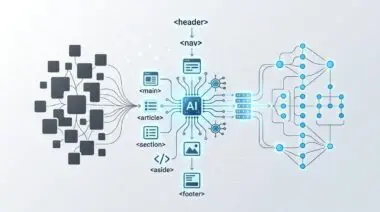
This is implemented by utilizing the Gutenberg block editor to create Summary Blocks at the top of posts. These blocks are specifically tagged with HTML5 semantic elements that AI agents prioritize.
OpenAI’s 2026 ‘Source Attribution Protocol’ update revealed that models prioritize ‘verifiable claims’ over ‘keyword density’ by a factor of 4 to 1 (Source: OpenAI Engineering Blog). You can review the underlying principles of the Source Attribution Protocol to understand how verifiability scores are calculated.
The Execution Roadmap
Implementation Roadmap
Automated Citation Scraping
Use a headless browser (Puppeteer) or a specialized GEO tool to query target keywords in SearchGPT and Google AI Overviews. Extract the URLs of all cited sources and the specific text snippets the AI attributed to them.
Entity Extraction and Gap Analysis
Run the competitor’s cited text through an NLP library like spaCy or Amazon Comprehend to identify the primary entities and relationships. Compare these to your own content to identify ‘Knowledge Gaps’ that prevent your site from being the preferred source.
Injecting High-Density Schema
Modify the functions.php or use a dedicated Schema injector to add ‘About’ and ‘Mentions’ properties to your JSON-LD, specifically targeting the entities identified in the competitor analysis.
Optimizing for Semantic Declaratives
Rewrite key content sections into declarative ‘Fact-Action-Result’ strings. Ensure these are wrapped in <section> tags with clear ID attributes to allow LLMs to link directly to the specific proof point.
Automated Citation Scraping
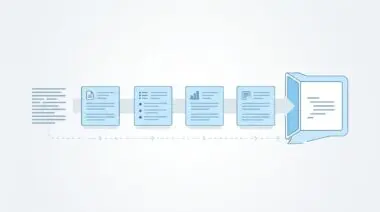
Transitioning from theory to application requires a systematic approach to Generative Engine Optimization. The execution roadmap begins with automated citation scraping.
Use a headless browser like Puppeteer or a specialized GEO tool to query target keywords in SearchGPT and Google AI Overviews. You must extract the URLs of all cited sources and the specific text snippets the AI attributed to them. This creates your baseline dataset for reverse-engineering.
Entity Extraction and Gap Analysis
Next, run the competitor’s cited text through an NLP library like spaCy or Amazon Comprehend. This identifies the primary entities and relationships the LLM deemed valuable.
Compare these extracted entities to your own content. This gap analysis identifies the missing knowledge nodes that prevent your site from being the preferred source. Addressing these gaps is critical for improving your verifiability score.
Injecting High-Density Schema
Modify the functions.php file or use a dedicated Schema injector. You must add About and Mentions properties to your JSON-LD.
Specifically target the entities identified in the competitor analysis. This creates a direct map for the LLM to understand your relevance. It removes ambiguity during the RAG retrieval phase.
Optimizing for Semantic Declaratives
Finally, rewrite key content sections into declarative Fact-Action-Result strings. Ensure these are wrapped in section tags with clear ID attributes.
This structural clarity allows LLMs to link directly to the specific proof point within your architecture. It dramatically increases the likelihood of your content being selected for the final output generation.
Technical Implementation
The technical execution of Citation Attribution Reverse-Engineering (CARE) relies heavily on structured data fidelity. Below is a highly optimized JSON-LD payload designed to feed directly into an LLM’s knowledge graph ingestion pipeline.
This schema explicitly defines the entities discussed and links them to authoritative external sources.
{
  "@context": "https://schema.org",
  "@type": "TechArticle",
  "headline": "Reverse-Engineering AI Citations",
  "about": [
    { "@type": "Thing", "name": "Generative Engine Optimization", "sameAs": "https://en.wikipedia.org/wiki/Generative_engine_optimization" },
    { "@type": "Thing", "name": "Retrieval-Augmented Generation" }
  ],
  "mainEntityOfPage": {
    "@type": "WebPage",
    "@id": "https://example.com/geo-guide"
  },
  "significantLink": "https://wikidata.org/wiki/Q116609437"
}
This payload uses the About and mainEntityOfPage properties to establish definitive topical authority. The sameAs attribute is critical here.
It anchors your content to established Wikipedia and Wikidata nodes. This provides the exact verifiability that modern LLMs demand before issuing a citation.
Validation & Future-Proofing
Validation & Monitoring
- Verify implementation by running your URL through the Perplexity Pages indexer.
- Pass Google’s Rich Results Test for structured data integrity.
- Monitor the AI Overview share in Search Console (2026 update).
- Track Citation Share growth relative to competitors post-deployment.
Deployment is only the first phase of Citation Attribution Reverse-Engineering (CARE). Continuous validation ensures your technical optimizations remain effective as LLM architectures evolve.
Verify your implementation by running your target URL through the Perplexity Pages indexer. This confirms that the AI can parse your semantic declaratives. You must pass Google’s Rich Results Test to guarantee structured data integrity.
A single JSON syntax error can break your entire citation strategy. Monitor the AI Overview share in Google Search Console using the latest 2026 reporting features. Track your Citation Share growth relative to competitors post-deployment.
As models update their source attribution protocols, your monitoring stack will alert you to necessary structural adjustments. Staying ahead of these updates is the key to long-term visibility.
Navigating the intersection of traditional SEO and Generative Engine Optimization requires a precise architecture. To future-proof your enterprise stack for AI Overviews and LLM discovery, connect with Andres at Andres SEO Expert.
Frequently Asked Questions
What is Citation Attribution Reverse-Engineering (CARE)?
CARE is a methodology used to deconstruct the semantic structures, data points, and authoritative signals that lead Large Language Models to select specific content for citations. It allows brands to identify the exact content architecture required to displace competitors in AI-generated summaries.
How does semantic claim density impact AI search visibility?
Semantic claim density measures the ratio of verifiable facts to the total word count. LLMs prioritize ‘dense’ information nodes that provide high utility per token, allowing Retrieval-Augmented Generation (RAG) systems to maximize factual output while minimizing context window usage.
Why is Knowledge Graph node alignment critical for GEO?
Aligning content with the Global Knowledge Graph using technical identifiers like Wikidata or DBpedia URIs proves to the LLM that your site is a definitive source. This creates a deterministic link between your content and established facts, which is essential for achieving a high verifiability score.
What JSON-LD structures help improve AI citation rates?
Technical implementations should prioritize JSON-LD structures like ClaimReview and Speakable, as well as high-density ‘About’ and ‘Mentions’ properties. These structures provide the provenance and structural verifiability that modern RAG pipelines require to accurately extract and cite data.
How can I optimize content for syntactic citability?
To optimize for syntactic citability, you should rewrite key sections into short, declarative ‘Fact-Action-Result’ strings. Wrapping these summaries in HTML5 semantic section tags with unique ID attributes allows AI agents to link directly to specific proof points within your content architecture.
How do you monitor success in AI Overviews and SearchGPT?
Success is monitored by tracking ‘Citation Share’ growth and AI Overview visibility in Search Console. Additionally, running URLs through indexers like Perplexity Pages and verifying structured data with Google’s Rich Results Test ensures that semantic declaratives are being parsed correctly by AI scrapers.