Executive Summary
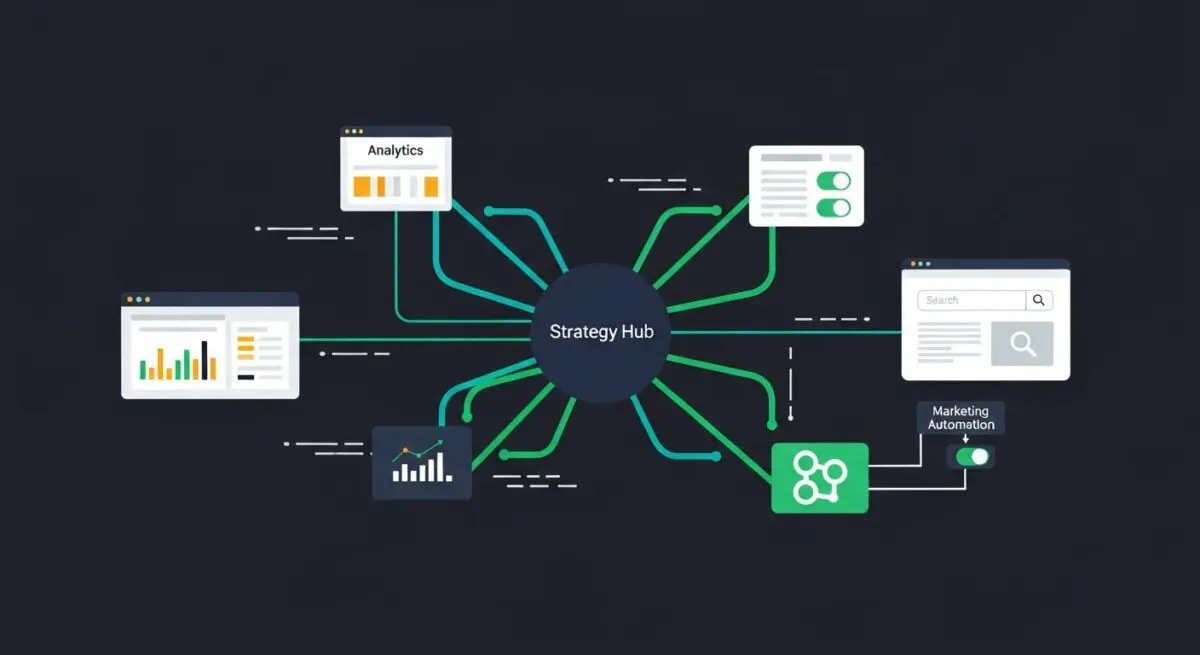
- Cross-Functional Integration: BizOps serves as the connective tissue between strategy, finance, and product teams to ensure unified execution.
- Data-Driven Optimization: It utilizes advanced analytics and financial modeling to identify operational bottlenecks and scale high-margin opportunities.
- Agile Strategic Execution: The framework enables rapid pivoting by translating high-level corporate objectives into actionable, measurable departmental workflows.
What is BizOps?
BizOps, short for Business Operations, is a strategic professional discipline focused on optimizing the internal processes and decision-making frameworks of a corporation. It functions as an internal consulting unit that bridges the gap between high-level executive strategy and the granular execution performed by functional teams like sales, marketing, and engineering.
In the modern tech stack, BizOps is increasingly data-centric, relying on complex data pipelines and business intelligence tools to provide a single source of truth for the entire organization. We at Andres SEO Expert define it as the mechanism that ensures every department is aligned with the company’s North Star metrics through rigorous quantitative analysis.
Unlike traditional operations, which may focus on administrative maintenance, BizOps is inherently proactive and growth-oriented. It involves the continuous evaluation of market trends, internal performance data, and resource allocation to ensure the business remains agile in a competitive landscape.
The Real-World Analogy
Think of BizOps as the mission control center for a deep-space exploration vessel. While the captain sets the destination and the engineers maintain the propulsion systems, mission control monitors every sensor, calculates trajectory adjustments, and ensures that resources like oxygen and fuel are allocated perfectly to reach the goal.
Without mission control, the engineers might optimize the engines for speed while the captain is trying to conserve fuel for a long-duration orbit, leading to a catastrophic mission failure. BizOps ensures that the pilot, the engineers, and the crew are all operating based on the same real-time data to maximize the probability of success.
How BizOps Drives Strategic Growth & Market Competitiveness?
BizOps drives strategic growth by transforming raw data into actionable intelligence that directly impacts the bottom line. By analyzing the entire customer journey, BizOps teams can identify specific points of friction where potential revenue is lost, such as high drop-off rates in a conversion funnel or inefficient lead routing in a CRM.
This discipline is critical for managing Customer Acquisition Cost (CAC) and Lifetime Value (LTV) ratios. By optimizing these metrics, BizOps allows a company to reinvest capital more efficiently, outspending competitors in high-yield channels while cutting waste in underperforming segments.
Furthermore, BizOps facilitates market competitiveness by breaking down departmental silos that often lead to redundant work and misaligned goals. When marketing, sales, and product teams operate on disparate data sets, the resulting friction increases operational overhead and slows down the time-to-market for new features or campaigns.
In the era of AI-driven marketing and automated sales cycles, BizOps provides the necessary oversight to ensure that automation scripts and algorithmic bidding strategies are aligned with actual business outcomes. This prevents the common pitfall of optimizing for vanity metrics that do not contribute to net profit.
Strategic decision-making is enhanced through the use of predictive modeling and scenario planning. BizOps teams can simulate the impact of market shifts or internal changes, allowing leadership to make informed bets on new product lines or geographic expansions with a higher degree of confidence.
Ultimately, BizOps acts as a force multiplier for every other department. By streamlining workflows and providing clear performance benchmarks, it allows specialized teams to focus on their core competencies without being bogged down by logistical or data-related hurdles.
Strategic Implementation & Best Practices
- Centralize Data Architecture: Implement a robust data warehouse that integrates inputs from CRM, ERP, and marketing automation platforms to ensure a single source of truth for all operational analysis.
- Define Clear OKRs: Establish Objectives and Key Results that are measurable and time-bound, ensuring that every BizOps initiative is directly tied to a high-level corporate goal.
- Establish Feedback Loops: Create formal mechanisms for functional leads to report operational friction back to the BizOps team, allowing for continuous process iteration and improvement.
- Leverage Predictive Analytics: Move beyond descriptive reporting by utilizing machine learning models to forecast churn, demand, and revenue trends, enabling proactive rather than reactive management.
- Prioritize Scalability: Design all operational processes with a modular architecture that can handle a 10x increase in volume without requiring a linear increase in headcount or manual intervention.
Common Pitfalls & Strategic Mistakes
One of the most frequent errors enterprise brands make is treating BizOps as a reactive troubleshooting team rather than a proactive strategic partner. When BizOps is only called in to fix broken processes, the organization misses out on the long-term value of structural optimization and strategic foresight.
Another significant mistake is the failure to secure executive buy-in for data transparency across departments. Without a mandate from the top, individual departments may guard their data silos, leading to incomplete analyses and fragmented strategies that undermine the effectiveness of the BizOps function.
Finally, many organizations over-index on short-term efficiency at the expense of long-term innovation. While cutting costs is a component of operations, a purely defensive BizOps strategy can stifle the experimentation necessary for breakthrough growth in a rapidly evolving digital economy.
Conclusion
BizOps is the essential strategic layer that converts corporate vision into measurable operational success through data integrity and cross-functional alignment. For the modern enterprise, it is the primary driver of sustainable growth and long-term market dominance in an increasingly complex business environment.