Executive Summary
- Hybrid Intelligence Architecture: Integrates human strategic intuition with AI computational power to optimize decision-making accuracy and operational speed.
- Risk Mitigation Framework: Employs human-in-the-loop (HITL) protocols to prevent algorithmic hallucinations and ensure ethical alignment in enterprise environments.
- Cognitive Augmentation: Enhances the OODA loop by automating high-volume data processing while reserving high-level judgment for human experts.
What is Centaur Model?
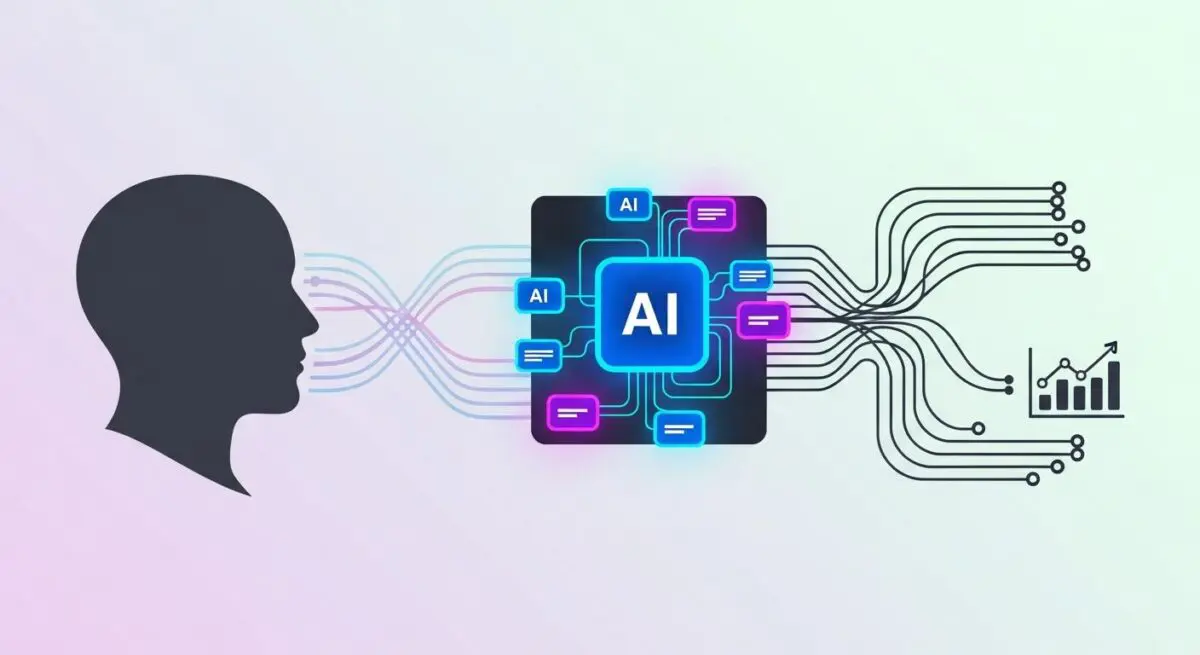
The Centaur Model is a sophisticated hybrid intelligence framework that facilitates a symbiotic relationship between human cognitive capabilities and artificial intelligence systems. This model moves beyond simple automation, focusing instead on cognitive augmentation where the strengths of both entities are leveraged to achieve superior outcomes.
In a technical business context, the Centaur Model functions as a decision-support architecture. It utilizes machine learning algorithms to handle massive data throughput and pattern recognition, while human operators provide the strategic context, ethical oversight, and creative problem-solving that algorithms currently lack.
This framework is increasingly vital in modern tech stacks, particularly within data analytics and digital marketing. By integrating human judgment at critical nodes of the AI workflow, organizations can maintain high levels of data integrity and strategic alignment that fully autonomous systems often fail to provide.
The Real-World Analogy
Consider the operation of a modern commercial aircraft. The autopilot system is capable of maintaining altitude, navigating complex waypoints, and processing thousands of sensor inputs per second with perfect precision.
However, the human pilot remains the ultimate authority, responsible for making critical decisions during unpredictable weather events or mechanical anomalies. The pilot does not manually control every flap but instead manages the system, using the computer’s data to make high-level strategic choices that ensure a safe arrival.
In this scenario, the combination of the pilot’s experience and the computer’s computational speed creates a Centaur system. This partnership is significantly more reliable and efficient than either the pilot flying manually or the computer flying entirely unmonitored.
How Centaur Model Drives Strategic Growth & Market Competitiveness?
The implementation of a Centaur Model directly influences a company’s bottom line by optimizing the efficiency of the decision-making process. By reducing the time required to move from data collection to actionable insight, firms can respond to market shifts with unprecedented agility.
In the realm of customer acquisition, the Centaur Model allows for hyper-personalized marketing at scale. AI identifies micro-segments and predicts behavior, while human strategists craft the narrative and brand positioning that resonates on an emotional and psychological level.
This synergy significantly lowers Customer Acquisition Costs (CAC) by eliminating the waste associated with broad-spectrum, non-targeted campaigns. Furthermore, it increases the Lifetime Value (LTV) of customers by ensuring that automated interactions remain grounded in human empathy and brand consistency.
From a data integrity perspective, the Centaur Model acts as a safeguard against the “black box” problem of AI. Human oversight ensures that the data driving strategic decisions is not only statistically significant but also contextually relevant and ethically sound.
Market competitiveness is further enhanced through the acceleration of the OODA loop (Observe, Orient, Decide, Act). Organizations that master the Centaur Model can iterate on product development and marketing strategies faster than competitors who rely on purely manual or purely automated processes.
Strategic Implementation & Best Practices
- Define Clear Hand-off Protocols: Establish precise technical triggers that determine when a task should move from an automated AI process to a human expert for review or intervention.
- Implement Robust Observability Tools: Utilize real-time dashboards that allow human operators to monitor AI performance metrics and identify potential drift or bias before they impact business outcomes.
- Foster Cross-Functional Training: Ensure that human team members are trained not just in their domain expertise, but also in the technical capabilities and limitations of the AI tools they are augmenting.
- Optimize the Human-AI Interface: Design user interfaces that present AI-generated insights in a clear, actionable format, reducing the cognitive load on human decision-makers.
- Continuous Feedback Loops: Create a structured system where human corrections are fed back into the AI models to improve future accuracy and alignment with business objectives.
Common Pitfalls & Strategic Mistakes
One frequent error is the development of automation bias, where human operators become overly reliant on AI outputs and stop applying critical scrutiny. This can lead to catastrophic failures if the underlying model encounters an edge case it was not trained to handle.
Another significant mistake is the creation of data silos between the AI development teams and the business strategists. Without a unified understanding of the Centaur Model’s goals, the AI may optimize for metrics that do not actually drive long-term business value.
Finally, many enterprise brands fail to account for the “skill atrophy” that can occur when humans are removed from the tactical execution of tasks. Maintaining a baseline level of manual proficiency is essential for effective oversight and emergency intervention.
Conclusion
The Centaur Model represents the pinnacle of modern operational efficiency by harmonizing human intuition with algorithmic precision. Adopting this hybrid approach is essential for any data-driven organization seeking to maintain a competitive edge in an increasingly AI-centric marketplace.