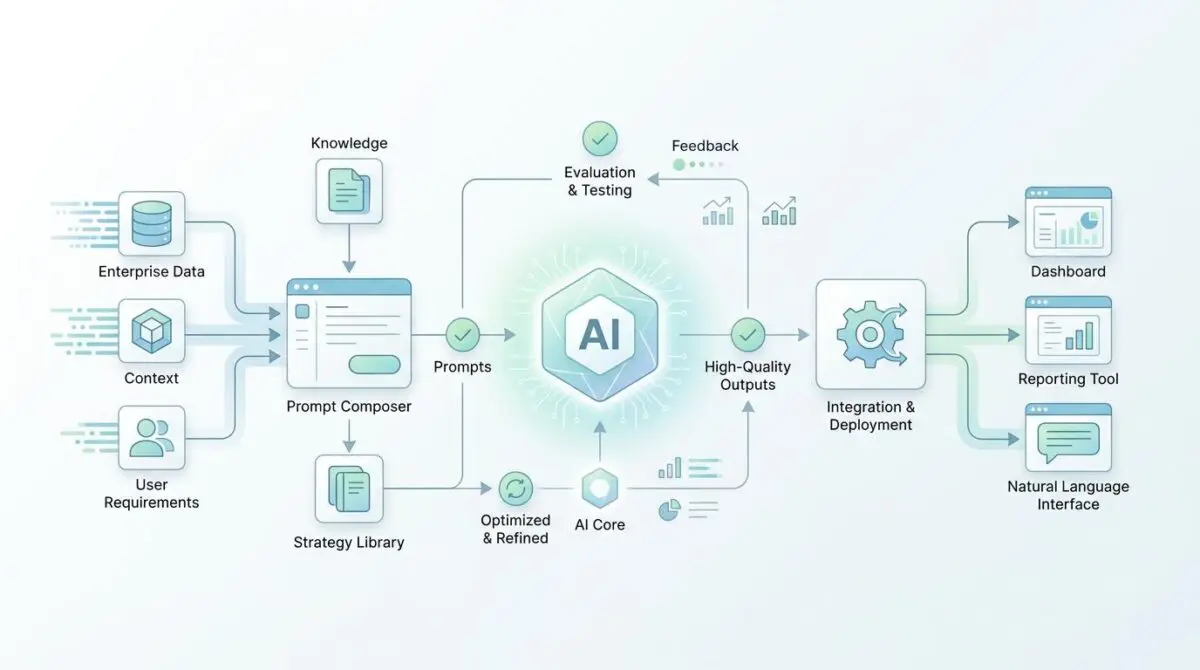
Key Points
- Programmatic Prompt Engineering Frameworks (PEFs) are replacing manual trial-and-error workflows, treating prompts as optimizable code to eliminate stochastic output drift during model migrations.
- The enterprise AI landscape is shifting toward multi-agent orchestration, heavily supported by standardized protocols and self-correcting runtimes that ensure 99% operational accuracy.
- Forward-thinking executives are architecting Sovereign Agent Networks and utilizing neural compilation to automate complex B2B negotiations and internal compliance protocols securely.
Table of Contents
The Core Friction: The End of Trial-and-Error AI
For years, enterprise artificial intelligence was bottlenecked by a fragile, artisanal practice known as prompt hacking. Teams of developers would spend countless hours tweaking natural language inputs, hoping to coax a specific output from a volatile language model. This approach was inherently unscalable, turning enterprise software deployment into a game of linguistic roulette. The friction was palpable across boardrooms, as minor phrasing changes or invisible model updates would routinely shatter critical business workflows.
Today, that era of digital guesswork is officially over. According to a 2026 market report from OutSight AI, manual prompt engineering adoption is projected to crash to 30% by the end of this year, down from 85% in 2023, as systematic programmatic frameworks become the mandatory enterprise standard. This is not merely a shift in developer tooling. It represents a fundamental evolution in how artificial intelligence is integrated into the corporate nervous system.
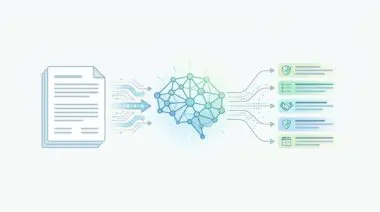
The solution driving this massive transition is the rise of Programmatic Prompt Engineering Frameworks (PEFs). These advanced architectures treat AI prompts not as static text strings, but as dynamic, optimizable code. By decoupling the intent of the user from the specific linguistic quirks of the underlying model, PEFs allow businesses to scale their AI operations with deterministic reliability. They act as the vital fly-by-wire system for modern enterprise infrastructure.
Understanding PEFs is no longer optional for technology executives. It is the dividing line between companies that successfully deploy autonomous agents and those that remain trapped in endless cycles of manual optimization. The enterprise AI landscape of 2026 demands precision, and programmatic frameworks are the only viable mechanism to achieve it.
Market Intelligence & Smart Capital
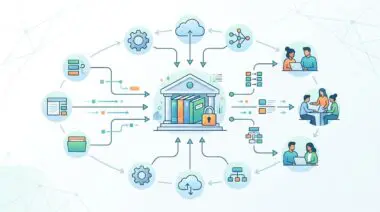
To truly grasp the magnitude of this technological shift, one must follow the flow of institutional capital. The smart money is aggressively abandoning application-layer wrappers in favor of foundational orchestration infrastructure. Investors recognize that the true value lies in the connective tissue that allows disparate AI models to function cohesively within a corporate environment.
Market Intelligence & Data
Market Valuation
The global prompt engineering market is estimated to reach $1.49 billion in 2026, growing at a 32.3% CAGR as enterprises move toward structured frameworks, per The Business Research Company.
Labor Demand Surge
Job postings for multi-agent orchestration specialists are growing at 1,257% annually as the discipline shifts from trial-and-error to formal AI engineering, according to Gartner-linked labor data.
Optimization ROI
Enterprises utilizing programmatic frameworks like DSPy report a 79% reduction in total cost of ownership compared to traditional reinforcement learning approaches, according to OutSight AI.
Enterprise Integration
Gartner predicts that by the end of 2026, 40% of all enterprise applications will have task-specific AI agents embedded directly into their core architecture, up from less than 5% in 2025.
This data reveals a critical narrative about market maturity. A 32.3% compound annual growth rate signifies a transition from experimental pilot programs to mission-critical deployments. Enterprises are no longer testing AI in isolated sandboxes. They are embedding it directly into their core operational architecture.
Furthermore, the staggering 1,257% surge in demand for multi-agent orchestration specialists highlights a severe talent pivot. The industry is moving away from conversational prompt writers and toward formal AI engineers who understand high-dimensional vector spaces and automated compilation. This labor shift is a leading indicator of where technological capabilities are heading over the next decade.
Perhaps the most compelling metric for the C-suite is the 79% reduction in total cost of ownership. By utilizing structured frameworks, businesses are drastically cutting the compute and labor costs associated with traditional reinforcement learning. Programmatic frameworks are not just improving accuracy, they are fundamentally rewriting the economics of enterprise artificial intelligence.
The Strategic Deep Dive: Architecting Context
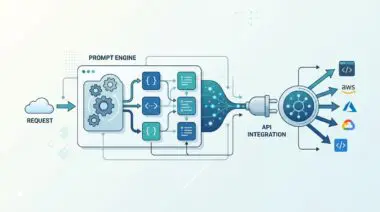
The transition from manual hacking to programmatic architecture is rooted in a concept known as Context Engineering. In this new paradigm, platforms like DSPy and LangGraph allow developers to define the desired outcome and the available data tools, leaving the framework to automatically generate and optimize the necessary prompts. This abstracts the complexity away from the human operator.
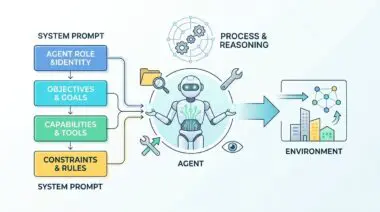
Enterprises are now deploying sophisticated multi-agent orchestration systems. These systems effectively turn large language models into operational operating systems capable of managing complex, recursive reasoning chains without any human intervention. It is a leap from simple automation to genuine digital autonomy.
Eradicating Stochastic Output Drift
One of the most persistent nightmares for technology leaders has been Stochastic Output Drift. This phenomenon occurs when minor, often unannounced updates to a foundation model cause previously stable enterprise workflows to fail catastrophically. A prompt that generated perfect financial summaries on Tuesday might produce unformatted gibberish on Wednesday.
Programmatic Prompt Engineering Frameworks solve this critical friction point entirely. By utilizing programmatic optimization, these frameworks can automatically re-align and re-compile prompts to adapt to model changes in real-time. Businesses can now achieve 99% accuracy across diverse model migrations.
This automated resilience drastically reduces the deployment cycles traditionally required for manual prompt tuning. What used to take a dedicated engineering team 16 weeks of trial-and-error can now be accomplished by a self-correcting runtime in a matter of hours. The operational agility gained here is a massive competitive advantage.
The Consolidation of Agentic Infrastructure
As the market matures, we are witnessing rapid consolidation among the major infrastructure providers. The tech giants realize that whoever controls the orchestration layer will ultimately control the enterprise AI ecosystem. A strategic industry consolidation in late 2025 saw Microsoft merge its AutoGen and Semantic Kernel projects into a single ‘Unified Agent Framework’ to eliminate fragmentation and provide a standardized runtime for enterprise multi-agent systems, according to Medium’s 2026 Infrastructure Analysis.
This move signaled a broader industry trend toward standardization. You can read more about Microsoft’s unified Agent Framework consolidation to understand how this reduces friction for enterprise developers. By providing a unified runtime, businesses can finally build multi-agent systems that are vendor-agnostic and highly scalable.
Simultaneously, Anthropic has been pioneering its own agentic-first infrastructure. A crucial component of this is the Model Context Protocol (MCP) standardization, which allows disparate AI tools and data sources to communicate seamlessly. MCP acts as the universal translator, ensuring that an agent trained on GPT-5 can seamlessly hand off a complex reasoning task to an agent powered by Claude 4.
The Rise of Self-Correcting Runtimes
Alongside the tech giants, specialized PromptOps platforms like Vellum and Maxim AI are capturing significant market share. These platforms provide the necessary observability and testing environments required to deploy PEFs at an enterprise scale. They offer the dashboards and analytics that Chief Information Officers need to maintain governance over autonomous systems.
The most lucrative area for venture capital right now is in Self-Correcting Runtimes. These are advanced startups that automate the validation and re-optimization of prompts across diverse model architectures. If an agent hallucinates or deviates from compliance protocols, the runtime detects the error, rewrites the underlying prompt instructions, and redeploys the agent instantly.
This self-healing capability is what truly unlocks the potential of autonomous agents. It removes the need for constant human oversight, allowing businesses to scale their AI operations exponentially without a corresponding linear increase in management overhead. It is the ultimate expression of programmatic leverage.
The Executive Action Plan: Sovereign Networks
Looking ahead, the trajectory of programmatic frameworks points toward even deeper abstraction. The next major evolution is Neural Compilation. In this future state, natural language intent is translated directly into high-dimensional vector instructions by autonomous compilers. This bypasses human-readable prompts entirely, optimizing purely for machine efficiency.
For enterprise leaders, preparing for this shift requires immediate strategic alignment. The focus must move away from training employees on how to talk to AI, and toward architecting systems that manage AI autonomously. The goal is to build an infrastructure that is resilient, secure, and infinitely scalable.
Strategic Trajectory
- Transition toward Neural Compilation where natural language intent is converted into high-dimensional vector instructions.
- Implement autonomous compilers to bypass human-readable prompts for increased machine efficiency.
- Architect Sovereign Agent Networks to run private, federated agent frameworks for internal security.
- Enable autonomous B2B procurement and compliance negotiation through federated agent protocols.
- Shift from manual prompting to high-level intent orchestration within sovereign infrastructures.
The concept of Sovereign Agent Networks is particularly critical for enterprise security. As AI agents gain the ability to execute financial transactions and negotiate contracts, businesses cannot rely on public, multi-tenant cloud models. They must run private, federated agent frameworks that operate strictly within their own secure perimeters.
These sovereign networks will eventually communicate with one another, enabling autonomous B2B procurement and compliance negotiation. Imagine a scenario where your company’s procurement agent negotiates pricing, verifies compliance, and executes a contract with a vendor’s sales agent, all in a matter of milliseconds. This is the disruptive power of programmatic orchestration.
To capitalize on this, executives must audit their current AI initiatives immediately. Any project relying on static, hard-coded prompts should be flagged for refactoring. The transition to PEFs should be prioritized as a core infrastructure upgrade, akin to migrating from on-premise servers to the cloud a decade ago.
Conclusion: The New Standard of AI
The era of treating artificial intelligence as a simple chatbot interface is drawing to a close. We are entering a sophisticated phase of enterprise technology where AI is a structural, programmatic component of the business operating system. Programmatic Prompt Engineering Frameworks are the catalyst for this transformation.
By embracing Context Engineering, deploying self-correcting runtimes, and preparing for the advent of Neural Compilation, businesses can insulate themselves against the volatility of the AI market. They can achieve deterministic, reliable outcomes from inherently probabilistic models. This is the hallmark of true technological maturity.
The organizations that recognize this shift and invest in orchestration infrastructure today will be the ones dictating the pace of innovation tomorrow. Those who cling to manual prompt hacking will find themselves outmaneuvered by faster, more resilient autonomous competitors.
Navigating the intersection of technology, capital, and market psychology requires a sharp strategy. To future-proof your business architecture and scale with precision, connect with Andres at Andres SEO Expert.
Frequently Asked Questions
What is a Programmatic Prompt Engineering Framework (PEF)?
A Programmatic Prompt Engineering Framework (PEF) is an advanced architecture that treats AI prompts as dynamic, optimizable code rather than static text strings. By decoupling user intent from specific model quirks, PEFs allow enterprises to scale AI operations with deterministic reliability and automated optimization.
How do programmatic frameworks eliminate Stochastic Output Drift?
Stochastic Output Drift occurs when foundation model updates cause stable workflows to fail. Programmatic frameworks solve this by using automated re-alignment and re-compilation, allowing prompts to adapt to model changes in real-time and maintaining 99% accuracy across diverse model migrations.
What are the cost benefits of using frameworks like DSPy?
Enterprises utilizing programmatic frameworks like DSPy report a 79% reduction in total cost of ownership compared to traditional manual reinforcement learning. This efficiency is driven by a massive reduction in the engineering labor and compute cycles required for trial-and-error prompt tuning.
What is the role of Sovereign Agent Networks in enterprise security?
Sovereign Agent Networks are private, federated agent frameworks that operate within a company’s secure perimeter. These networks are critical for security as AI agents begin to handle autonomous B2B procurement and financial transactions, ensuring data remains outside public multi-tenant cloud models.
What is Neural Compilation in AI infrastructure?
Neural Compilation is an evolution where natural language intent is translated directly into high-dimensional vector instructions by autonomous compilers. This process bypasses human-readable prompts entirely, optimizing the AI system purely for machine efficiency and deeper programmatic abstraction.
How do Self-Correcting Runtimes manage AI hallucinations?
Self-Correcting Runtimes provide automated observability and validation. If an autonomous agent hallucinates or deviates from compliance protocols, the runtime detects the error, rewrites the underlying instructions, and redeploys the agent instantly without human intervention.