Key Points
- Agentic Orchestration: ALR shifts LLMs from simple text completion to autonomous, multi-agent workflows that mimic a comprehensive legal review team.
- Dynamic Playbook Injection: Enterprise risk thresholds and negotiation stances are injected at runtime to ensure LLM outputs strictly adhere to corporate policy.
- Source-Grounded Generation: Advanced RAG architectures and hallucination-proof citing mechanisms guarantee that all AI-generated redlines are based on verified legal precedents.
Table of Contents
The AI Landscape: Redefining Legal Operations
By May 2026, 88% of Fortune 500 legal teams have adopted automated redlining tools, resulting in a 65% reduction in contract negotiation cycles.
This staggering adoption rate signals a fundamental paradigm shift in the enterprise legal sector. We are moving rapidly away from manual text review toward autonomous systems driven by Large Language Models. At the forefront of this evolution is Agentic Legal Redlining (ALR).
This technology transforms LLMs from mere text generators into sophisticated legal reasoning engines. Early generative AI models struggled with the nuanced logic required for contract negotiation. They often lost context during long document reviews or hallucinated non-existent clauses.
Today, ALR represents the maturation of neural networks applied to highly structured, high-stakes enterprise data. By integrating Long-Context Windows with Retrieval-Augmented Generation, these systems ingest an organization’s entire historical negotiation data. They utilize corporate playbooks to identify risks and autonomously propose precision edits.
This technological leap effectively eliminates the blank page problem in contract lifecycle management. It shifts the legal professional’s role from manual drafting to high-level strategic oversight. In the broader artificial intelligence landscape, ALR is becoming a primary driver for specialized model development.
We are seeing a surge in Small Language Models fine-tuned exclusively on legal corpora. These models offer lower latency and higher accuracy for specific reasoning tasks compared to generalized frontier models. The integration of ALR into daily operations is no longer an experimental luxury but a baseline competitive requirement.
Core Concepts & Capabilities of ALR
Core Architecture & Pillars
Recursive Contextual Embedding
At the server level, legal documents are decomposed into hierarchical nodes rather than linear chunks. High-dimensional vector embeddings are assigned to specific clauses, cross-referenced with metadata such as “jurisdiction” and “enforceability date.” This allows the transformer architecture to maintain semantic relationships between non-adjacent paragraphs, preventing logic breaks during long-form redlining.
Agentic Chain-of-Thought (CoT) Verification
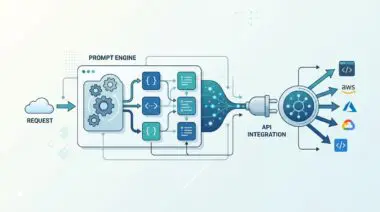
Instead of a single-inference pass, the system utilizes an agentic workflow where an “Editor Agent” proposes a redline, a “Critic Agent” reviews it against the playbook, and a “Compliance Agent” verifies it against current statutory law. This happens via asynchronous API calls, ensuring high-fidelity output that mimics a multi-lawyer review process.
Dynamic Playbook Injection
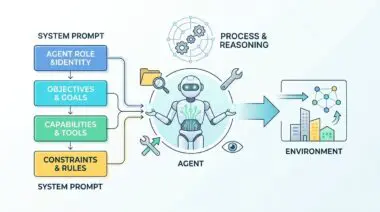
This involves the runtime injection of enterprise-specific negotiation “stances” into the system prompt. Using “Few-Shot” prompting techniques, the model is provided with examples of “Accepted” vs. “Rejected” language for specific indemnity or liability clauses, forcing the LLM to adhere to corporate risk thresholds.
Hallucination-Proof Citing (Source-Grounded Generation)
To prevent the generation of fake case law, the system employs a “Grounding” mechanism where the LLM is restricted to generating text based ONLY on a provided set of verified legal documents. If the model attempts to deviate, a logic-gate (using Logit Bias or hard-coded regex) blocks the output and triggers a secondary retrieval search.
The architecture detailed above highlights the transition from basic semantic search to complex legal reasoning. Recursive Contextual Embedding is particularly vital for maintaining the integrity of multi-page agreements. Traditional linear chunking often causes the LLM to forget the definitions established on page one by the time it reaches page fifty.
By utilizing hierarchical nodes, the transformer architecture maintains a persistent understanding of the document’s global state. This prevents context drift and ensures that all redlines are semantically consistent throughout the entire contract. Furthermore, the implementation of Agentic Chain-of-Thought Verification introduces a self-correcting loop into the AI’s workflow.
This multi-agent orchestration mimics the collaborative review process of a real-world legal team. The Editor Agent drafts the initial revision, while the Critic Agent aggressively cross-references the proposed text against the injected playbook. This dynamic interplay drastically reduces the error rate of the final output.
In early 2026, specialized ‘Legal LLMs’ achieved a 94.2% parity rate with senior partners in identifying high-risk indemnity clauses, compared to just 62% for non-specialized general-purpose models.
This level of specialized precision is exactly what prevents catastrophic enterprise failures. It is the definitive solution to the infamous Mata v. Avianca scenario where lawyers submitted AI-hallucinated fake cases. Modern ALR systems rely heavily on Hallucination-Proof Citing to maintain absolute factual consistency.
These grounding mechanisms utilize strict logic gates to block unverified outputs. If the model attempts to generate text outside the provided legal corpus, the system instantly triggers a secondary retrieval search. This ensures that every single redline is backed by verifiable, enterprise-approved documentation.
Strategic Implementation of Legal AI
Implementation Roadmap
Establish the Vectorized Knowledge Base
Digitize and index all historical “winning” contracts and the current “Gold Standard” playbook. Convert these into vector embeddings and store them in a secure, SOC2-compliant vector database to facilitate RAG-based retrieval.
Configure Agentic Orchestration
Deploy a multi-agent framework (such as LangGraph or AutoGen) to separate the “Reviewer,” “Drafter,” and “Fact-Checker” roles. This ensures every redline is cross-referenced against internal policy before being presented to the human lawyer.
Integrate Human-in-the-Loop (HITL) UI
Deploy a Microsoft Word Add-in or browser extension that surfacing AI suggestions directly within the lawyer’s workflow. The UI must include “Accept/Reject/Modify” buttons that feed back into the model’s fine-tuning loop.
Implement Continuous Policy Sync
Establish an automated pipeline where any update to corporate legal policy in the CMS (Content Management System) triggers a re-embedding of the specific playbook section, ensuring the AI never redlines based on outdated rules.
The transition from traditional legal operations to AI-driven workflows requires a highly orchestrated technical strategy. Enterprises must first establish a robust data pipeline to feed the LLM accurate historical context. This involves converting decades of winning contracts into high-dimensional vector embeddings.
These embeddings are then housed in specialized vector databases optimized for high-density metadata retrieval. This infrastructure is the backbone of any effective Retrieval-Augmented Generation system. To handle the complex logic required for contract negotiation, organizations must deploy multi-agent orchestration frameworks like LangGraph to separate reviewer and drafter roles.
This separation of concerns is critical for maintaining high-fidelity outputs. It allows different LLM weights to be assigned to specific tasks, balancing computational cost with reasoning accuracy. For example, a massive frontier model might handle the complex reasoning of the Critic Agent, while a faster, smaller model handles the drafting.
Furthermore, the integration of a Human-in-the-Loop user interface is non-negotiable for enterprise deployment. Lawyers must be able to interact with the AI’s suggestions seamlessly within their existing software environments. Every interaction with the UI feeds valuable reinforcement data back into the system.
This continuous feedback loop allows the model to adapt to the specific stylistic preferences of the legal team over time. Finally, implementing a continuous policy sync ensures the AI’s reference library is never deprecated. When a risk threshold changes in the corporate dashboard, the AI’s redlining logic updates instantly across all active sessions.
Real-World Impact & Enterprise Use Cases
The real-world impact of Agentic Legal Redlining extends far beyond simple time savings and operational efficiency. It fundamentally alters the power dynamics of enterprise contract negotiation. Forward-thinking legal departments implement an AI intelligence layer that elevates contract redlining by instantly accessing historical deal context.
This capability allows the AI to provide a sophisticated delta-analysis against industry benchmarks in real-time. When a counterparty submits a heavily modified Master Services Agreement, the ALR system instantly highlights deviations from the organizational baseline. It does not just flag the risk; it autonomously drafts a counter-proposal based on previously successful negotiations.
This level of Comparative Intelligence ensures that legal teams are always negotiating from a position of data-backed strength. Furthermore, ALR excels at managing complex, multi-layered agreements like Data Processing Addendums and complex liability caps. The neural network can instantly cross-reference proposed indemnity clauses against current regional compliance statutes.
This proactive risk mitigation prevents costly legal exposure long before a contract is signed. The technology also democratizes high-level legal reasoning across the entire enterprise. Junior associates empowered by ALR can perform the deep contextual analysis previously reserved for senior partners.
This shift allows senior legal staff to focus entirely on high-level strategic negotiations and complex relationship management. The AI handles the exhaustive syntax review, ensuring that no hidden liabilities slip through the cracks. Ultimately, ALR transforms the legal department from a reactive operational bottleneck into a proactive driver of business velocity.
Best Practices & Future Outlook
Strategic Best Practices
- Always maintain a “Human-in-the-Loop” architecture; AI should propose redlines, but a qualified legal professional must authorize the final version.
- Ensure “Zero Data Retention” (ZDR) agreements with LLM providers to protect Client-Attorney Privilege.
- Use “Attribution-First” generation where the AI must provide a link to the specific internal playbook clause for every redline it suggests to ensure accountability.
Deploying advanced AI within a legal framework requires strict adherence to data security and ethical guidelines. Enterprises must establish Zero Data Retention agreements with their LLM providers. This ensures that sensitive corporate data and Client-Attorney Privileged information are never used to train external public models.
Additionally, utilizing an Attribution-First generation model is critical for maintaining internal accountability. The AI must be forced to provide a direct link to the specific internal playbook clause that justifies every suggested redline. This transparency allows human reviewers to instantly verify the AI’s logic and confidently authorize the final version.
Looking toward the future, the evolution of ALR points toward autonomous AI-to-AI negotiation environments. We will soon see scenarios where an enterprise’s AI agent directly negotiates standard clauses with a vendor’s AI agent. Human lawyers will only step in to resolve complex edge cases or finalize strategic concessions.
This impending reality makes the immediate adoption and fine-tuning of ALR systems a critical strategic imperative. Organizations that delay building their vectorized knowledge bases today will find themselves unable to compete in the autonomous negotiation landscapes of tomorrow. The foundation of future legal operations is being built right now on the back of agentic AI frameworks.
Navigating the rapid evolution of Large Language Models and AI infrastructure requires a precise strategy. To stay ahead of the AI revolution and optimize your digital presence, connect with Andres at Andres SEO Expert.
Frequently Asked Questions
What is Agentic Legal Redlining (ALR)?
Agentic Legal Redlining (ALR) is an advanced AI framework that transforms Large Language Models into sophisticated legal reasoning engines. It utilizes multi-agent workflows—including editor, critic, and compliance agents—to autonomously analyze contracts and propose precision edits based on an organization’s historical negotiation data and corporate playbooks.
How does Agentic Legal Redlining prevent AI hallucinations in contracts?
ALR systems employ Hallucination-Proof Citing, a grounding mechanism that restricts the LLM to generating text based only on verified legal documents. Using logic gates like Logit Bias or hard-coded regex, the system blocks unverified outputs and triggers secondary retrieval searches to ensure every redline is factually grounded in an approved corpus.
What are Recursive Contextual Embeddings in legal AI?
Recursive Contextual Embedding is a technique where legal documents are decomposed into hierarchical nodes rather than linear chunks. This allows the AI to maintain semantic relationships between non-adjacent paragraphs, preventing logic breaks and ensuring that the context established at the beginning of a document is preserved throughout the entire contract review process.
How does Agentic Chain-of-Thought (CoT) Verification work?
Agentic Chain-of-Thought Verification is a multi-step inference process involving collaborative AI agents. An “Editor Agent” proposes a redline, a “Critic Agent” reviews it against the corporate playbook, and a “Compliance Agent” verifies it against statutory law. This asynchronous workflow ensures high-fidelity output that mimics a human multi-lawyer review.
Why are specialized Small Language Models (SLMs) becoming a legal baseline?
Small Language Models fine-tuned on legal corpora offer lower latency and higher accuracy for specific reasoning tasks compared to generalized models. By 2026, specialized Legal LLMs achieved a 94.2% parity rate with senior partners in identifying high-risk clauses, making them essential for high-stakes enterprise contract negotiation.
How do legal teams maintain client-attorney privilege when using AI agents?
Enterprises maintain privilege and data security by establishing “Zero Data Retention” (ZDR) agreements with LLM providers. This ensures that sensitive legal data and privileged communications are never used to train external models. Furthermore, implementation typically involves secure, SOC2-compliant vector databases to host the organization’s knowledge base.