


Key Points
- Eradicating Data Silos: Transitioning to Single Source of Truth (SSOT) architectures prevents the 20% prospective student drop-off during critical administrative handoffs.
- AI-Driven Predictive Retention: Leveraging autonomous AI agents allows institutions to identify at-risk students with 94% accuracy, proactively saving millions in lost tuition revenue.
- Pivoting to Education-as-a-Service: Implementing lifelong learning ledgers and verifiable digital wallets transforms the archaic one-time degree model into a continuous, data-driven revenue stream.
Table of Contents
The Core Friction of Fragmented Enrollment
Higher education is currently navigating an unprecedented liquidity and retention crisis. Recent industry surveys indicate that top-tier global universities are rapidly migrating to AI-native data platforms. This shift aims to offset projected national declines in traditional enrollment numbers.
The era of relying on legacy brand prestige and complacent admission strategies is officially over. Institutions can no longer afford to leak prospective learners through the cracks of administrative friction. The modern answer to this systemic hemorrhage is the rapid adoption of Unified Student Lifecycle Management (SLM) Systems.
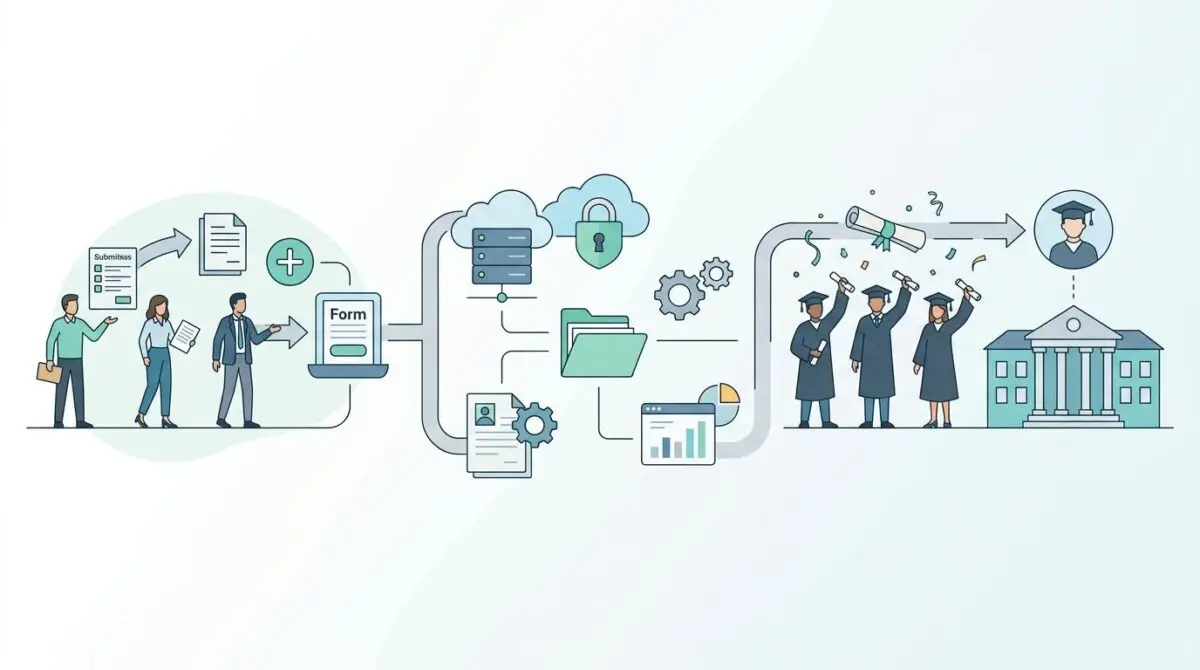
These robust platforms represent a fundamental paradigm shift in how schools manage student data from admissions to graduation. By transitioning away from fragmented legacy systems, leading universities are constructing highly responsive digital environments. Within these advanced hubs, autonomous AI agents seamlessly manage the entire student journey from the first touchpoint.
These intelligent systems utilize real-time behavioral data to predict enrollment melt and automate complex financial aid packaging. The killer strategy for the next decade involves integrating labor market intelligence directly into core curriculum data. This ensures that student progress is continuously mapped against real-world employability metrics.
Universities that fail to architect this digital nervous system will simply be outpaced by more agile competitors.
Market Intelligence and the Influx of Smart Capital
Market Intelligence & Data
Global SLM Market Value
IDC reports the total addressable market for AI-integrated Student Lifecycle Management has reached nearly $15 billion as of mid-2026.
Administrative Efficiency Gain
Data from HolonIQ indicates that institutions adopting automated admission-to-graduation workflows have reduced administrative overhead by 65% since 2024.
Predictive Accuracy
Deloitte’s 2026 Tech Trends study shows that predictive analytics models can now identify at-risk students with 94% accuracy before the end of the first semester.
ROI on Data Personalization
According to McKinsey & Company, schools utilizing hyper-personalized student engagement data see a 3x return on recruitment spend compared to traditional methods.
The influx of smart money into the educational technology sector signals a massive vote of no confidence in traditional administrative workflows. Market dominance is currently held by heavyweight incumbents that have successfully integrated proprietary language models. These legacy giants are automating vast swaths of administrative bureaucracy.
However, massive disruption is rapidly approaching from highly agile startups. These market challengers have secured significant funding with a singular mission to eliminate manual admissions processing entirely. They are replacing human data entry with seamless conversational interfaces that guide students through enrollment.
Furthermore, elite venture capital firms are aggressively pouring capital into sovereign identity platforms. These cutting-edge solutions allow students to truly own their academic data via decentralized identifiers. This approach entirely bypasses traditional registrar delays to create a frictionless ecosystem for credential verification.
For enterprise leaders, the message is abundantly clear. Capital is flowing away from isolated software tools and toward holistic interoperable ecosystems. The future belongs to platforms that can seamlessly unify the student experience while drastically reducing operational overhead.
The Strategic Deep Dive
Eliminating Data Silos with SSOT Architecture
The primary friction point crippling modern higher education remains the pervasive data silo problem. Admissions, financial aid, and registrar data frequently live in completely isolated legacy environments. This digital fragmentation prevents cross-departmental visibility and stifles institutional agility.
This lack of interoperability leads to a devastating loss in prospective students during the critical handoff phase between enrollment and financial aid. Modern SLM solutions solve this exact bottleneck by creating a robust single source of truth architecture. This unified data structure breaks down departmental walls to ensure every administrator views the exact same real-time student profile.
This centralized intelligence enables the deployment of automated early warning systems that monitor student performance continuously. By leveraging this vast repository of behavioral data, predictive analytics models can identify at-risk students weeks before their grades actually slip. This proactive intervention capability saves institutions millions in lost tuition revenue while drastically improving overall graduation rates.
Furthermore, a unified architecture removes the cognitive load from the student. Instead of navigating a labyrinth of disconnected portals, learners experience a singular digital concierge. This level of user experience is no longer a luxury but a baseline expectation for the modern digital-native student.
Securing the Digital Campus
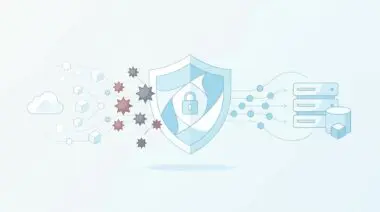
As universities consolidate their fragmented data into powerful SLM platforms, they inadvertently create massive targets for malicious actors. The aggregation of personal, academic, and financial data requires an impenetrable security posture. A single breach can decimate decades of institutional brand equity overnight.
Recent industry reports reveal that educational institutions now face an unprecedented volume of cyberattacks. This escalation in threat sophistication requires a complete reimagining of campus cybersecurity frameworks. Firewalls and basic encryption are no longer sufficient to protect the digital campus.
This alarming reality underscores exactly why educational institutions face thousands of cyberattacks per week and must prioritize zero trust network architectures. Leaders must view cybersecurity not as a frustrating IT expense but as a fundamental pillar of institutional trust. Protecting student data is now a core operational mandate that directly impacts enrollment viability.
By partnering with hyperscalers and deploying advanced encryption protocols, forward-thinking universities are future-proofing their data ecosystems. This proactive defensive strategy ensures that the institution remains a safe harbor for the highly sensitive information of its student body.
The Executive Action Plan
To successfully navigate this technological renaissance, educational leaders must adopt a radically different strategic posture. The transition requires moving beyond mere software procurement and entering the realm of holistic business transformation. The end goal is a fully integrated digital ecosystem that supports the learner indefinitely.
Strategic Trajectory
- Transition from terminal records to a ‘Lifelong Learning Ledger’ model that persists beyond graduation.
- Implement permanent, verifiable digital wallets for student data portability and ownership.
- Pivot institutional strategy toward ‘Education-as-a-Service’ (EaaS) to replace the one-time degree model.
- Deploy data systems for the continuous tracking of alumni skills and workforce readiness.
- Utilize automated recommendation engines for upskilling based on global job market shifts.
Founders and university presidents must aggressively move toward a model where the student data record does not abruptly end at graduation. The future of the industry is a permanent digital wallet that evolves alongside the professional career of the alumni. This creates a lifelong tether between the institution and the learner.
Visionary leaders in the educational technology space are rapidly preparing for a reality where continuous learning replaces the archaic one-time degree model. By continuously tracking alumni skills, these advanced systems will provide automated recommendations for upskilling. This shift transforms alumni from past customers into recurring lifelong subscribers.
Implementing this roadmap requires ruthless prioritization and a willingness to dismantle legacy bureaucratic structures. Executives must champion data fluidity and invest heavily in interoperable middleware. The institutions that successfully execute this pivot will dominate the educational landscape for the next century.
The Future Trajectory of Education
The transition to unified student lifecycle management systems is not merely an incremental IT upgrade. It is a fundamental restructuring of the educational business model designed to meet the demands of a hyper-connected global economy. Institutions that stubbornly cling to fragmented data silos will inevitably be outpaced by agile competitors.
By embracing advanced success hubs and sovereign identity platforms, universities can unlock unprecedented operational efficiency. The integration of continuous learning ledgers will ensure that educational institutions remain deeply relevant in a rapidly shifting workforce. The future of education is fluid, continuous, and entirely data-driven.
Navigating the intersection of technology, capital, and market psychology requires a sharp strategy. To future-proof your business architecture and scale with precision, connect with Andres at Andres SEO Expert.
Frequently Asked Questions
What is Student Lifecycle Management (SLM) in higher education?
Student Lifecycle Management (SLM) is a unified digital architecture that manages the entire student journey from initial recruitment to graduation and alumni engagement. These platforms replace fragmented legacy systems with a single source of truth, utilizing AI and real-time data to reduce administrative friction and improve institutional agility.
How does AI and predictive analytics improve student retention?
AI-native platforms utilize predictive analytics to monitor student behavioral data and engagement metrics continuously. These systems can identify at-risk students with 94% accuracy before the end of the first semester, allowing for proactive interventions that significantly improve graduation rates and prevent tuition revenue loss.
What are the primary risks associated with university data silos?
Data silos create institutional fragmentation that prevents cross-departmental visibility. This lack of interoperability typically leads to a 20% loss in prospective students during the handoff between enrollment and financial aid. Furthermore, silos increase administrative overhead and prevent the implementation of a personalized, cohesive student experience.
Why is Zero Trust security critical for modern educational institutions?
As universities consolidate student data into unified SLM platforms, they become high-value targets for cyberattacks, which currently average 2,400 incidents per week. Zero Trust architectures and quantum-resistant encryption are essential to protect personally identifiable information (PII) and maintain institutional trust in an increasingly hostile digital environment.
What is the ‘Education-as-a-Service’ (EaaS) model?
Education-as-a-Service (EaaS) is a strategic pivot away from the one-time degree model toward a lifelong learning subscription. This approach uses digital wallets and lifelong learning ledgers to continuously track alumni skills and provide automated, hyper-personalized upskilling recommendations based on real-time global job market shifts.