Key Points
- Evolving Threat Landscape: With 43% of CISA vulnerabilities tied to APIs, transitioning to AI-Orchestrated API Protection & Governance is mandatory to defend against agentic AI attacks.
- Eradicating API Sprawl: Enterprises must deploy automated discovery tools to neutralize shadow and zombie APIs that serve as frictionless entry points for data exfiltration.
- Boardroom-Level Governance: API security is shifting from an IT function to a critical business-risk metric, requiring continuous agentic red-teaming and self-healing infrastructure.
Table of Contents
The Core Friction of the Agentic Era
According to the 2026 API ThreatStats Report from Wallarm, APIs are now the most exploited attack surface in the enterprise. A staggering 43% of all Known Exploited Vulnerabilities added to the CISA catalog in 2025 were entirely API-related. This is no longer a fringe IT issue but a massive bleeding of corporate data assets.
The root cause is a fundamental misunderstanding of how to protect APIs in an ecosystem dominated by autonomous agents. Traditional static firewalls remain completely blind to modern machine-to-machine communications. They treat malicious agentic probes exactly like legitimate enterprise traffic.
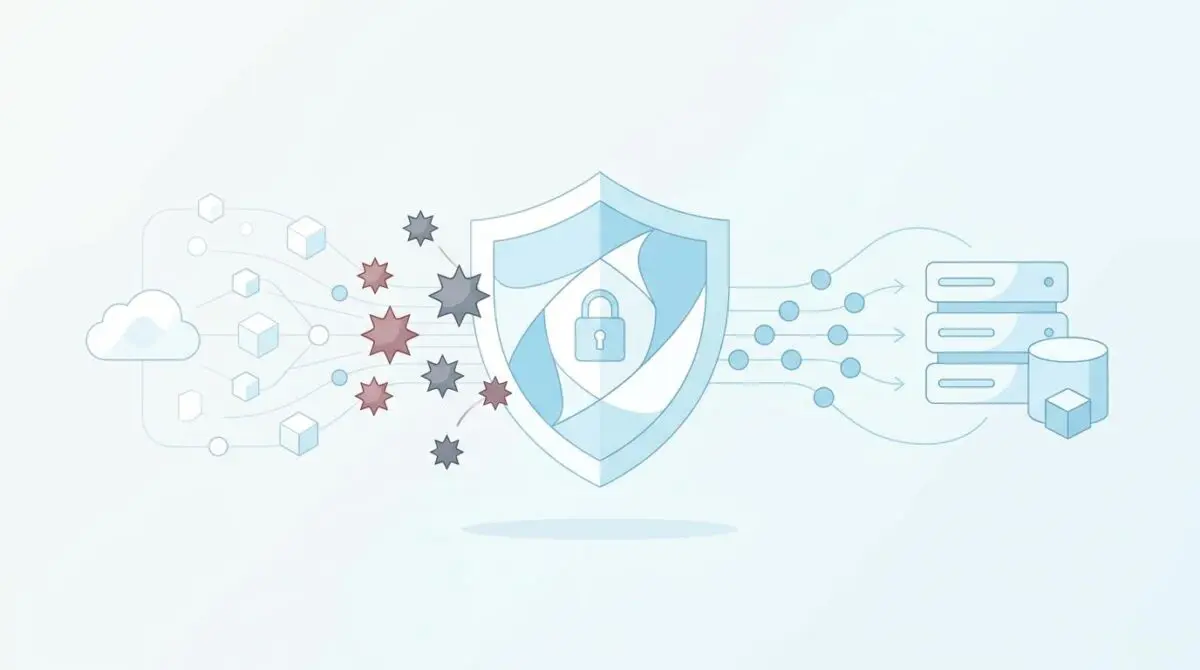
To survive this shift, organizations must deploy AI-Orchestrated API Protection & Governance. This approach is not just a defensive measure but a strategic enabler for safe AI scaling. It transforms vulnerable endpoints into dynamic, self-aware control planes.
Founders and executives now realize that market friction is directly tied to security posture. If your data layer is compromised, your entire artificial intelligence strategy collapses. The market punishes insecure architectures with brutal efficiency.
Market Intelligence and Capital Flow
Market Intelligence & Data
Enterprise Exposure Rate
An overwhelming 99% of organizations encountered at least one significant API security incident in the past 12 months, according to Salt Security’s 2025/2026 state-of-the-market analysis.
Attack Traffic Surge
Automated API attack traffic grew by 600% in 2025 as adversaries deployed their own agentic AI to probe for misconfigurations, as reported by SQ Magazine.
AI-API Risk Overlap
Research from Wallarm indicates that 36% of all published AI vulnerabilities in late 2025 were fundamentally API security flaws, highlighting that AI security is inseparable from API protection.
Sector Investment
Global venture capital spending in cybersecurity reached $13.97 billion in 2025, with a massive pivot toward platforms that combine cloud, identity, and API governance, according to PitchBook data.
Analyzing the Data
These figures paint a clear picture of an enterprise landscape under siege. When 99% of organizations encountered at least one significant API security incident, the narrative shifts from prevention to continuous resilience. Smart money is actively following this exact friction point.
Dominance in the cybersecurity space is rapidly shifting toward integrated platforms capable of handling identity context alongside telemetry. We saw this massive consolidation begin when Akamai acquired Noname Security. Meanwhile, Cloudflare launched its highly anticipated 2026 Zero-Trust API suite to combat these exact vulnerabilities.
Venture capital giants like Insight Partners and Sequoia are doubling down on Shift-Left API security testing tools. They recognize that securing non-human identities is the next digital gold rush. Startups like Oasis and Entro raised over $200 million in 2025 simply to secure the API keys that autonomous agents use to communicate.
This capital injection proves that the market values proactive governance over reactive patching. The investment thesis is clear for the coming decade. Platforms that successfully combine cloud infrastructure, identity management, and API protection will dominate the enterprise software sector.
The Strategic Deep Dive into API Sprawl
The massive friction point today is API sprawl across the modern enterprise. Rapid AI adoption has generated thousands of undocumented, shadow, and zombie APIs. These forgotten endpoints often lack basic authentication protocols like BOLA protections.
Consequently, these shadow APIs serve as frictionless entry points for low-skill attackers. Modern solutions resolve this by providing automated, real-time API discovery and autonomous remediation. Security policies are now automatically injected directly into the CI/CD pipeline.
This shift-left approach closes vulnerabilities long before they ever reach a production environment. However, the scale of the problem requires an executive mandate to prioritize these integrations. Recent data reveals that security and risk concerns are now the primary barrier to scaling agentic AI, with executives citing API-centric cybersecurity as their highest-priority risk.
Without a comprehensive map of your digital architecture, you simply cannot defend it. Autonomous discovery tools act as the radar system for your engineering teams. They illuminate the dark corners of your network where legacy code intersects with modern machine learning models.
Neutralizing Logic Abuse
The current landscape has pivoted entirely from static API gateways to dynamic control planes. These advanced systems utilize Small Language Models for sub-second behavioral analysis. By analyzing the intent behind the traffic, they can stop attacks before payloads are delivered.
Modern enterprises are rapidly adopting Web Application and API Protection models. These WAAP frameworks integrate identity context with deep telemetry to detect logic abuse. This abuse occurs when attackers bypass traditional firewalls by perfectly mimicking legitimate user behavior.
AI-Orchestrated API Protection & Governance is the only viable defense against this sophisticated mimicry. It establishes a baseline of normal machine identity behavior and instantly severs connections that deviate. This real-time governance prevents catastrophic data exfiltration.
Attackers are no longer simply brute-forcing passwords. They are manipulating the business logic of your applications to quietly drain resources. Defeating this requires a digital immune system that understands the context of every single interaction.
The Model Context Protocol Vulnerability
Innovation is now hyper-focused on securing the Model Context Protocol. The MCP serves as the critical connective tissue of modern agentic AI ecosystems. If compromised, it allows attackers to hijack autonomous AI agents and weaponize them against the host network.
Industry leaders remain the primary disruptors in AI-vulnerability mapping for these specific protocols. They understand that securing the MCP is equivalent to securing the central nervous system of the enterprise. Without strict governance, autonomous agents can be manipulated into bypassing internal data silos.
Protecting this protocol requires continuous, AI-driven behavioral monitoring. It is a fundamental requirement for any organization deploying agentic workflows at scale. The connective tissue of your business must be armored against adversarial injection.
Future market leaders are already building proprietary moats around their MCP implementations. They view protocol security not as an IT expense, but as a core intellectual property defense mechanism. This mindset separates the disruptors from the disrupted.
The Executive Action Plan
The next evolution involves self-healing APIs where AI defense agents proactively rewrite vulnerable code in real-time. Founders are preparing for a massive shift toward agentic red-teaming. This involves using proprietary AI agents to continuously stress-test their own API architectures.
Strategic Trajectory
- Engineer ‘Self-Healing APIs’ utilizing AI defense agents to proactively rewrite vulnerable code in real-time.
- Operationalize ‘Agentic Red-Teaming’ by deploying proprietary AI agents for 24/7 API architecture stress-testing.
- Embed API security as a core pillar of institutional ‘AI Trust Maturity’ frameworks by 2027.
- Elevate API protection from a siloed IT function into a boardroom-level critical business-risk metric.
In the near future, API security will no longer be a standalone, siloed function. It is rapidly becoming a core component of institutional AI Trust Maturity frameworks. This transition moves API governance out of the IT department and directly into the boardroom.
Executives must operationalize these strategies today to avoid catastrophic breaches tomorrow. Deploying proprietary AI agents for continuous stress-testing ensures that your defenses evolve faster than adversarial tactics. The cost of inaction is simply too high for modern digital enterprises.
Leadership must demand visibility into the API lifecycle from development to deprecation. This requires breaking down the silos between security, engineering, and product teams. True resilience is a cross-functional discipline powered by intelligent automation.
Conclusion
The era of static defense mechanisms is officially over. As adversarial AI becomes more sophisticated, enterprise security must evolve into a dynamic, self-healing ecosystem. AI-Orchestrated API Protection & Governance is the definitive blueprint for surviving this paradigm shift.
Those who treat API security as a boardroom-level risk metric will scale their agentic AI initiatives securely. Those who ignore the shadow APIs lurking in their infrastructure will face unprecedented exposure. The market will relentlessly test the integrity of your digital foundations.
Navigating the intersection of technology, capital, and market psychology requires a sharp strategy. To future-proof your business architecture and scale with precision, connect with Andres at Andres SEO Expert.
Frequently Asked Questions
What is AI-Orchestrated API Protection & Governance?
AI-Orchestrated API Protection & Governance is a strategic security framework that transforms static endpoints into dynamic, self-aware control planes. Unlike traditional firewalls, it utilizes AI and Small Language Models to perform sub-second behavioral analysis on machine-to-machine traffic, enabling safe scaling of agentic AI workflows.
Why are APIs the primary attack surface in the Agentic Era?
APIs are the single most exploited attack surface because traditional security tools are blind to the nuances of autonomous agent communications. With 43% of CISA’s 2025 known vulnerabilities being API-related, adversaries use agentic AI to probe for misconfigurations and shadow APIs at a scale human-centric defenses cannot match.
What are the security risks of the Model Context Protocol (MCP)?
The MCP serves as the connective tissue for agentic AI ecosystems. If compromised, it allows attackers to hijack autonomous agents and weaponize them against the host network, bypassing internal data silos. Securing the MCP requires continuous, AI-driven behavioral monitoring to prevent adversarial injection and logic manipulation.
How does Shift-Left API security mitigate API sprawl?
Shift-Left security involves integrating automated API discovery and testing protocols directly into the CI/CD pipeline. This proactively identifies undocumented shadow and zombie APIs before they reach production, ensuring that security policies like BOLA protections are embedded early in the development lifecycle.
What is logic abuse in API security?
Logic abuse occurs when attackers bypass traditional firewalls by mimicking legitimate user behavior to manipulate the business logic of an application. Modern Web Application and API Protection (WAAP) frameworks use identity context and deep telemetry to detect these sophisticated deviations and prevent catastrophic data exfiltration.
What is Agentic Red-Teaming for enterprises?
Agentic Red-Teaming is the practice of deploying proprietary AI agents to continuously stress-test an organization’s own API architectures. This 24/7 automated testing allows enterprises to discover and remediate vulnerabilities faster than adversarial AI can exploit them, elevating security to a boardroom-level risk metric.