Key Points
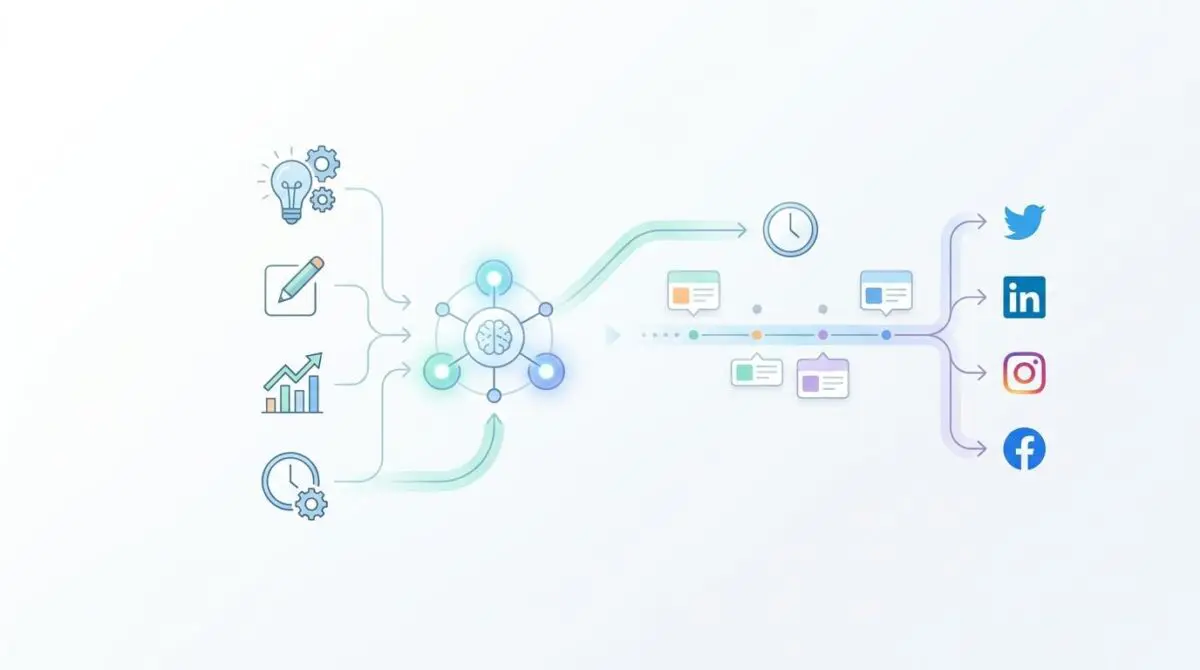
- Autonomous AI Social Orchestration (AASO) eliminates the traditional 48-hour content production lag, utilizing ‘Brand Twins’ to react to cultural shifts in sub-five-minute windows.
- Venture capital is aggressively funding ‘Self-Correcting Content Engines’ that leverage Shadow Audience Testing to simulate engagement, improving organic reach by up to 450%.
- The strategic frontier is the ‘Predictive Narrative’ era, where AI agents will generate bespoke, one-to-one marketing feeds tailored to individual real-time psychological profiles.
Table of Contents
The Attention Crisis and the Death of Manual Scheduling
According to Gartner’s 2026 Marketing Outlook, 80% of digital marketing content is now autonomously generated and distributed via agentic workflows, effectively reducing manual content operations by 90% compared to 2024 levels.
We have officially entered the era of Autonomous AI Social Orchestration (AASO). The legacy model of manual social media scheduling is entirely dead, suffocated by the sheer volume and velocity of the modern digital ecosystem.
Today’s enterprise faces a dual crisis of Content Saturation and Attention Decay. Human-led marketing teams simply cannot keep pace with a relentless 24/7 global trend cycle. They struggle constantly under the weight of demanding hyper-personalized content across a dozen platforms simultaneously.
Consider the traditional social media workflow. A trend appears online, a human team spots it four hours later, and an agency is briefed. Scripting, shooting, and legal reviews consume another 48 hours.
By the time that content is finally published, the cultural moment has already evaporated. This 48-hour production lag is a death sentence in an economy where digital attention spans are measured in milliseconds.
AASO solves this market friction by replacing human lag with sub-five-minute reaction windows. By deploying specialized AI agents, brands can respond to cultural shifts in real-time while slashing operational overhead by up to 85%.
It is a masterclass in disruptive innovation, effectively turning the social media department from a cost center into an autonomous revenue engine.
Market Intelligence: The Capital Gravity of Agentic Ops
Market Intelligence & Data
Market Valuation
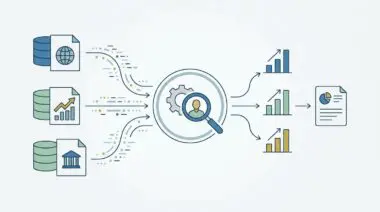
The global market for AI-driven social orchestration has expanded to $12.4B in 2026, as reported by Forrester Research.
Enterprise Adoption
72% of CMOs have fully migrated from legacy scheduling tools to autonomous AI agents as of Q1 2026, according to a Deloitte Digital survey.
Content Velocity
Organizations utilizing multi-agent content pipelines report a 14x increase in total content output compared to 2024 human-centric benchmarks, per McKinsey & Company.
Trend Pivot Speed
Top-tier AI workflows now pivot brand messaging in just 0.8 seconds following a global news event, according to data from the 2026 TechCrunch Startup Index.
This data paints a vivid picture of where the smart money is actively flowing in the tech ecosystem. The capital markets are no longer interested in isolated generative tools or basic automation platforms.
Instead, venture capital giants like Sequoia and Andreessen Horowitz have aggressively shifted their focus toward Self-Correcting Content Engines. They are funding Agentic Ops platforms that manage entire swarms of AI workers rather than individual software subscriptions.
This shift represents a fundamental transition from Software-as-a-Service to Service-as-Software. You are no longer buying a tool to do the work; you are buying the digital employee that does the work for you.
Dominant players like Synthesia are pioneering automated video personas that are indistinguishable from human actors. Meanwhile, Jasper’s 2026 Agentic Brand suite is completely redefining corporate identity by allowing AI to govern tone and style autonomously.
Startups such as FluxSocial and AgenticFlow are rapidly capturing market share by offering the underlying infrastructure that scales these autonomous ecosystems. They provide the digital plumbing necessary for AI swarms to operate without human bottlenecks.
The Strategic Deep Dive: Brand Twins and Autonomous Swarms
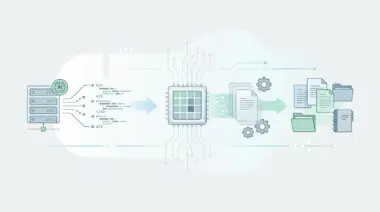
In 2026, social media management has transitioned entirely from manual scheduling to autonomous agentic workflows. Forward-thinking businesses are deploying Brand Twins to handle the heavy lifting.
These Brand Twins are highly specialized AI agents that handle the entire content lifecycle from inception to publication. They operate as an always-on digital ambassador, tirelessly working to capture market share.
These digital twins execute real-time trend sensing and multi-modal asset generation seamlessly. They blend Sora-integrated video generation with GPT-5 copywriting to produce broadcast-quality assets in seconds.
Beyond creation, they also manage autonomous community engagement. When a user comments on a post, the Brand Twin analyzes the sentiment and replies instantly with brand-aligned messaging, fostering a parasocial relationship at an unprecedented scale.
Closed-Loop Optimization: The Algorithmic Nervous System
The true killer strategy of this era is Closed-Loop Optimization. This is the algorithmic nervous system that separates legacy brands from modern digital apex predators.
In this framework, AI agents analyze audience engagement in milliseconds. If a piece of content is underperforming, the system does not wait for a weekly marketing meeting to adjust the strategy.
Instead, the AI instantly re-generates content variations to capture viral momentum without human intervention. It swaps a video hook, rewrites a caption, and alters the background music in real-time until the algorithm rewards it with reach.
This creates a self-healing marketing campaign. The friction of human decision-making is entirely removed, allowing the brand to operate at the literal speed of the internet.
Shadow Audience Testing: Simulating Virality
This level of optimization requires a fundamental shift in how we understand audience psychology and market friction. We can no longer rely on educated guesses or A/B testing that takes weeks to yield statistically significant results.
A 2026 report from Andreessen Horowitz reveals that ‘Shadow Audience Testing’—where AI agents simulate millions of bot-audience reactions to a post before it goes live—has improved organic engagement rates for Fortune 500 brands by a staggering 450%.
This simulated testing environment allows brands to fail privately and succeed publicly. The AI creates a digital replica of your target demographic and tests thousands of variations against this synthetic audience.
By simulating the psychological triggers of a target demographic, these agents essentially guarantee a baseline level of virality before a single human ever sees the post. It is a masterclass in risk mitigation and capital efficiency.
In fact, recent industry analyses on AI agents running marketing experiments highlight exactly how these iterative loops drastically reduce the financial risk of major campaign launches.
RLHF and the Velocity of Multi-Modal Content
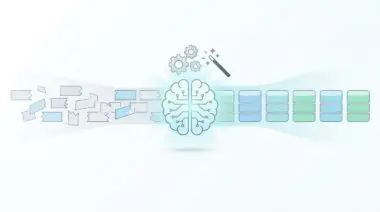
To maintain brand voice at a scale previously considered impossible, these systems rely heavily on reinforcement learning from human feedback (RLHF). This is the critical safety mechanism of the agentic era.
The AI continuously learns the nuanced boundaries of corporate messaging from subtle human corrections. This ensures that autonomous output never strays into reputational risk, maintaining strict compliance with brand guidelines.
The resulting output is staggering for organizations willing to embrace the disruption. A McKinsey benchmark on generative AI increasing content velocity demonstrates exactly how algorithmic orchestration outpaces legacy human-centric pipelines.
It is a pure volume play, but one driven by surgical precision rather than brute force. The friction of scaling a global brand voice across multiple languages and platforms is entirely eliminated by these intelligent swarms.
The Executive Action Plan: Engineering Predictive Narratives
Strategic Trajectory
- Transition into the ‘Predictive Narrative’ era by shifting from reactive scheduling to proactive content creation.
- Implement predictive analytics to simulate and trigger social trends before they enter the public zeitgeist.
- Architect infrastructure for ‘Bespoke Social Feeds’ that provide unique marketing experiences for every individual.
- Deploy AI agents capable of generating automated, one-to-one content for the entire follower base.
- Integrate real-time psychological profiling and user search history into core social orchestration workflows.
The next evolution in this space is the Predictive Narrative era. AI workflows will soon stop merely reacting to trends and begin using predictive analytics to simulate and trigger social movements before they even occur.
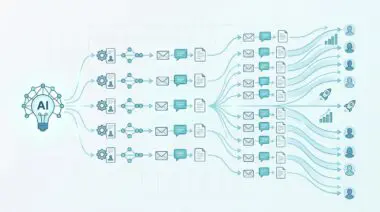
Founders and C-suite executives must prepare their enterprise infrastructure for Bespoke Social Feeds. This involves AI generating unique, one-to-one marketing content for every individual follower in real-time.
Imagine a consumer logging into a platform and seeing an advertisement that was rendered just seconds ago. The video features their preferred aesthetic, addresses their current pain points, and perfectly aligns with their search history from ten minutes prior.
By basing this content on specific real-time psychological profiles, brands will achieve unprecedented conversion rates. The imperative for leadership is to build the robust data pipelines today that will feed these agentic swarms tomorrow.
Conclusion: The New Paradigm of Scale
Autonomous AI Social Orchestration is not merely a new software tool; it is a fundamental rewiring of digital attention. The friction of the modern internet demands a solution that operates at the speed of algorithms, not human keystrokes.
Those who cling to manual scheduling and legacy content calendars will find themselves outpaced and out-engaged. They will ultimately be rendered obsolete by competitors utilizing self-correcting content engines.
The future of digital marketing belongs to the automated, the predictive, and the hyper-personalized. The brands that survive will be those that successfully transition from managing social media to orchestrating autonomous intelligence.
Navigating the intersection of technology, capital, and market psychology requires a sharp strategy. To future-proof your business architecture and scale with precision, connect with Andres at Andres SEO Expert.
Frequently Asked Questions
What is Autonomous AI Social Orchestration (AASO)?
AASO is an advanced digital marketing framework where agentic workflows autonomously generate, distribute, and optimize content. It replaces legacy manual scheduling with sub-five-minute reaction windows, allowing brands to respond to global trends in real-time.
Why is traditional manual social media scheduling considered obsolete?
Manual scheduling typically involves a 48-hour production lag, which is ineffective in a digital ecosystem where attention spans are measured in milliseconds. AASO eliminates this friction, increasing content velocity by 14x and enabling messaging pivots in under one second.
How do AI Brand Twins manage the social media lifecycle?
Brand Twins are specialized AI agents that act as 24/7 digital ambassadors. They handle the entire content lifecycle—from trend sensing and multi-modal asset generation to autonomous community engagement and sentiment-aligned messaging—without human bottlenecks.
What is Shadow Audience Testing and how does it affect engagement?
Shadow Audience Testing uses AI agents to simulate millions of synthetic audience reactions before a post is published. This process allows brands to identify psychological triggers and mitigate risk, resulting in organic engagement improvements of up to 450%.
What is Closed-Loop Optimization in marketing automation?
Closed-Loop Optimization is an algorithmic system that analyzes audience engagement in real-time. If a piece of content underperforms, the AI instantly re-generates hooks, captions, or visuals to capture viral momentum without requiring human decision-making.
What are Predictive Narratives in AI social orchestration?
Predictive Narratives represent the next evolution of agentic operations, where AI uses predictive analytics to trigger social movements before they enter the public zeitgeist. This allows brands to provide bespoke, one-to-one marketing experiences for every individual follower simultaneously.