Key Takeaways
- Gemini Flash models now use an agentic loop to search video, cutting token consumption by up to 88%.
- The model dynamically selects what to watch and at what speed, enabling split-second retrieval and anomaly detection.
- Agentic processing breaks the linear cost curve for long-form video, reducing analysis costs by up to 66%.
Table of Contents
Gemini Flash Models Now Treat Video as a Search Problem
Google DeepMind reports that Gemini 3.7 Flash, 3.6 Flash, and 3.5 Flash-Lite now support agentic video understanding, a feature that reduces token consumption by up to 88 percent and cuts analysis costs by up to 66 percent. The capability goes live today through the Gemini API in Google AI Studio and the Gemini Enterprise Agent Platform, bringing a model-driven search loop to video uploads and YouTube content.
The same update claims a quality improvement of up to 7 percent, with the most significant efficiency gains appearing across long-form videos such as ten-minute how-to guides, ninety-minute lectures, and multi-hour recordings.
Inside the Agentic Loop That Replaces Static Sampling
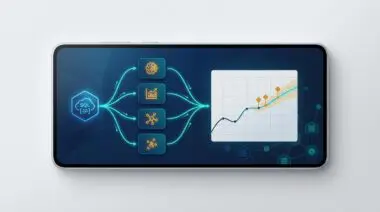
Static video processing typically forces a model to ingest the stream at a fixed frame rate, with the API default set to one frame per second. Agentic video understanding replaces that uniform sampling with an active loop that pairs core reasoning with native video tools to search, scan, and inspect target segments across visual frames, audio, and transcripts.
As Google DeepMind explains, the model determines what to watch, at what speed, and through which modality, fetching only the moments and signals that matter for a given query. When a relevant section is identified, an internal tool loads the required portion of the video file, removing much of the manual orchestration previously handled by developers.
Where the Mode Shifts From Cost Cut to Capability Unlock
- Sub-second moment retrieval: Detects split-second state changes and tight cut boundaries that one-frame-per-second sampling can miss.
- Needle-in-a-haystack search: Answers complex queries across multi-hour footage without burning millions of tokens.
- Anomaly detection: Re-samples interesting time windows at higher frame rates to inspect rapid motion and subtle visual artifacts.
- Counting actions and objects: Tracks repeated physical movements and distinct objects over time.
Gemini 3.7 Flash with agentic processing sits at the accuracy-to-cost pareto frontier among tested models, making it the strongest option for teams that need both quality and efficiency. The gains span all three supported Flash variants, but 3.7 Flash delivers the best overall quality.
Standard Gemini API token pricing applies, with no additional feature fee. Developers enable the mode by setting the processing parameter to ‘agentic’ in the API configuration.
The feature is also moving beyond the API: Gemini app users across Flash and Flash-Lite models will receive it soon, and YouTube’s ‘Ask YouTube’ feature will use it in the coming months to ground answers in video visuals.
Token Reduction Reshapes the Economics of Long-Form Video
The most disruptive number is not the 66 percent cost drop alone, but the 88 percent token reduction that makes the cost drop possible. For long-form video, static processing forces a hard tradeoff between high token bills and aggressive downsampling that silently drops detail.
Agentic search changes that calculus by spending compute only on relevant segments, which breaks the linear relationship between video length and token consumption. That distinction matters for teams indexing lecture archives, reviewing security footage, or processing hours of user-generated content.
Across AI infrastructure, agentic loops are emerging as the operational layer that replaces static inference calls. The same pattern is surfacing in adjacent workloads where fixed sampling gives way to goal-directed retrieval, from machine-speed security evaluation to inference cost analysis.
Recent industry discussions around GPU capacity and inference total cost of ownership point to the same pressure: compute efficiency is becoming the decisive variable for production AI systems. A native agentic loop moves that orchestration inside the model, shrinking the ingestion stack for video QA, moderation, and content intelligence.
The consumer rollout extends the same economics to Google’s wider ecosystem. Once ‘Ask YouTube’ and the Gemini app adopt the mode, the boundary between video search and video understanding becomes a product surface rather than a pipeline problem.
The Real Signal Is Retrieval, Not Just Compression
Agentic video understanding turns long-form footage from a passive data stream into an addressable corpus that the model can query like a search engine. For teams building AI-powered video understanding pipelines that need to scale, programmatic SEO and AI automation is how Andres SEO Expert approaches it — contact us.
Frequently Asked Questions
What is agentic video understanding in Gemini Flash models?
Agentic video understanding is a new capability in Gemini 3.7 Flash, 3.6 Flash, and 3.5 Flash-Lite that lets the model actively search and inspect video content using an internal agentic loop. Instead of processing every frame at a fixed rate, the model decides which moments, modalities, and speeds to focus on, leading to up to 88 percent lower token consumption and 66 percent lower analysis costs.
How does agentic video understanding reduce token consumption and cost?
The model uses a reasoning loop with native video tools to search, scan, and inspect only the relevant segments of a video. It fetches specific portions of the file only when needed, breaking the linear relationship between video length and token usage. This reduces the number of tokens processed and lowers analysis costs by up to 66 percent.
Which Gemini models support agentic video understanding and how do I enable it?
The feature is available today on Gemini 3.7 Flash, 3.6 Flash, and 3.5 Flash-Lite through the Gemini API in Google AI Studio and the Gemini Enterprise Agent Platform. Developers can enable it by setting the processing parameter to ‘agentic’ in the API configuration. Standard Gemini API token pricing applies with no additional feature fee.
What are the key benefits of agentic video understanding for long-form video?
It enables sub-second moment retrieval, needle-in-a-haystack search across multi-hour footage, anomaly detection with higher frame rates on interesting segments, and accurate counting of actions and objects. These capabilities make it ideal for lectures, how-to videos, security footage, and user-generated content, with quality improvements of up to 7 percent.
How does agentic video processing work under the hood?
The model pairs core reasoning with native video tools to search, scan, and inspect target segments across visual frames, audio, and transcripts. It determines what to watch, at what speed, and through which modality, and an internal tool loads the required portion of the video file when a relevant section is identified, removing manual orchestration by developers.
When will agentic video understanding be available in the Gemini app and YouTube?
The feature is moving beyond the API soon. Gemini app users across Flash and Flash-Lite models will receive it shortly, and YouTube’s ‘Ask YouTube’ feature will use it in the coming months to ground answers in video visuals.
What types of tasks is agentic video understanding best suited for?
It is best suited for tasks requiring precise moment retrieval, complex queries across long recordings, anomaly detection, and counting repeated actions or objects. The efficiency gains are most significant for ten-minute how-to guides, ninety-minute lectures, and multi-hour recordings.