Key Takeaways
- MCP’s 2026-07-28 spec makes every request self-contained, eliminating sticky sessions and enabling serverless deployment.
- New Mcp-Method and Mcp-Name headers let infrastructure route and observe tool calls without parsing JSON bodies.
- Cloudflare, Sentry, Linear, and Simon Willison have already adopted stateless MCP, signaling a maturation of agent-native infrastructure.
Table of Contents
- MCP Goes Stateless: How One Spec Update Removed the Biggest Bottleneck in Agent Connectivity
- Inside the 2026-07-28 Protocol: Statelessness by Design, Not by Workaround
- Industry Titans React: Sentry, Linear, and the Real-World Shift to Agent-Native Infrastructure
- Where Agent Infrastructure Goes From Here
MCP Goes Stateless: How One Spec Update Removed the Biggest Bottleneck in Agent Connectivity
The Model Context Protocol—the connective tissue between AI agents and external tools—just underwent its most radical architectural shift since launch. Cloudflare reports that the MCP 2026-07-28 specification, released on July 28, 2026, transforms the protocol from a stateful session-based design into a fully stateless, request-scoped interaction model.
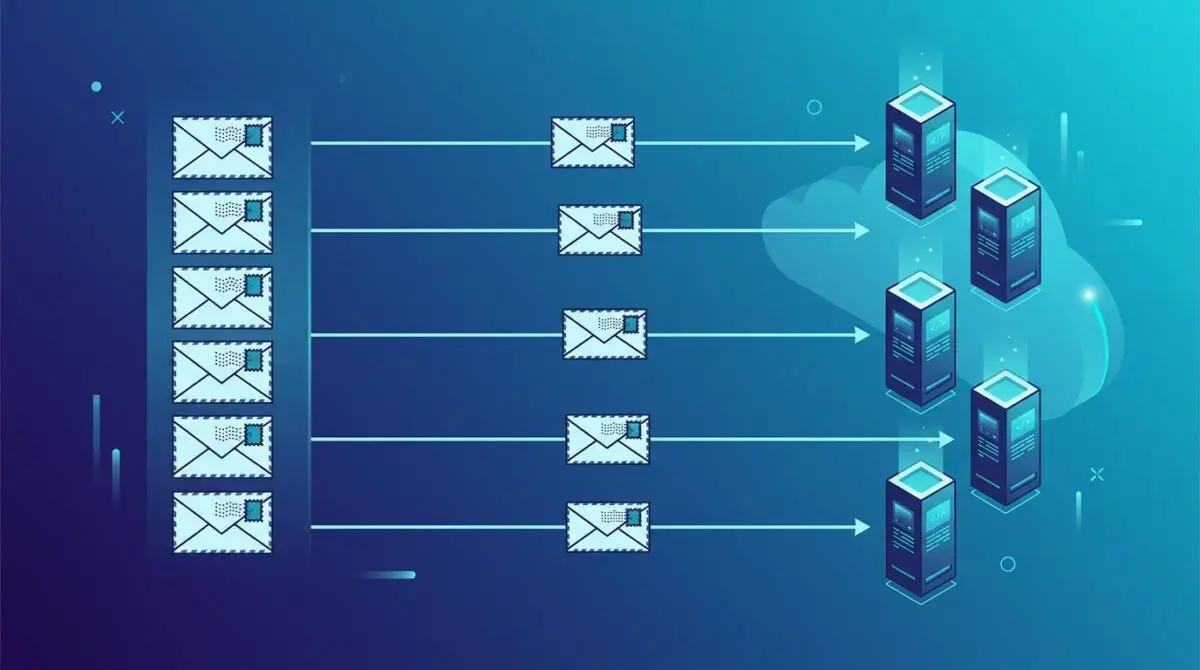
Developers no longer need to manage sticky sessions, session IDs, or persistent streams. Each request now carries its own protocol version, client identity, and capabilities, making it trivially deployable on serverless platforms like Cloudflare Workers.
The update also reworks elicitation—the mechanism for agent-to-human confirmation—using a multi-round-trip request pattern that eliminates the need for an open stream, a source of complexity that plagued early MCP deployments.
Inside the 2026-07-28 Protocol: Statelessness by Design, Not by Workaround
The protocol’s architecture documentation describes how every request now carries version and capability metadata in a _meta field, enabling servers to process each call independently without referencing prior state. The session-based initialize/initialized handshake is gone entirely.
The new HTTP transport introduces mandatory Mcp-Method and Mcp-Name headers, allowing gateways, load balancers, and web application firewalls to route, rate-limit, and log tool calls without parsing JSON bodies. At the same time, caching directives (ttlMs and cacheScope) and deterministic ordering for tool catalogs let clients reuse discovery data efficiently.
The previous elicitation model, which depended on an open stream for the server to request additional input, has been replaced by multi-round-trip requests (MRTR). A server returns an input_required result, the client collects the missing data and retries the operation, and no session state persists between those exchanges. This trades a stream for a series of idempotent round trips, a simpler operational pattern for serverless runtimes.
- Stateless requests: No session IDs, no sticky routing required. Each call is self-contained.
- HTTP-native observability: Method and tool name exposure in headers enables infrastructure-level decisions without application-layer introspection.
- Caching and ordering: Deterministic tool lists and cache hints reduce upstream load and improve cold-start latency.
- Authorization evolution: Pre-registered clients and Client ID Metadata Documents (CIMD) replace Dynamic Client Registration, which is deprecated and slated for removal after summer 2027. OAuth issuer identification via RFC 9207 and audience-bound tokens tighten security.
- Feature lifecycle: A formal deprecation policy (12-month window) applies to older transports, sampling, logging, and DCR, giving teams a predictable migration path.
The Cloudflare Agents SDK now provides a createMcpHandler that wraps the upstream MCP TypeScript server, now running on Web Standards instead of Node.js, so the same code works across Workers, Bun, and Deno. Servers can expose a single /mcp route that accepts both the new stateless protocol and the legacy Streamable HTTP client, enabling a gradual migration.
Industry Titans React: Sentry, Linear, and the Real-World Shift to Agent-Native Infrastructure
The new specification isn’t a theoretical upgrade. It landed in production before it was even finalized. David Cramer, co-founder and CPO of Sentry, shared the following:
We built Sentry’s MCP on Cloudflare’s SDK. Big fans. We went live with this new one before the 7-28 spec was even finalized, and it didn’t break prod. Big fans of that, too. This new spec cleans up a bunch of the nonsense around auth and tools, which is exactly what I wanted. Agents only get useful once the plumbing stops being the whole story.
Linear’s engineering team also moved early. Tom Moor, Head of Engineering, noted that the stateless design makes hosting MCP servers more reliable while preserving the universality they valued: one server works with any MCP-compatible client, without building hundreds of integrations.
On July 29, independent developer Simon Willison called it “Stateless MCP day” and wrote on his weblog that the removal of persistent connections breathed new life into the protocol for him. He immediately built mcp-explorer and datasette-mcp, two tools that demonstrate how drastically the integration model has simplified.
Willison also echoed a growing consensus that MCP’s highest-value role isn’t to abstract the world for the agent, but to manage authentication, networking, and security boundaries while staying out of the way once the tool is invoked. That perspective shifts the design conversation from “how do we model everything in MCP” to “how do we use MCP as the secure entry point to existing APIs.”
Where Agent Infrastructure Goes From Here
The stateless MCP specification marks a maturation point where agent infrastructure aligns with the same operational patterns that power the web: stateless HTTP, standard auth, and infrastructure-friendly headers. The protocol no longer forces developers into bespoke stateful topologies, which means agent connectivity can scale horizontally with the same primitives used for any modern API service.
The immediate effect is a lower barrier to entry for production-grade MCP servers. Teams can deploy tool endpoints as lightweight serverless functions, secure them with OAuth, and still support advanced features like elicitation without persistent sessions. That unlocks the protocol for a much broader range of use cases, from quick internal tooling to multi-tenant SaaS integrations.
For organizations embedding AI agents into production workflows, the infrastructure decisions that power agent connectivity matter just as much as the intelligence itself. Andres SEO Expert’s programmatic SEO and AI automation services translate the same architectural rigor into content systems that perform under algorithmic complexity, ensuring that automated pipelines scale without fragility. To explore how these capabilities can support your next project, connect with Andres and learn more about Andres SEO Expert’s approach.
Frequently Asked Questions
What is the Model Context Protocol (MCP)?
The Model Context Protocol (MCP) is the connective tissue between AI agents and external tools, enabling them to access tools, data, and APIs. The 2026-07-28 spec update makes it stateless, removing persistent sessions for simpler serverless deployment.
What changed in the MCP 2026-07-28 specification?
The specification shifts from a stateful session-based design to a fully stateless, request-scoped model. It eliminates session IDs and the initialize/initialized handshake, adds Mcp-Method and Mcp-Name headers, and introduces caching directives, deterministic tool ordering, and a new multi-round-trip elicitation pattern.
Why is a stateless MCP beneficial for developers?
Stateless MCP allows each request to be self-contained, removing the need for sticky sessions and persistent streams. This makes servers trivially deployable on serverless platforms like Cloudflare Workers and simplifies scaling, observability, and infrastructure management.
How does elicitation work in the new MCP protocol?
The new elicitation model uses multi-round-trip requests (MRTR). The server returns an input_required result, the client collects the missing data and retries the operation, without persisting session state between exchanges, enabling simpler serverless operation.
What security and authorization updates are included in MCP 2026-07-28?
Dynamic Client Registration is deprecated and replaced by pre-registered clients and Client ID Metadata Documents (CIMD). OAuth issuer identification via RFC 9207 and audience-bound tokens tighten security.
How can existing MCP servers migrate to the new stateless protocol?
Servers can expose a single /mcp route that accepts both the new stateless protocol and the legacy Streamable HTTP client, enabling gradual migration. A formal 12-month deprecation policy applies to older transports, sampling, logging, and DCR.
What has been the industry reaction to stateless MCP?
Companies like Sentry and Linear adopted the spec before finalization. Independent developer Simon Willison called it “Stateless MCP day” and built new tools, highlighting how the removal of persistent connections simplifies integration and makes MCP a secure entry point to existing APIs.