Key Takeaways
- Muse Spark 1.1 excels in agentic tasks, tool use, and computer use, with a 1M token context window for long-running complex workflows.
- It achieves competitive benchmark scores: 80.0 on MCP Atlas and 42.8 on HealthBench Hard, outperforming rivals in specific evaluations.
- The model is now available via the Meta Model API and in ‘Thinking’ mode on Meta AI, with strong safety and adversarial robustness.
Table of Contents
Meta Unveils Muse Spark 1.1: A Leap in Agentic AI
Meta Superintelligence Labs has unveiled Muse Spark 1.1, a multimodal reasoning model that dramatically advances performance in agentic tasks, tool use, and computer use. Launched on July 9, 2026, the model is now available in ‘Thinking’ mode on Meta AI and via the new Meta Model API, marking a strategic push toward personal superintelligence.
Muse Spark 1.1 builds on its predecessor with a 1-million-token context window, enabling it to handle long-running complex workflows. This release, alongside Muse Image, signals Meta’s commitment to models that help users pursue goals, create, and take action.
Inside Muse Spark 1.1: Technical Deep Dive
Agentic Orchestration
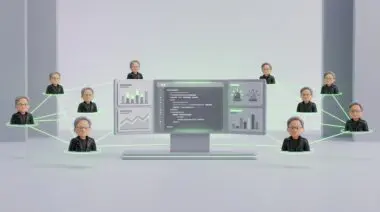
Muse Spark 1.1 excels in personal agentic tasks requiring planning across external apps and services. It zero-shot generalizes to new tools, MCP servers, and custom skills. The model is trained to orchestrate multi-agent systems, acting as main agent to gather context, plan, and delegate, or as subagent adhering to its role and escalating when needed.
Computer Use
The model handles computer-use workflows across multiple applications with dynamic information. It maintains context over extended sessions, adapting to evolving requirements. Muse Spark 1.1 knows when to automate via scripting or interact directly, generating batches of actions efficiently. For example, in a dinner party organization demo, it adapts to new context without user intervention.
Coding and Multimodal Understanding
Coding performance improved substantially on real-world tasks with complex codebases. It diagnoses bugs, implements features, and executes migrations. The model performs well with popular agentic coding setups like OpenCode, combining coding, multimodal understanding, and tool calling. Multimodal capabilities allow it to process visual and audio, preserve details, and operate computers on the user’s behalf, such as listing a product on Facebook Marketplace from video.
Market Implications and Benchmark Performance
According to Meta’s official technical release, Muse Spark 1.1 posts competitive benchmark scores. On MCP Atlas (scaled tool use), it scores 80.0, slightly behind Claude Opus 4.8 (82.7) and GPT-5.5 (83.4) according to DataCamp. However, on HealthBench Hard, it leads with 42.8 versus Claude Opus 4.6 Max (14.8) and Gemini 3.1 Pro High (20.6) as reported by Facebook community analysis.
‘What’s most impressive about Muse Spark is how much it packs into one model: massive million-token context, full multimodal support (images, video, PDFs), built-in search with citations, strong reasoning, top-tier coding abilities, structured output, and parallel tool calling — all in a clean OpenAI-compatible package. A complete agentic foundation.’ — Amjad Masad, CEO of Replit
Industry leaders praise the model. Amjad Masad of Replit called it a complete agentic foundation, while Saoud Rizwan of Cline noted its strong tool use at a viable price point. Meta developers are using Muse Spark 1.1 daily for faster building and smarter work. Safety evaluations were extensive, following Meta’s Advanced AI Scaling Framework, with strong resistance to jailbreaks and prompt injection.
The Future of Personal Superintelligence
Muse Spark 1.1 represents a significant step toward Meta’s vision of personal superintelligence. With its combination of agentic orchestration, long context, and robust multimodal reasoning, it advances the performance-efficiency frontier. Meta hints at even more capable models in training, suggesting the pace of innovation will accelerate.
Staying ahead in the rapidly shifting landscape of AI requires precision. To future-proof your digital strategy and scale effortlessly, you need a foundation built on precision. Optimize your site with advanced speed engineering, secure your infrastructure in high-performance hosting environments, and streamline your entire workflow through autonomous AI pipelines. If you are ready to elevate your systems, Connect with Andres at Andres SEO Expert to build your ultimate architecture.
Frequently Asked Questions
What is Muse Spark 1.1 and when was it released?
Muse Spark 1.1 is a multimodal reasoning model unveiled by Meta Superintelligence Labs on July 9, 2026. It is designed for agentic tasks, tool use, and computer use, and is available in ‘Thinking’ mode on Meta AI and via the Meta Model API.
What is the context window size of Muse Spark 1.1?
Muse Spark 1.1 features a 1-million-token context window, enabling it to handle long-running complex workflows and maintain context over extended sessions.
How does Muse Spark 1.1 perform in agentic orchestration and computer use?
Muse Spark 1.1 excels in personal agentic tasks, zero-shot generalizing to new tools and MCP servers. It can orchestrate multi-agent systems and handle computer-use workflows across multiple applications, adapting to dynamic information and automating via scripting or direct interaction.
What are the benchmark scores for Muse Spark 1.1 compared to competitors?
On MCP Atlas (scaled tool use), Muse Spark 1.1 scores 80.0, behind Claude Opus 4.8 (82.7) and GPT-5.5 (83.4). However, on HealthBench Hard, it leads with 42.8 versus Claude Opus 4.6 Max (14.8) and Gemini 3.1 Pro High (20.6).
What are the key features of Muse Spark 1.1 for coding and multimodal understanding?
Coding performance improved on real-world tasks with complex codebases; it diagnoses bugs, implements features, and executes migrations. Multimodal capabilities allow processing visual and audio input, preserving details, and operating computers on the user’s behalf, such as listing a product on Facebook Marketplace from video.
How does Muse Spark 1.1 contribute to Meta’s vision of personal superintelligence?
Muse Spark 1.1 advances the performance-efficiency frontier by combining agentic orchestration, long context, and robust multimodal reasoning, representing a significant step toward Meta’s vision of personal superintelligence. Meta hints at even more capable models in training.
What safety evaluations were conducted for Muse Spark 1.1?
Safety evaluations followed Meta’s Advanced AI Scaling Framework, demonstrating strong resistance to jailbreaks and prompt injection.