Key Takeaways
- Cloudflare’s Turnstile Spin lets AI coding agents install, recover, or migrate Turnstile widgets and backend Siteverify calls after explicit human approval, with over 65,000 successful builds since July.
- Research showing 81 percent human accuracy and 100 percent model success on reCAPTCHAv2 image puzzles is collapsing the assumption that visual challenges reliably separate humans from bots.
- Trust is shifting to backend, agent-aware verification that weighs identity and intent, since anti-bot defenses often block legitimate AI agents alongside malicious automation.
Table of Contents
Turnstile Spin Puts AI Coding Agents on Security Duty
Cloudflare has launched Turnstile Spin, an agent-mediated implementation layer that turns the standard two-step Turnstile CAPTCHA setup into an approval-based workflow inside existing AI coding agents.
The tool can create widgets, wire backend Siteverify calls, recover incomplete deployments, and migrate legacy CAPTCHA markers across frontend and backend code without sending application source to Cloudflare.
Turnstile operates as a privacy-first client-side challenge, works on any site without requiring Cloudflare traffic proxying, and does not present puzzles to visitors.
The Three Agentic Install Paths Inside Turnstile Spin
As detailed on Cloudflare’s blog, Turnstile Spin starts from the Cloudflare dashboard, Wrangler, or a public skill URL that operators paste into their preferred coding environment.
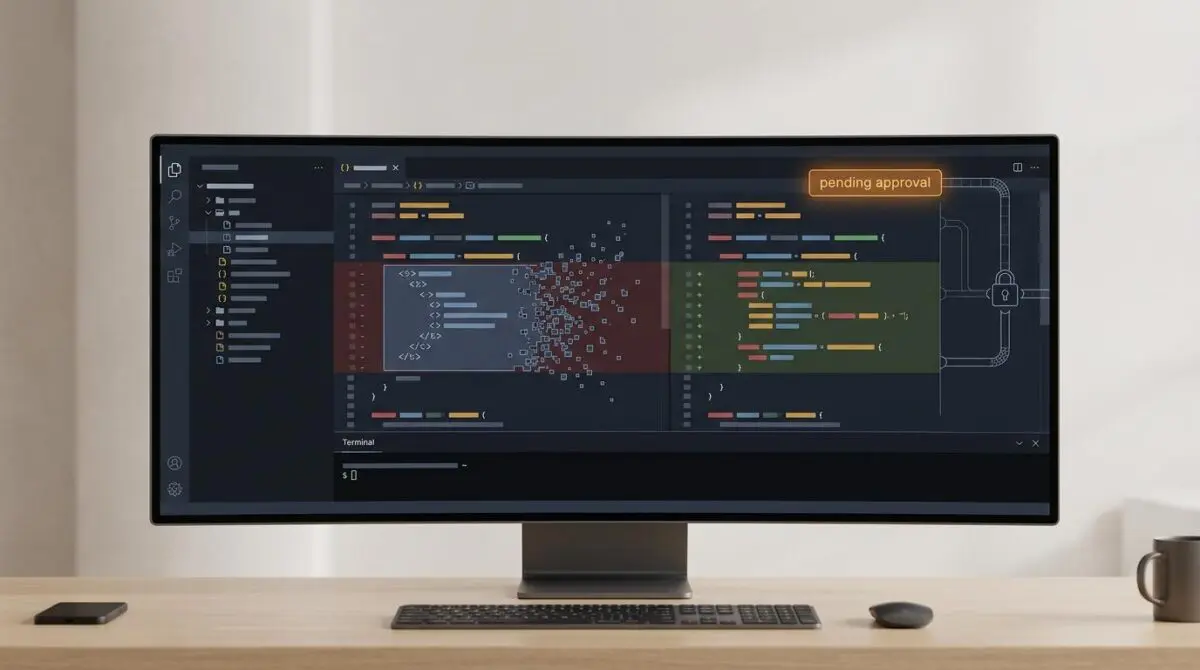
The agent then inspects the codebase, identifies the frontend and backend touchpoints, outlines a proposed plan, and pauses for explicit approval before editing any file.
The local agent — Claude Code, Cursor, Codex, or another tool — applies approved edits inside the repository.
The only new artifact in a Cloudflare account remains the Turnstile widget; backend validation stays next to application logic that decides what happens after a challenge.
- Fresh install — no CAPTCHA in place, so the agent embeds the frontend widget and wires Siteverify into the backend from scratch.
- Widget recovery — Cloudflare detects missing server-side validation and surfaces a ‘Fix with Spin’ banner; the agent adds the missing backend step while the widget keeps serving traffic.
- Migration from CAPTCHA — the agent spots existing markers, outlines a replacement plan, and executes it only after explicit approval.
Since the July rollout, dashboard telemetry has counted over 65,000 successful widget builds through Spin, while users copied the generated prompt more than 30,000 times.
Cloudflare handles roughly three billion verification decisions every normal weekday, a scale that makes installer quality a production concern rather than a convenience feature.
The Collapsing CAPTCHA Assumption Shifts Trust to the Backend
A USENIX Security study of 1,400 participants solving 14,000 CAPTCHAs found human accuracy on image classification at roughly 81 percent.
The same study recorded a 30 percent abandonment rate: 174 of 574 participants quit before completing a challenge, and account-creation flows pushed abandonment 120 percent higher than standalone puzzles.
ETH Zurich researchers later found that standard computer-vision models could clear reCAPTCHAv2 image challenges 100 percent of the time, compared with 68 to 71 percent in earlier studies.
Those numbers collapse the old assumption that a visual puzzle is a reliable human gate.
AWS Bedrock AgentCore documentation warns that anti-bot mechanisms often block approved AI agents because websites cannot reliably distinguish them from malicious automation.
Anti-bot mechanisms including CAPTCHA are designed to prevent malicious automated traffic but often block legitimate AI agents as well.
That is the tension Turnstile Spin addresses: it leaves verification on the backend, where identity, intent, and control can be weighed as a trust decision instead of a single puzzle result.
Market analysts are now reframing the space from a security-first mindset to a trust-first model in which agents can represent legitimate customers, partners, or hostile actors.
Agentic Security Moves From Prompt to Pipeline
Turnstile Spin turns bot protection into an agent-native, backend-verified workflow that solo builders can ship in minutes. For teams building AI-agent workflows that need to scale without tripping over bot mitigation, programmatic SEO and AI automation is how Andres SEO Expert approaches it — contact the team.
Frequently Asked Questions
What is Cloudflare Turnstile Spin?
Turnstile Spin is an agent-mediated implementation layer that turns the standard two-step Turnstile CAPTCHA setup into an approval-based workflow inside existing AI coding agents like Claude Code, Cursor, and Codex. It can create widgets, wire backend Siteverify calls, recover incomplete deployments, and migrate legacy CAPTCHA markers without sending application source to Cloudflare.
How does Turnstile Spin work with AI coding agents?
Operators start from the Cloudflare dashboard, Wrangler, or a public skill URL, then paste the prompt into their coding environment. The agent inspects the codebase, identifies frontend and backend touchpoints, outlines a plan, and pauses for explicit approval before editing any file. The local agent applies approved edits inside the repository.
What are the three install paths inside Turnstile Spin?
Fresh install, widget recovery, and migration from CAPTCHA. Fresh install embeds the frontend widget and wires Siteverify into the backend. Widget recovery adds missing server-side validation while the widget keeps serving traffic. Migration spots existing CAPTCHA markers and executes a replacement plan only after explicit approval.
Why is CAPTCHA no longer considered a reliable human gate?
A USENIX Security study of 1,400 participants found human accuracy on image classification at roughly 81 percent, with a 30 percent abandonment rate. ETH Zurich researchers later found standard computer-vision models could clear reCAPTCHAv2 image challenges 100 percent of the time. These numbers collapse the assumption that a visual puzzle reliably distinguishes humans from bots.
How does Turnstile Spin shift trust to the backend?
Turnstile Spin leaves verification on the backend, where identity, intent, and control can be weighed as a trust decision instead of a single puzzle result. The only new artifact in a Cloudflare account remains the Turnstile widget; backend validation stays next to application logic that decides what happens after a challenge.
What scale does Cloudflare handle for verification decisions?
Cloudflare handles roughly three billion verification decisions every normal weekday. Since the July rollout, dashboard telemetry has counted over 65,000 successful widget builds through Spin, while users copied the generated prompt more than 30,000 times.