Key Takeaways
- Agentic intake systems cut manual triage time by 70% in private practices.
- Structured JSON routing with three branches replaces rigid decision trees.
- Self-hosting and strict governance are compliance prerequisites for HIPAA.
Table of Contents
A 70 Percent Reduction in Manual Triage Is Now an Engineering Problem
Private practices are shifting intake from static forms to agentic systems that read patient language, assess urgency, and decide whether to follow up, escalate, or hand off a clean record.
n8n Lab, an independent automation services provider, reports that clinics deploying this architecture typically see a 70 percent reduction in manual administrative triage time and no delayed responses to urgent enquiries.
The technical playbook centers on a self-hosted n8n instance, an LLM reasoning layer, and a routing switch that replaces brittle conditional logic with dynamic evaluation.
From Linear Forms to a Three-Path Reasoning Engine
The most important design decision is not the model choice; it is forcing the LLM to produce a structured decision that downstream nodes can act on without reinterpreting free text.
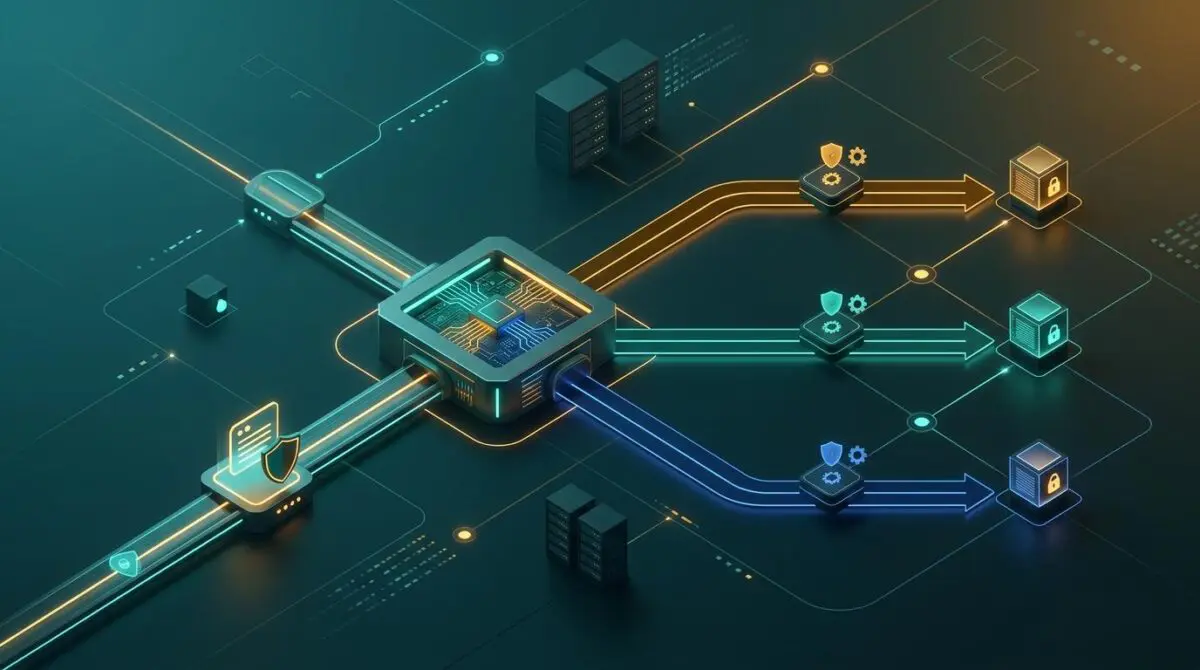
The workflow captures a patient enquiry through a secure webhook, sends the payload to a reasoning node, and then routes the result through one of three branches.
A strict JSON schema defines the possible statuses — complete, missing_info, or urgent_escalation — along with missing fields, urgency level, and a one-sentence explanation.
That output becomes the machine-readable handoff for the rest of the system.
Three Routes Replace the Rigid Decision Tree
The first branch handles incomplete enquiries by drafting a contextual follow-up that names the missing insurance, demographic, or clinical detail and holds the message in a review queue.
The second branch escalates urgent cases to a clinical Slack or Teams channel, attaching the agent’s reasoning so staff do not have to re-read the original message to find the red flag.
The third branch pushes a verified record into a practice management system such as Jane App, Cliniko, or SimplePractice and notifies scheduling staff that a patient is ready for booking.
- Autonomous Follow-Up: Drafts a specific request for missing insurance, date of birth, or reason for visit and stages it for human approval.
- Human Escalation: Sends the original message plus the agent’s reasoning to a dedicated triage channel for immediate review.
- Complete Handoff: Posts a clean patient record through the practice management API and alerts the scheduling team.
The value is the contextual layer: a patient who writes a complex mixed message no longer breaks the intake process.
Self-Hosting Is a Compliance Prerequisite, Not a Preference
For HIPAA-covered practices, the n8n Lab playbook treats self-hosted n8n as a non-negotiable boundary because it keeps protected health information outside third-party SaaS pipelines that complicate Business Associate Agreements.
That infrastructure requirement is paired with encrypted storage, least-privilege API keys, aggressive log pruning, and a documented escalation rubric.
An LLM provider such as Anthropic Claude via API or Azure OpenAI under a BAA fits the architecture because the reasoning layer never sends PHI to consumer-grade endpoints.
Compliance and Cost Are Redefining the Agentic Market
Late-summer 2026 automation coverage has been circling a pair of ideas that mirror this intake architecture: self-hosted stacks are becoming a cost lever, and routing layers are replacing single-model agents.
Recent published work across the field points to local n8n and Ollama deployments, Git-based workflow versioning, and worst-case ETL designs as the practical bulwark against brittle automation.
Those themes are not separate from healthcare intake; they are the same operational questions wearing different industry clothing.
A clinical practice cannot afford a silent webhook failure or a hallucinated urgency flag, so the automation market’s turn toward deterministic routing and version-controlled workflows is directly relevant.
Local Stacks and Routing Layers Are the New Baseline
The push toward local LLM infrastructure aligns with the playbook’s insistence on self-hosting, while the router-first critique of single-model agents reinforces the switch node as the actual control plane.
That convergence suggests the next wave of agentic systems will look less like chatbots and more like supervised reasoning pipelines.
The Counterweight: Governance Still Separates Serious Deployments
The playbook’s production checklist is the unglamorous part: retry logic, dead letter queues, rate limiting, encrypted databases, and alerts that fire when a workflow fails.
Those controls are what separate a compelling demo from a system that can safely touch real patient data at scale.
The Hardest Piece Is Not the Model, It Is the Governance
The strongest signal from this playbook is not that language models can read patient messages; it is that reliable clinical intake depends on constrained reasoning, visible routing, and a human approval layer.
For teams building agentic automation pipelines that need to scale without compromising compliance, programmatic AI automation strategy is how Andres SEO Expert approaches it — talk to us.
Frequently Asked Questions
How does an agentic intake workflow reduce manual triage time by 70%?
According to n8n Lab, clinics deploying an agentic intake architecture that reads patient language, assesses urgency, and routes decisions typically see a 70 percent reduction in manual administrative triage time, with no delayed responses to urgent enquiries.
What are the three routing branches in the patient intake system?
The system routes structured LLM output through three branches: autonomous follow-up for incomplete enquiries that drafts a contextual request for missing details; human escalation for urgent cases that sends the original message plus reasoning to a dedicated triage channel; and complete handoff that pushes a verified record into a practice management system and alerts scheduling staff.
Why is self-hosting n8n a compliance prerequisite for HIPAA-covered practices?
Self-hosting n8n keeps protected health information outside third-party SaaS pipelines that complicate Business Associate Agreements. The infrastructure is paired with encrypted storage, least-privilege API keys, aggressive log pruning, and a documented escalation rubric. LLM providers like Anthropic Claude via API or Azure OpenAI under a BAA fit because the reasoning layer never sends PHI to consumer-grade endpoints.
What role does a strict JSON schema play in the reasoning layer?
A strict JSON schema defines possible statuses — complete, missing_info, or urgent_escalation — along with missing fields, urgency level, and a one-sentence explanation. This forces the LLM to produce a structured decision that downstream nodes can act on without reinterpreting free text, making the output a machine-readable handoff for the rest of the system.
How does the system handle urgent patient enquiries?
Urgent cases are escalated to a clinical Slack or Teams channel with the agent’s reasoning attached, so staff do not need to re-read the original message to find the red flag. This ensures immediate review without delaying responses to urgent enquiries.
What governance and production safeguards separate serious clinical deployments from demos?
The production checklist includes retry logic, dead letter queues, rate limiting, encrypted databases, and alerts that fire when a workflow fails. These controls are what allow a system to safely touch real patient data at scale, making governance the hardest piece rather than the model itself.
How do local stacks and routing layers redefine agentic system design?
The push toward local LLM infrastructure aligns with self-hosting, while the router-first critique of single-model agents reinforces the switch node as the actual control plane. The next wave of agentic systems will look less like chatbots and more like supervised reasoning pipelines with deterministic routing and version-controlled workflows.


![What to Look When Hiring AI Automation Agency [Ful Decision Making Guide]](https://andresseo.expert/wp-content/smush-webp/2026/08/10-validation-nodes-that-separate-ai-automation-builders-from-marketers-380x212.jpg.webp)