Key Takeaways
- Managed AI agent platforms punish success with linear per-execution pricing—self-hosting flattens the cost curve.
- Self-hosted n8n keeps sensitive PII and PHI inside your VPC, satisfying data sovereignty and regulatory requirements.
- Production agents need network-level isolation, external secrets management, and custom audit logs—only self-hosting delivers.
Table of Contents
- Autonomous Agents in Production Demand Infrastructure Control—and the Industry Agrees
- Data Sovereignty, Cost Scaling, and the Real Operational Differences of Autonomous Agents
- Enterprise Data Confirms Self-Hosting Is Becoming a Regulatory and Financial Imperative
- From Architectural Decision to Competitive Moat
Autonomous Agents in Production Demand Infrastructure Control—and the Industry Agrees
When autonomous AI agents graduate from controlled prototypes to live production systems, the hosting layer instantly transforms from a mundane DevOps checkbox into the fulcrum of security, cost, and compliance. N8N Lab’s latest technical analysis makes the case that organizations clinging to fully managed multi-tenant platforms for agentic workloads are operating on a financial and security precipice that crumbles the moment real data volumes, broad tool access, and regulatory mandates collide with shared infrastructure.
The core premise is jarring in its clarity: an agent that can independently reason, call tools, and take action across production systems does not merely use infrastructure—it makes infrastructure an active component of the security boundary and the cost architecture itself. This article dissects why self-hosted n8n deployments are not a hosting preference but a structural prerequisite for safe, scalable, and economically viable autonomous agents.
Data Sovereignty, Cost Scaling, and the Real Operational Differences of Autonomous Agents
Standard API integrations follow a predictable, narrow data path—Field A maps to Field B, and the blast radius is inherently bounded by hardcoded logic. An LLM-driven agent equipped with tool-calling capabilities operates on an entirely different plane. To resolve a single customer ticket, it may reach into CRMs, knowledge bases, billing systems, and policy repositories, dynamically combining data in ways that cannot be enumerated during the development sprint.
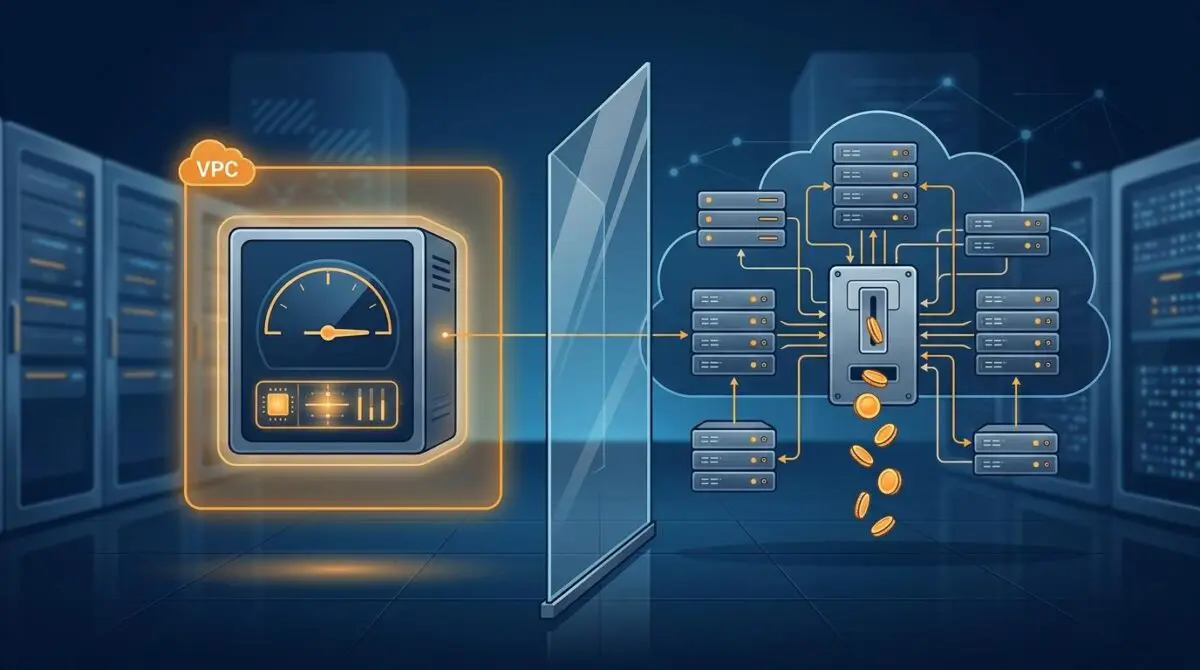
This expanded data surface area immediately raises the stakes for data residency and compliance. When sensitive PII or PHI transits through a cloud platform you do not command, multi-tenant architectures can violate geographic processing boundaries, obscure third-party processing chains, and permit unpredictable data mixing across shared resources. A self-hosted n8n deployment inside your own Virtual Private Cloud eliminates that risk: data never leaves the network perimeter you control, making the architecture legally and structurally viable for healthcare, finance, and defense.
How Volume Unlocks the Cost Trap
Managed agent platforms meter every micro-transaction—each tool call, each LLM reasoning step, each database query—producing a linear cost curve that masquerades as tolerable during the proof-of-concept phase. The trap springs when the agent earns internal product-market fit and scales to tens of thousands of daily executions. A 10x increase in workload translates directly into a 10x invoice, punishing operational success.
As N8N Lab’s analysis demonstrates, self-hosted infrastructure decouples execution volume from operational spend by tying costs to server capacity, not transaction count. A well-architected n8n instance running 10,000 executions monthly costs roughly the same as one running 100,000—because the underlying compute resources barely shift. Teams that defer the architectural revisit until the managed bill crosses $300 a month typically discover they are paying an order of magnitude more than necessary for the same throughput.
Credential Security and the Blast Radius Problem
Autonomous agents demand broad system access to be useful: write permissions to production databases, API keys to CRM platforms, and authentication tokens to internal communication tools. Storing that key ring on a third-party vendor’s infrastructure means you inherit their encryption standards, access controls, and multi-tenant isolation protocols—and you give them direct network paths to your internal systems.
A self-hosted deployment lets security teams retain absolute control. The most critical capabilities become achievable:
- External Secrets Management: Integrate directly with AWS Secrets Manager, HashiCorp Vault, or Azure Key Vault to vault credentials outside the application layer.
- Network-Level Isolation: Place the agent in a private subnet with outbound traffic restricted exclusively to required endpoints via NAT gateways.
- Precise Tool Scoping: Enforce the principle of least privilege at the network edge, not just within software logic, scoping exactly which databases, rows, and endpoints an agent can touch.
Auditability and Guardrails That Vendors Cannot Ship
LLM-driven agents can succeed at execution while producing a disastrous business outcome—such as confidently issuing an unauthorized 100% refund. Production systems therefore need explicit permission boundaries, human-review checkpoints for high-risk actions, and an immutable audit trail of every decision. Managed platforms can only provide the guardrails their product teams have built; if your enterprise requires custom log retention, anomaly detection integrated with a proprietary SIEM, or SQL proxy layers that intercept and approve agent-generated queries before execution, you hit a structural ceiling.
Self-hosted infrastructure restores full instrumentation. Engineering teams stream granular execution logs to Datadog, Splunk, or the ELK stack. They deploy proxy layers that review generated SQL against production data. They enforce exact timeout thresholds, memory limits, and concurrency caps via Docker and Kubernetes constraints to prevent a runaway agent from becoming an internal denial-of-service event.
The Honest Playbook: When Managed Infrastructure Wins
Insisting that self-hosting is always the answer ignores the real velocity trade-offs of product development. A managed platform is the correct strategic choice for early-stage prototyping, low-volume internal tooling that runs a few dozen times per week, teams without dedicated DevOps capacity, and agents that interact exclusively with public, non-sensitive data. The framework that matters is not ideology but three questions: Does the deployment carry data residency obligations? Will the volume trajectory make per-execution pricing a material constraint? Does the agent require broad access to systems where a compromised vendor represents an unacceptable risk?
If the answer to all three is no today, validate the business case on a managed platform—but architect workflows with modularity so that the migration to self-hosted n8n becomes a routine cutover, not a full rewrite.
Enterprise Data Confirms Self-Hosting Is Becoming a Regulatory and Financial Imperative
The market is now broadcasting what engineering teams have discovered in production: infrastructure control is the gatekeeper that determines whether autonomous agents can legally and financially operate inside regulated industries. A Deloitte survey found that over 50% of AI leaders identify regulatory monitoring and infrastructure control as the largest hurdles to sovereign AI. A Harvard Business Review report from March 2026 reveals that nearly two-thirds of enterprise leaders expect agentic AI to replace or augment core business processes within two years—impossible to deliver if the deployment model defaults to multi-tenant cloud.
This month, the EU AI Act’s high-risk classification provisions begin enforcement, mandating data governance documentation for agentic systems. According to Atlan’s analysis, data sovereignty for AI agents means that any context retrieved via RAG, MCP, or API is subject to the jurisdictional laws of the source data; cross-border transfer rules and SCHREMS II requirements apply to agent context windows just as they do to traditional databases. Architecture patterns such as regional context partitioning, RBAC-enforced MCP filtering, and policy-tagged context bundles are becoming standard compliance patterns, yet Gartner reports that fewer than 30% of enterprises have extended AI governance policies to the retrieval layer.
The automation industry itself is responding. In April, a major enterprise automation platform extended its full agentic stack—orchestration, agent builder, context grounding, and governance tooling—to on-premises Kubernetes environments, allowing regulated sectors such as banking, healthcare, public sector, and defense to finally deploy agentic workflows without surrendering process logic, audit trails, or model control to a cloud tenant. This move directly mirrors the argument that N8N Lab has been making: that self-hosted infrastructure is no longer a niche preference but the architectural unlock that lets high-compliance organizations move agentic AI from theoretical potential to operational reality.
Financial services illustrate the pressure most acutely. The sector generates immense volumes of structured and unstructured data, from fraud detection events to multi-jurisdictional regulatory monitoring and over a billion daily payments. Self-hosting avoids sending sensitive financial data to third-party cloud providers, guarantees audit trails that withstand regulatory scrutiny, and eliminates cloud latency for real-time decisions—transforming infrastructure control from a technical posture into a competitive advantage.
From Architectural Decision to Competitive Moat
The choice between self-hosted and managed infrastructure for autonomous AI agents is no longer a conversation about internal team capacity or vendor lock-in. It has hardened into a strategic determinant that separates organizations that can scale agents safely, profitably, and within legal boundaries from those that will hemorrhage budget on linear pricing, hit compliance walls, and lose the trust of security teams. Flat-rate cost scaling, network-level data sovereignty, credential isolation, and unconstrained audit instrumentation are not aspirational features—they are the operational chassis that production-grade agentic automation demands.
For organizations engineering the shift to autonomous agent infrastructure, Andres SEO Expert provides AI automation pipelines and reliable managed hosting environments designed to support secure, scalable agentic deployments. Connect with Andres to explore how the same principles that protect your data and cap your costs can accelerate your automation outcomes—and learn more about Andres SEO Expert‘s approach to infrastructure and AI-driven workflows.
Frequently Asked Questions
Why is self-hosting n8n important for autonomous AI agents in production?
Self-hosting gives organizations direct control over data residency, security boundaries, and cost structures. For autonomous agents that access multiple systems and handle sensitive data, shared multi-tenant infrastructure creates compliance and financial risks that self-hosted deployments eliminate by design.
What are the main risks of using managed multi-tenant platforms for agentic workloads?
Managed platforms risk violating data residency requirements, mixing sensitive data across tenants, exposing credentials to third-party vendors, and imposing linear per-execution pricing that scales unpredictably. They also limit custom guardrails and audit instrumentation.
How does self-hosting help with data sovereignty and compliance regulations like the EU AI Act?
Self-hosting keeps data within your own VPC, preventing cross-border transfers and third-party processing chains. This supports compliance patterns like regional context partitioning, RBAC-enforced MCP filtering, and policy-tagged context bundles required under high-risk classifications.
When should a team choose a managed platform instead of self-hosting?
Managed platforms are suitable for early-stage prototyping, low-volume internal tools, teams without dedicated DevOps capacity, and agents that interact only with public non-sensitive data. If there are no data residency obligations and volume remains low, managed options offer faster velocity.
How does self-hosting reduce costs for high-volume agent execution?
Self-hosted infrastructure ties cost to server capacity rather than transaction count. A well-architected n8n instance running 10,000 executions monthly costs roughly the same as one running 100,000, decoupling operational success from linearly growing invoices.
What security controls does self-hosting enable that managed platforms cannot offer?
Self-hosting enables external secrets management with HashiCorp Vault or AWS Secrets Manager, network-level isolation in private subnets, precise least-privilege tool scoping at the network edge, and custom audit logging integrated with enterprise SIEM tools.