Executive Summary
- Shared Responsibility Model: In serverless, the cloud provider secures the infrastructure, but the customer must secure the application code, dependencies, and data.
- Attack Surface Expansion: Serverless architectures introduce unique threats like event injection, insecure dependencies, and function event data exposure.
- Observability & Compliance: Traditional security tools often fail in ephemeral, stateless environments; require specialized logging, tracing, and runtime protection.
What is Serverless Security?
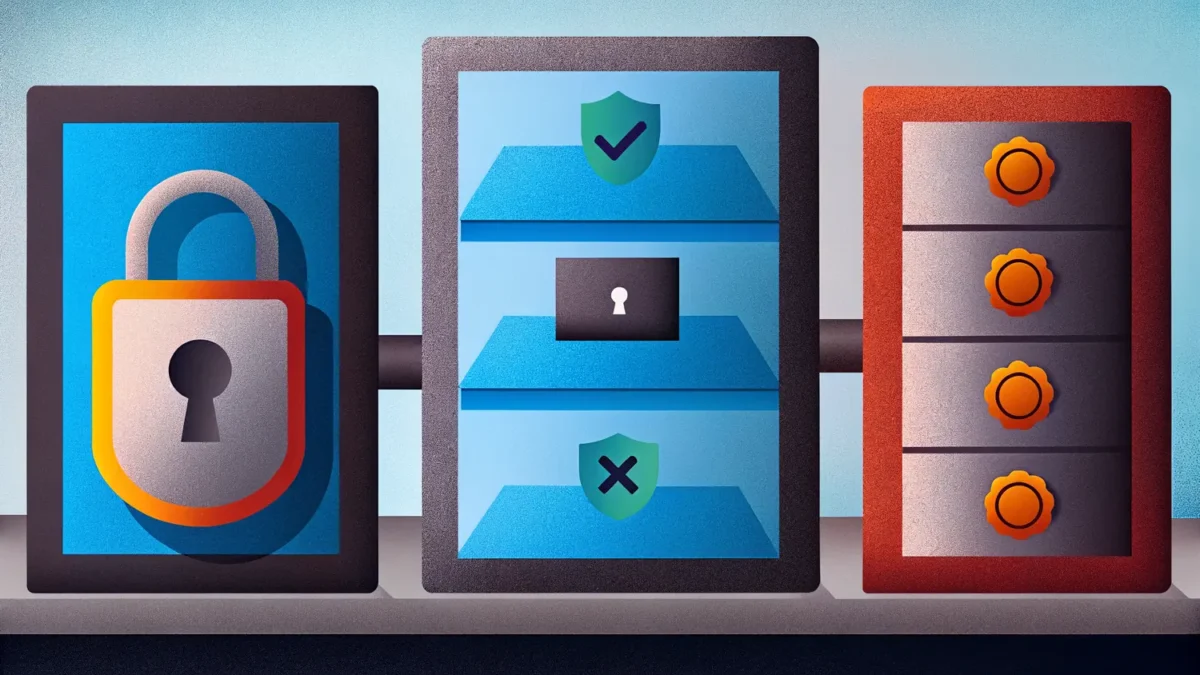
Serverless security refers to the set of practices, tools, and architectural patterns designed to protect serverless computing environments. In a serverless model, the cloud provider manages the underlying infrastructure, including servers, operating systems, and runtime environments. However, the customer remains responsible for securing the application code, third-party dependencies, configuration, and data.
This shared responsibility model shifts the security focus from infrastructure hardening to application-layer and data-layer protection. Serverless functions are ephemeral, stateless, and event-driven, which introduces unique challenges such as short-lived execution contexts, cold starts, and a large attack surface from event sources like HTTP requests, message queues, and database triggers.
The Real-World Analogy
Think of serverless security like renting a fully furnished apartment. The landlord (cloud provider) ensures the building’s structure, locks on doors, and fire alarms are in place. But you (the customer) must secure your personal belongings, avoid leaving windows open, and not invite strangers inside. Similarly, in serverless, you must secure your code, manage secrets, and control access to your functions.
How Serverless Security Drives Strategic Growth & Market Competitiveness?
Robust serverless security enables organizations to accelerate innovation by reducing the operational overhead of patching and infrastructure management. This allows development teams to focus on business logic and feature delivery, shortening time-to-market. Additionally, strong security posture builds customer trust, which is critical for competitive differentiation in data-sensitive industries like fintech, healthcare, and e-commerce.
From a cost perspective, serverless security reduces the risk of data breaches and compliance violations, which can incur significant financial penalties and reputational damage. By implementing automated security controls, such as runtime protection and vulnerability scanning, companies can achieve continuous compliance with regulations like GDPR, HIPAA, and SOC 2 without manual intervention.
Strategic Implementation & Best Practices
- Adopt a Defense-in-Depth Approach: Implement multiple layers of security including input validation, least privilege IAM roles, encryption at rest and in transit, and network segmentation using VPCs and security groups.
- Secure the Software Supply Chain: Use dependency scanning tools to identify vulnerabilities in third-party libraries. Pin versions and use package lock files to prevent unexpected updates.
- Implement Runtime Protection: Deploy Web Application Firewalls (WAF) and runtime application self-protection (RASP) to detect and block attacks like SQL injection and cross-site scripting in real-time.
- Enable Comprehensive Logging and Monitoring: Centralize logs from functions, API gateways, and event sources. Use cloud-native services like AWS CloudTrail, Azure Monitor, or third-party SIEM tools for anomaly detection.
- Automate Security Testing: Integrate static application security testing (SAST) and dynamic application security testing (DAST) into CI/CD pipelines to catch vulnerabilities before deployment.
Common Pitfalls & Strategic Mistakes
Overly Permissive IAM Roles: A frequent error is granting functions excessive permissions, such as full access to databases or storage. This violates the principle of least privilege and increases blast radius in case of compromise. Always scope permissions to the minimum required actions and resources.
Ignoring Event Injection: Serverless functions often process untrusted input from events. Without proper validation, attackers can inject malicious payloads that lead to code execution or data exfiltration. Always sanitize and validate all event data.
Neglecting Secrets Management: Hardcoding API keys, database credentials, or tokens in function code or environment variables is a common mistake. Use a dedicated secrets manager (e.g., AWS Secrets Manager, Azure Key Vault) to rotate and securely inject secrets at runtime.
Conclusion
Serverless security requires a shift from traditional perimeter-based defenses to a code-centric, automated approach. By embracing the shared responsibility model and implementing best practices, organizations can securely leverage the scalability and cost-efficiency of serverless computing.