Key Takeaways
- Home decor searches for inspiration are up 300%, making visual AI discovery the new default shopping path.
- Google’s five new search mechanics—AI Mode, Lens, Circle to Search, live DIY, and price tracking—compress the path from inspiration to purchase.
- Winning now requires optimized product images, structured data, and a presence across visual search surfaces.
Table of Contents
A 300% Search Surge Turns Home Decor Into a Visual Search Bellwether
On August 25, Google’s official product blog published a guide to upgrading home decor through Search. The announcement matters less for interior design than for what it reveals about search behavior: visual discovery and AI assistance are now the default shopping path.
Searches for ‘home decor inspo’ are up 300% in the past month, with bathroom and living room inspiration queries breaking out in the same window. Trending paint searches have shifted toward bold teal and magenta, signaling a consumer base that is ready to act on aesthetic impulses.
For search marketers, this is not a lifestyle story. It is a live demonstration of how Google is training users to expect visual answers, real-time guidance, and transaction-ready results inside the search experience.
Inside the Five Search Mechanics Reshaping Consumer Discovery
Google’s guide outlines five distinct interaction models that marketers should treat as separate funnel entry points. Each one changes where a consumer enters the purchase path and what data is available for optimization.
- AI Mode visualization — Consumers upload a photo of a room and ask for furniture recommendations based on specific dimensions. The tool generates mockups in the user’s space before a product page is ever visited.
- Lens-driven vintage discovery — Shoppers photograph an object in the physical world and receive similar items across price ranges. This collapses the distance between offline inspiration and online inventory.
- Circle to Search — Users circle decor inside social feeds, videos, or web pages to find similar products without switching apps. That extends Google’s index into third-party visual content.
- Search Live DIY guidance — Voice and camera input deliver step-by-step instructions for projects like floating shelf installation. This positions Search as a real-time service provider, not just an answer engine.
- Price tracking — Product listings expose price history and let consumers set alerts. This makes purchase timing more deliberate and price-sensitive.
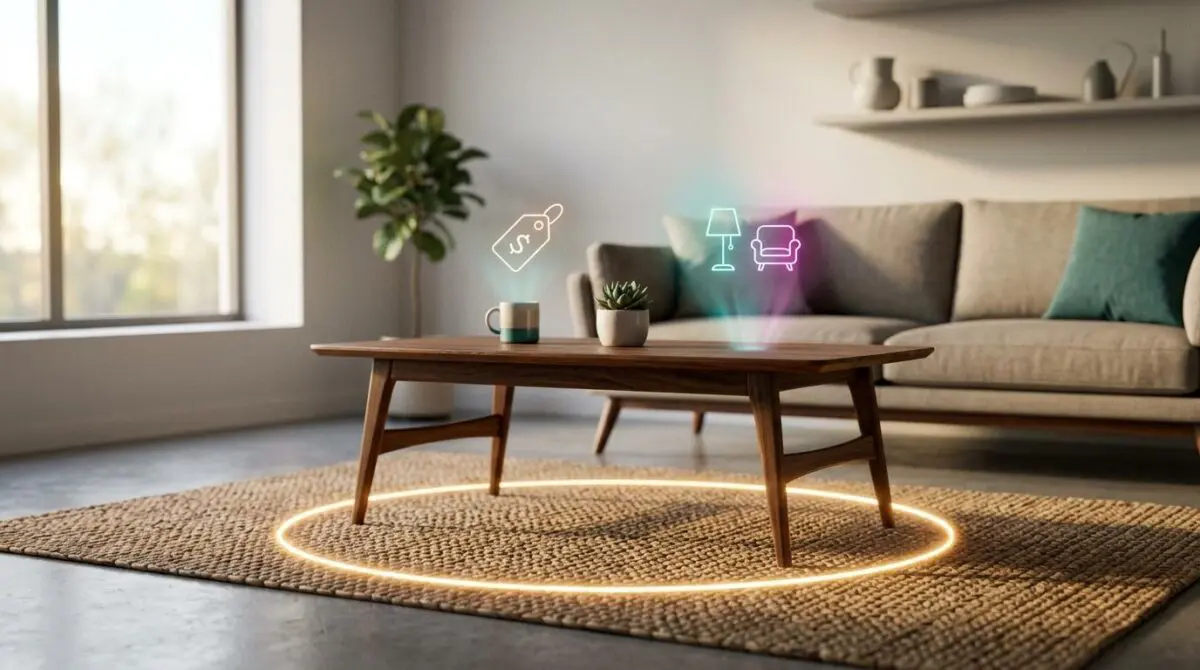
Vintage braided rugs and vintage wood coffee tables are the top trending home furnishing items this year. Fish wallpaper searches are up 140% in the past month, while funky lamps and harlequin wallpaper have become breakout queries.
From Inspiration to Transaction: The Marketing Impact of Visual AI Search
The strategic challenge is that these features compress the distance between inspiration and transaction inside Google-owned surfaces. When a consumer sees an emerald green velvet sofa rendered in their living room, the traditional organic result has already lost the discovery moment.
Recent search marketing analyses describe this pattern as a dark funnel problem, where demand exists before a click and attribution trails behind actual behavior. Personalization tools are also being framed as a publisher growth loop, giving Google stronger retention on discovery surfaces while reducing third-party referral points.
This shift forces marketing teams to rethink what a ranking signal actually is. A consumer who photographs a vintage coffee table expresses intent through object recognition rather than language, making image quality, feed hygiene, and structured product data the new technical SEO battlegrounds.
At the same time, price history visibility changes the competitive dynamic. Brands that overprice will be exposed before the first click, while those with consistent pricing and inventory data stand to win the consideration window.
For marketers, the playbook is no longer limited to keyword position. It is about being present in AI Mode mockups, Lens results, Circle to Search matches, and live guidance paths without owning any of those surfaces.
Why This Search Shift Demands a New Growth Playbook
The brands that treat visual search as a content and data engineering problem will capture demand before their competitors realize it exists. For marketing teams adapting to AI-mediated visual discovery, the programmatic SEO and AI automation practice at Andres SEO Expert builds the infrastructure for that future — start the conversation here.
Frequently Asked Questions
What is driving the 300% surge in home decor visual search queries?
The surge is driven by Google’s new visual search and AI assistance features that make discovery more intuitive. Searches for ‘home decor inspo’ are up 300% in the past month, with increases in queries for specific aesthetics like bold teal and magenta paints, vintage furniture, and patterns like fish wallpaper. Google is training users to expect visual answers and real-time guidance directly inside the search experience, turning home decor into a bellwether for visual search adoption.
What are the five key search mechanics reshaping consumer discovery in visual AI search?
The five mechanics are: AI Mode visualization (uploading a room photo for furniture mockups), Lens-driven vintage discovery (photographing physical objects to find similar items online), Circle to Search (circling decor in social feeds or videos to find products), Search Live DIY guidance (using voice and camera for step-by-step instructions), and price tracking (viewing price history and setting alerts). Each creates a distinct entry point into the purchase funnel and shifts where discovery happens.
How does visual AI search impact the traditional SEO and keyword ranking approach?
Visual AI search compresses the distance between inspiration and transaction, often bypassing traditional organic results. Instead of typing keywords, consumers express intent through object recognition, photos, and circling items. This means image quality, feed hygiene, and structured product data become the new technical SEO battlegrounds. Marketers must aim to be present in AI Mode mockups, Lens results, Circle to Search matches, and live guidance paths rather than focusing solely on keyword position.
How should marketing teams adapt to the ‘dark funnel’ problem created by visual search?
The dark funnel refers to demand existing before a user clicks on a traditional result, making attribution difficult. To address this, marketing teams need to treat visual search as a content and data engineering problem. They should ensure product data is structured for visual engines, maintain consistent pricing and inventory information, and optimize for appearance across Google-owned surfaces. A programmatic SEO and AI automation practice can build the infrastructure needed to capture this emerging demand.
What role does price history visibility play in the new visual search competitive landscape?
Price history visibility changes the competitive dynamic by exposing pricing trends before the consumer even clicks. Brands that overprice are now at a disadvantage because shoppers can see price fluctuations and set alerts. Brands with consistent pricing and accurate inventory data are better positioned to win the consideration window, as purchase timing becomes more deliberate and price-sensitive.
Why are trending products like vintage braided rugs and fish wallpaper significant for marketers?
These trending items reflect the shift toward visual and aesthetic-driven discovery, where shoppers seek unique, photogenic pieces. Vintage braided rugs and wood coffee tables are top trending furnishings, and fish wallpaper searches are up 140% in a month. This signals that marketers need to align visual content and product feeds with emerging aesthetic trends to capture demand as it forms, rather than reacting after the trend peaks.