Key Takeaways
- An AI pipeline screened 100,000 molecules to identify DMFSA, a compact solvent that speeds up sodium-ion transport.
- DMFSA delivers both rapid charging and long-term stability, breaking the historic speed-versus-lifespan trade-off.
- This solvent-size optimization strategy could accelerate the shift to cheaper, high-power sodium batteries for grid storage.
Table of Contents
AI Solvent Breakthrough Unlocks High-Speed Sodium Batteries
MIT News reports that a research team at the Massachusetts Institute of Technology has cracked a long-standing electrochemical trade-off using artificial intelligence to design a new class of electrolyte solvents.
The advance centers on a molecule called DMFSA, a tiny, congeneric solvent that makes sodium-metal batteries simultaneously stable and aggressively fast to charge.
For an industry racing to replace lithium-ion with cheaper, more abundant sodium, solving the solvent problem removes one of the biggest barriers to high-power energy storage.
As reported by MIT News, the group published its findings this week in the journal Joule.
The work represents the first time a sodium-metal electrolyte has demonstrated unconditional stability against side reactions at both electrodes while preserving rapid ion transport.
How Smaller Solvent Molecules Supercharge Ion Transport
An electrolyte is the liquid that shuttles ions between a battery’s anode and cathode, but most electrolytes degrade quickly by reacting with the electrodes themselves.
These parasitic side reactions create insoluble sludge that chokes ion flow, killing capacity and eventually the cell.
In 2021, the Li group discovered that a sulfonamide solvent called DMTMSA could resist such reactions in lithium batteries, but its bulky molecular structure slowed the movement of sodium ions.
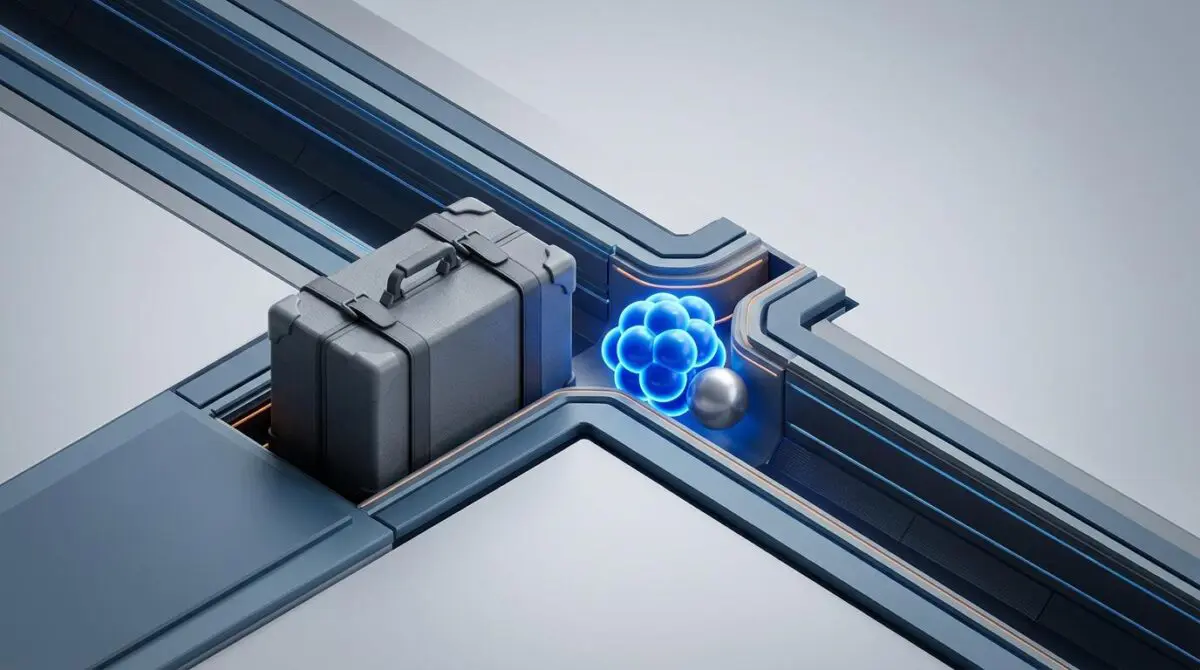
Weiyin Chen, a postdoc and lead author, uses a crowd-crossing analogy to explain the problem: a compact backpack lets you slip through faster than a rolling suitcase.
Smaller solvent molecules wrap sodium ions tightly, slashing the hydrodynamic drag and boosting the rate at which a battery can charge or deliver power.
The conundrum was that smaller solvents historically traded stability for speed—faster ion transport almost always came with more reactivity and shorter life.
The MIT team flipped this constraint by searching for molecules structurally similar to DMTMSA but with trimmed-down geometries that wouldn’t sacrifice electrochemical inertness.
Chia-Wei Hsu, a PhD student, built an AI-driven pipeline that generated 100,000 candidate molecules in 24 hours and winnowed them down to 27 top contenders for experimental testing.
Every candidate faced the same rigorous protocol to ensure a fair head-to-head evaluation.
Out of that field, one solvent—DMFSA—emerged as both the smallest and the best performer.
addresses one of the most persistent challenges in battery research: improving battery performance at high charging and discharging rates without sacrificing long-term stability.
That verdict comes from Jinhyuk Lee, an associate professor of materials engineering at McGill University who was not involved in the study.
By proving that solvent size can be dialed down without triggering degradation, the MIT team delivered a practical recipe for sodium cells that can handle the punishing cycles of grid storage and electric vehicles.
A New Blueprint for Battery Performance Economics
Sodium is roughly 1,000 times more abundant than lithium and costs about one-hundredth as much per pound, which makes the economic attraction obvious.
What held the technology back was the reactivity of sodium metal, which would shred conventional electrolytes long before any battery reached a commercially viable lifespan.
The DMFSA advance doesn’t merely patch that weakness—it rewrites the design rulebook for energy-dense, fast-cycling storage.
Instead of chasing exotic, expensive additive cocktails, future electrolyte development can target small, congeneric solvents that preserve the DMTMSA family’s intrinsic stability while shaving molecular bulk.
The AI-led screening method itself is a performance multiplier, compressing years of trial-and-error into a single automated funnel.
Cheaper raw materials coupled with faster development cycles could reshape the cost curve for grid-scale storage, high-power portable electronics, and even electrified heavy transport.
High-rate capability without corrosion penalties is exactly the combination that power-system integrators have been waiting for, because it slashes thermal management overhead and simplifies pack design.
The team is already iterating the approach, using DMFSA as the new starting template to hunt for an even more refined solvent, suggesting that the performance ceiling hasn’t been reached.
If this molecular-size strategy becomes a standard practice, every major chemist behind next-gen batteries will need to re-evaluate how they balance ionic mobility against electrochemical inertness.
The Race Toward Scalable, High-Power Energy Storage
Performance in energy storage has always been a three-variable equation of cost, speed, and longevity—solving for two has historically shortchanged the third.
By delivering a solvent that simultaneously boosts charge rates and chemical resilience, the MIT work shows that constraint is no longer absolute.
The breakthrough doesn’t just apply to sodium; the design principle of reducing solvent size without losing molecular stability can influence lithium, magnesium, and other metal batteries.
That portability makes this less a one-off material find and more a durable engineering framework that could accelerate the entire field’s performance roadmap.
Just as AI-guided design is collapsing iteration timelines in energy storage, your website’s speed demands the same kind of precision engineering to eliminate hidden performance debt.
Whether you need site speed optimization that strips out every unnecessary millisecond or AI-driven automation pipelines that scale technical SEO, Andres SEO Expert brings the same relentless efficiency focus to your digital infrastructure.
To get a performance audit tailored to your platform, connect with Andres and learn how Andres SEO Expert turns technical constraints into measurable speed gains.
Frequently Asked Questions
What is DMFSA and why is it important for sodium batteries?
DMFSA is a small, congeneric sulfonamide solvent designed by MIT researchers using AI. It is a key breakthrough because it makes sodium-metal batteries both highly stable and capable of rapid charging, overcoming a long-standing trade-off between speed and stability. Its small molecular size allows sodium ions to move quickly while its chemical structure resists the side reactions that normally degrade battery electrolytes.
How does the AI-driven screening process for new battery solvents work?
The MIT team built an AI pipeline that generated 100,000 candidate solvent molecules in just 24 hours. The AI was trained to favor molecules structurally similar to a known stable sulfonamide solvent, DMTMSA, but with smaller geometries that would improve ion transport. The algorithm ranked the candidates, and the team selected 27 top contenders for rigorous experimental testing, ultimately identifying DMFSA as the smallest and best performer.
Why do smaller solvent molecules improve ion transport in batteries?
Smaller solvent molecules wrap around sodium ions more tightly, reducing the hydrodynamic drag that slows ion movement. The article uses a crowd-crossing analogy: a compact backpack lets you slip through faster than a rolling suitcase. Smaller solvents thus enable faster charging and higher power delivery, while careful molecular design ensures they do not sacrifice chemical stability.
What were the main limitations of sodium batteries before this breakthrough?
Sodium batteries were held back by the high reactivity of sodium metal, which caused conventional electrolytes to degrade quickly through parasitic side reactions. This created insulating sludge that clogged ion flow, reduced capacity, and shortened battery life. Additionally, earlier attempts to use smaller, faster solvents often increased reactivity, making it difficult to achieve both high speed and long-term stability.
What are the economic benefits of sodium batteries compared to lithium-ion?
Sodium is roughly 1,000 times more abundant than lithium and costs about one-hundredth as much per pound. This makes sodium batteries a much cheaper alternative for energy storage. The MIT solvent breakthrough removes a key technical barrier, potentially accelerating the adoption of sodium batteries for grid storage, portable electronics, and electrified heavy transport, which could reshape the cost curve for high-power energy storage.
Can the AI-driven solvent design approach be applied to other battery chemistries?
Yes, the design principle of reducing solvent size without losing molecular stability is not limited to sodium. The article states that it can influence lithium, magnesium, and other metal batteries, making it a durable engineering framework rather than a one-off material discovery. This portability could accelerate the entire field’s performance roadmap for next-generation batteries.