Key Points
- AI-Driven Personalization: Modern workflows utilize AI agents to analyze CRM data, generating highly personalized, context-aware messages for physical greeting cards without human intervention.
- Bridging the Digital Divide: Direct mail automation yields a 4.4% response rate and a massive 509% revenue boost over digital-only efforts by leveraging tactile engagement.
- Low-Code Logistics: Platforms like Make and Zapier seamlessly connect your CRM directly to Postable’s printing API, eliminating hundreds of hours of clerical work annually.
Table of Contents
The Midnight Spreadsheet Struggle
It is 11:45 PM on a Thursday, and you are staring at a blinking cursor on a spreadsheet cell labeled ‘Client_DOB_Final_v3.xlsx.’ You realize with a sinking feeling that your top-tier client’s birthday was yesterday. The generic automated email your CRM fired off was likely buried under countless unread messages.
This exact micro-moment perfectly encapsulates the frustrating reality of scaling high-touch client relationships in a world saturated by digital noise. The administrative burden of manually tracking dates and licking envelopes simply breaks down at scale.
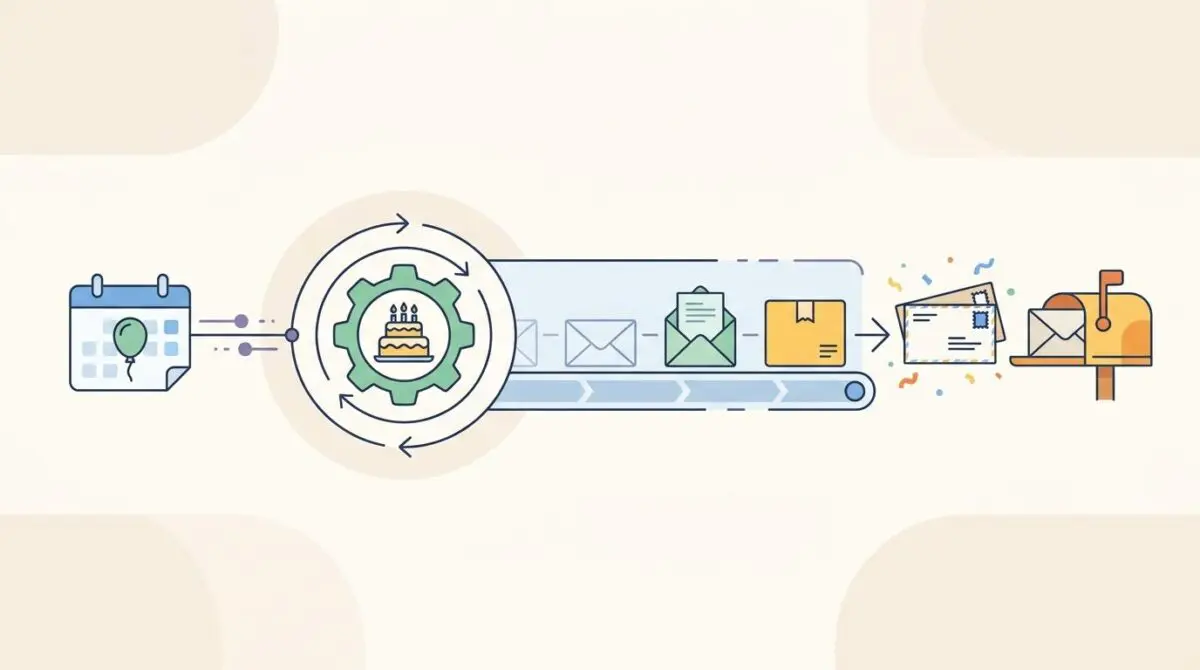
To reclaim your time and sanity, the solution lies in engineering a VIP birthday-triggered physical direct mail automation system. By seamlessly connecting your database to a physical fulfillment API, you can deliver premium tactile moments without ever checking a calendar again.
Quantifying the Tactile Advantage
Market Intelligence & Data
Direct Mail Response Rate
Direct mail achieves a 4.4% average response rate compared to just 0.12% for email, making it 37 times more effective for high-value engagement, per the ANA/DMA 2025/2026 Response Rate Report.
VIP Brand Loyalty Increase
Exactly 89% of VIP clients reported significantly higher brand loyalty when receiving physical ‘surprise and delight’ mail instead of digital greetings, according to the 2025 CX Index Report.
Automation Market Size
The global direct mail automation software market reached $1.67 billion in 2025 and is projected to maintain a 20.9% CAGR through 2030, according to The Business Research Company 2026 report.
Physical vs Digital Revenue
Automated physical mail leads generate 509% more revenue on average than digital-only leads due to higher trust and tactile engagement, according to a 2026 PostcardMania analysis.
Direct mail achieves a 4.4% average response rate compared to just 0.12% for email. This massive discrepancy highlights how digital fatigue has severely diminished the impact of electronic communication. When an executive receives a tangible card, it demands immediate physical attention and bypasses the crowded digital inbox entirely.
Exactly 89% of VIP clients reported significantly higher brand loyalty when receiving physical surprise and delight mail. This metric proves that tactile engagement is no longer just a legacy tactic but a premium differentiator. Younger demographics are driving this trend, with recent data showing 85% of Gen Z and Millennials respond to direct mail at unprecedented rates due to a powerful nostalgia effect.
The global direct mail automation software market reached $1.67 billion in 2025. This rapid financial growth indicates a massive shift in how enterprise teams allocate their retention budgets. As more companies realize the value of programmatic physical mail, the sector is projected to maintain a 20.9% CAGR through 2030, cementing its role in modern tech stacks.
Automated physical mail leads generate 509% more revenue on average than digital-only leads. This staggering figure completely reshapes the traditional cost-per-acquisition argument against physical postage. While a stamp costs more than a server ping, the resulting trust and tactile engagement yield a return on investment that digital channels simply cannot replicate.
Reviving Premium Client Experiences
In 2026, the inbox is a battlefield of automated noise where generic digital greetings are often perceived as low-effort afterthoughts. When a high-net-worth client receives a standard automated email, it can actually decrease brand sentiment rather than build loyalty.
This is where VIP birthday-triggered physical direct mail automation steps in as a critical differentiator. By integrating tools like Postable and PostPilot directly with your CRM, you can trigger beautiful physical card sends without human intervention.
The surprise and delight factor of a tangible card arriving in the mail acts as a premium touchpoint. It provides a level of warmth and effort that digital channels simply cannot replicate for top-tier clients.
Bypassing Expensive API Development
Historically, bridging the gap between a digital database and a physical printing facility required custom and expensive API development. Today, platforms like Make and Zapier have completely democratized this process.
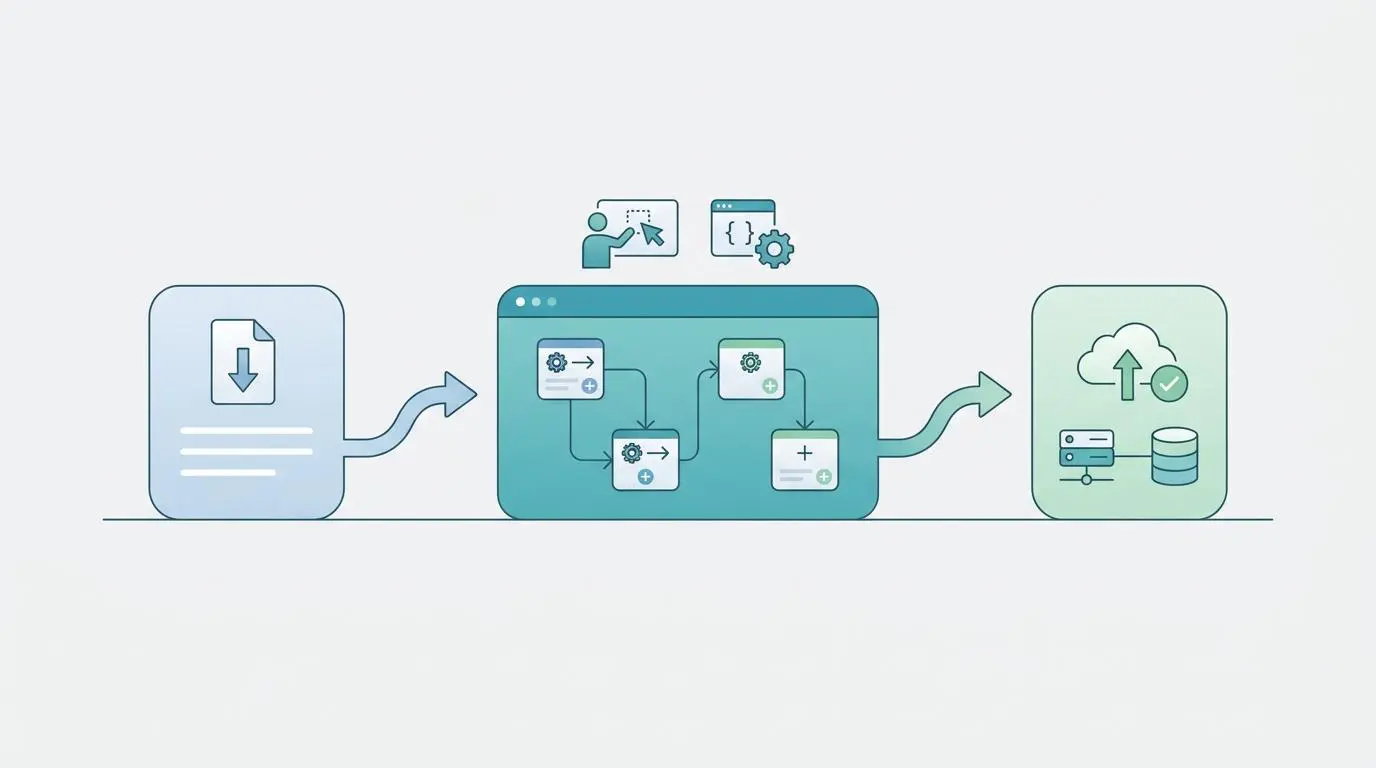
These low-code platforms allow non-technical teams to build sophisticated birthday watcher workflows in a single afternoon. These workflows silently monitor CRM date fields and wait for the exact moment to execute the automation.
Once a birthday is detected, the system uses Webhooks to instantly transmit recipient data and custom message variables directly to the printing API. The card is then queued for immediate printing and mailing, transforming complex logistical hurdles into a seamless background process.
Breathing Life Into Static Templates

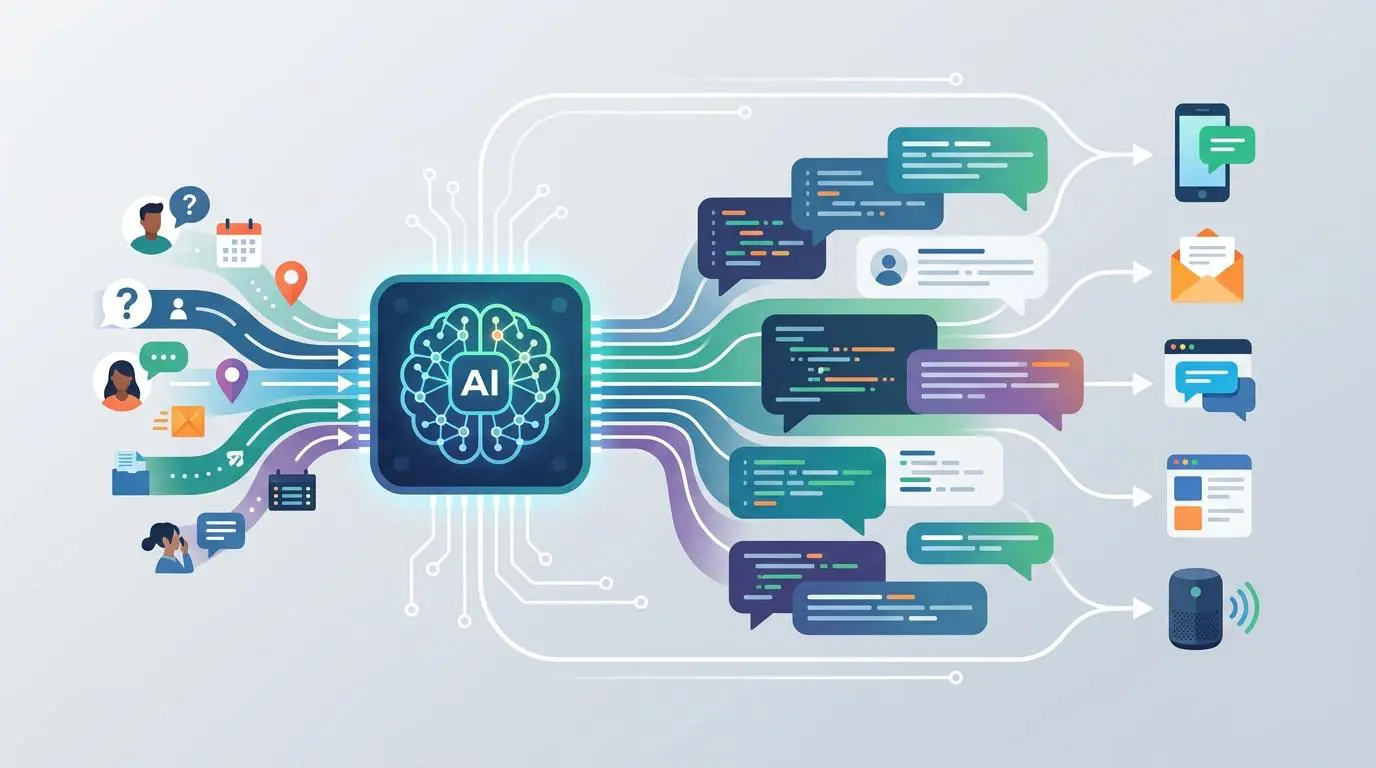
Automated physical cards run the risk of feeling robotic if the internal message is identical for every single client. To solve this, modern workflows deploy AI agents to act as invisible copywriters.
Tools powered by advanced language models analyze the last twelve months of client interaction data to extract key conversational nuances and recent milestones. The AI then generates a highly unique and context-aware birthday message.
This dynamic payload is instantly inserted into the card design before it hits the printer. This ensures that every physical greeting feels deeply personal and meticulously crafted, preserving the authentic human touch at scale.
Eradicating the Clerical Time Sink
The administrative burden of manually managing a VIP outreach program is often the silent killer of client retention initiatives. Research indicates that procuring, handwriting, and posting a single greeting card takes an average of twelve to fifteen minutes.
For a roster of five hundred VIP clients, this equates to roughly 125 hours of high-value employee time squandered on clerical tasks. Teams frequently abandon these gifting programs midway through the year because the manual logistics become entirely unsustainable.
Automating this process reclaims those lost hours immediately. By removing the friction of manual fulfillment, you allow your team to focus on strategic growth rather than managing postage stamps.
Measuring the Unmeasurable Return
Proving the financial return of soft relationship-building efforts has historically been difficult and often leads to budget cuts for client retention. However, direct mail automation has been shown to reduce operational costs by over 60% compared to manual gifting programs.
The math becomes undeniable when you factor in the sheer effectiveness of tactile engagement. Response rates for physical mail remain significantly higher than email, easily justifying the higher unit cost of paper and postage.
By tracking these automated sends within your CRM, you can finally tie physical touchpoints directly to revenue retention. This transforms a previously unmeasurable soft skill into a hard and quantifiable business asset.
Bridging the Phygital Divide
A common friction point with physical mail is that it is often a one-and-done experience. This makes it difficult to pull the recipient back into your brand ecosystem once the card is read.
The next evolution of this workflow solves this through phygital integration. Automated cards now frequently include dynamic QR codes or augmented reality triggers printed directly on the paper.
When the VIP scans the physical card with their smartphone, it unlocks an exclusive digital reward or a personalized video message. This seamless bridge transforms a static piece of paper into an interactive gateway.
Anticipating the Next Milestone
The automation landscape is rapidly pivoting entirely toward anticipatory gifting. In this model, AI agents do not just react to static birthdays but actively predict highly specific micro-milestones.
Imagine a system that detects a client business expansion or personal hobby achievement and triggers a physical card before the client even realizes the milestone was tracked. This level of hyper-personalized and zero-touch automation will define the absolute pinnacle of customer experience.
Navigating the intersection of technology, workflows, and operational efficiency requires a sharp strategy. To future-proof your business architecture and scale with precision, connect with Andres at Andres SEO Expert.
Frequently Asked Questions
Why is physical direct mail more effective than email for VIP engagement?
Physical direct mail achieves a 4.4% average response rate compared to just 0.12% for email. This 37x effectiveness gap is driven by digital fatigue, as tactile mail demands immediate physical attention and bypasses crowded digital inboxes, resulting in an 89% increase in brand loyalty among VIP clients.
How do you automate physical birthday cards using a CRM?
Automation is achieved by connecting a CRM (like Salesforce or HubSpot) to physical fulfillment APIs (like Postable or PostPilot) using low-code tools like Make or Zapier. These workflows monitor birthday fields and trigger a Webhook to print and mail a card automatically without human intervention.
Can AI personalize automated direct mail messages?
Yes, modern 2026 workflows use AI agents to analyze the last 12 months of client interaction data. The AI generates a unique, context-aware message that is dynamically inserted into the card’s design before printing, ensuring the automated mail feels authentic and human-crafted.
What is the ROI of automated physical mail compared to digital leads?
Automated physical mail leads generate 509% more revenue on average than digital-only leads. While postage and printing costs are higher than email, the significantly higher trust and tactile engagement levels result in a superior return on investment for high-value client retention.
What does ‘Phygital’ mean in the context of direct mail?
‘Phygital’ refers to bridging the gap between physical and digital experiences. This is typically done by printing dynamic QR codes or Augmented Reality (AR) triggers on physical cards, allowing the recipient to scan the paper and unlock exclusive digital rewards or personalized video content.
How much time does automating client outreach save?
Manually handwriting and posting a greeting card takes approximately 12 to 15 minutes. For a roster of 500 VIP clients, automation reclaims roughly 125 hours of high-value employee time per year, while reducing operational costs by over 60% compared to manual gifting programs.