Key Takeaways
- Vanta leads on quick setup and integration breadth but lacks custom control logic.
- Drata excels in deep automation and real-time evidence collection for multi-framework teams.
- Self-hosted n8n keeps audit logs on your infrastructure, redefining compliance ownership for regulated industries.
Compliance Automation in 2026: Who Holds the Keys to Your Audit Trail?
Compliance automation has shifted from manual spreadsheets to real-time, continuous monitoring. But as 2026 audits demand more rigorous evidence, the choice of platform determines not just efficiency but ownership of your compliance posture. New research from June 2026 positions Vanta as the quick-setup leader with 300+ integrations, while Drata pushes deeper automation. Yet a growing number of teams are turning to self-hosted solutions like n8n to keep audit logs on their own infrastructure.
Table of Contents
The Compliance Automation Tooling Landscape
Compliance automation software automates the end of regulatory work: tracking controls, collecting evidence, and preparing audits. Most teams run these tools alongside their existing stack rather than as a single product. Three categories dominate the landscape:
- GRC platforms: Handle frameworks, controls, and audit workflows at the center of enterprise deployments.
- Risk assessment platforms: Quantify exposure and prioritize remediation.
- Data management platforms: Control where regulated data lives and who accesses it.
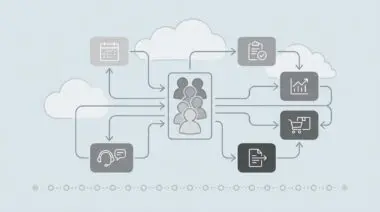
The automation workflow maps regulations to internal controls, integrates APIs from cloud providers and identity tools, collects evidence automatically, and triggers alerts when controls drift out of compliance. The result is continuous monitoring instead of point-in-time audits.
Key Features to Evaluate
Framework coverage depth matters more than breadth. A platform supporting 40 frameworks with shallow templates costs more hours than one with 10 well-mapped frameworks. Evidence collection should be pre-built for specific regulatory controls your auditors request. Audit trails must be tamper-resistant, exportable, and queryable across multi-year windows.
The integration layer determines whether the platform fits your environment or forces adaptation. Pre-built connectors to AWS, GitHub, and Okta cover common cases; APIs and webhooks handle the rest. Pricing models: per-user pricing punishes growth; per-control pricing punishes framework expansion.
Top Compliance Automation Tools in 2026
Vanta remains the dominant SOC 2 platform for early- and mid-stage startups. According to 2026 research, Vanta wins on quick setup and 300+ integrations with strong cross-framework mapping. However, it falls short when teams need custom control logic or want to host their own audit trail.
Drata competes head-to-head with Vanta, known for the depth of its continuous monitoring and automation. Real-time evidence collection and granular control mapping make it a strong choice for teams pursuing multiple frameworks.
Secureframe is ideal for organizations pursuing several frameworks simultaneously (e.g., SOC 2, ISO 27001, PCI DSS). Its dense control mapping supports multiple audits at once.
Hyperproof serves larger organizations with mature GRC programs, orchestrating audits across business units. It scales further than startup-focused alternatives.
n8n takes a different approach. Self-hosted and source-available, n8n keeps sensitive audit logs and access records on infrastructure the team owns. With over 1,000 integrations and AI agent nodes, it acts as a programmable layer that connects your GRC stack and automates workflows while maintaining full data control.
Strategic Analysis: The Ownership Imperative
The 2026 compliance automation market is polarizing between all-in-one SaaS platforms and flexible, self-hosted orchestration layers. While Vanta and Drata dominate the news, a critical factor is emerging: who controls the audit trail?
Static SaaS platforms store evidence and credentials on vendor clouds. This creates a risk: if the vendor changes pricing, retires features, or suffers a breach, your compliance posture is impacted. Self-hosted solutions like n8n, as detailed in the compliance automation deep-dive, invert that model—every credential, log, and integration runs on infrastructure you own.
According to June 2026 research, Drata leads in deep automation and real-time evidence collection, but teams requiring data residency or custom workflows often hit limits. Vanta offers unmatched breadth of integrations but locks teams into continuous monitoring without extensibility. The choice is no longer just about features—it’s about architectural control.
For regulated industries where data residency is mandatory, self-hosted automation provides the only audit-proof foundation. n8n’s scheduled triggers, webhooks, and AI agents allow teams to build custom compliance pipelines that dedicated platforms can’t match natively.
Conclusion: Build an Audit-Proof Automation Foundation
Compliance automation in 2026 is about more than saving time. Teams need to know who controls the audit trail, the evidence store, and the workflow logic. Static SaaS platforms hand those to the vendor; self-hosted orchestration gives them back to you.
By integrating a flexible layer like n8n with your chosen GRC platform, you can collect evidence on your terms, route alerts to the right owners, and keep audit logs on owned infrastructure. That’s the foundation of audit-proof regulatory compliance automation.
Staying ahead in the rapidly shifting landscape of Automations requires precision. To future-proof your digital strategy and scale effortlessly, you need a foundation built on precision. Optimize your site with advanced speed engineering, secure your infrastructure in high-performance hosting environments, and streamline your entire workflow through autonomous AI pipelines. If you are ready to elevate your systems, Connect with Andres at Andres SEO Expert to build your ultimate architecture.
Frequently Asked Questions
What is the difference between SaaS compliance platforms like Vanta and self-hosted solutions like n8n?
SaaS platforms like Vanta and Drata store evidence and credentials on vendor clouds, offering quick setup but limited control over audit trails. Self-hosted solutions like n8n keep audit logs and access records on your own infrastructure, giving you full data ownership and customizability for regulated industries.
How do Drata and Vanta compare in 2026 for compliance automation?
Drata leads in deep automation and real-time evidence collection with granular control mapping, while Vanta offers the broadest integration library (300+) and quick setup. Drata is better for multi-framework deployments; Vanta is ideal for early-stage SOC 2 startups. Both lack extensibility for custom workflows compared to self-hosted layers.
Why is ownership of the audit trail important in compliance automation?
If a vendor changes pricing, retires features, or suffers a breach, your compliance posture is impacted when you rely on SaaS platforms. Owning the audit trail via self-hosted solutions ensures data residency, tamper-resistant logs, and continuous control over evidence, which is critical for regulated industries and audit-proof foundations.
Can n8n integrate with existing GRC platforms for compliance automation?
Yes, n8n acts as a programmable orchestration layer with over 1,000 integrations and AI agent nodes. It can connect your GRC stack (e.g., Vanta or Drata) to collect evidence on your terms, route alerts, and keep logs on your infrastructure, complementing rather than replacing dedicated platforms.
What are the key features to evaluate in compliance automation tools in 2026?
Key features include framework coverage depth (quality over quantity), pre-built evidence collection for specific controls, tamper-resistant audit trails, integration layer with pre-built connectors and APIs, and pricing models (avoid per-user pricing if scaling). The ability to maintain data ownership and custom workflows is increasingly critical.
How does Secureframe differ from Hyperproof in compliance automation?
Secureframe is ideal for organizations pursuing multiple frameworks simultaneously (e.g., SOC 2, ISO 27001, PCI DSS) with dense control mapping. Hyperproof serves larger enterprises with mature GRC programs, scaling across business units for audit orchestration. Secureframe is more startup-focused; Hyperproof is enterprise-grade.
What is continuous monitoring in compliance automation?
Continuous monitoring replaces point-in-time audits by automatically mapping regulations to internal controls, integrating APIs from cloud tools, collecting evidence in real time, and triggering alerts when controls drift out of compliance. This ensures ongoing audit readiness rather than periodic snapshots.