

Key Takeaways
- Token pricing is only the surface; hidden costs from multiple model calls and context windows can surge unexpectedly.
- Ownership provides predictable costs and control; owned hardware can be 18x cheaper than APIs for sustained workloads.
- Recent NVIDIA research on reasoning workflows and efficient post-training further strengthens the case for AI infrastructure ownership.
The Hidden Economics of AI: Why Your Token Bill Is Just the Beginning
Today, Cohere published a detailed analysis on the total cost of AI ownership, arguing that enterprises misjudge AI costs by focusing solely on token pricing. The report reveals that token-based pricing is only a fraction of true cost, which includes hidden infrastructure, multiple model calls, and agentic loops.
Table of Contents
Core Breakdown: The Real Cost Drivers
Cohere identifies token pricing as the most visible but most unpredictable cost. Tokens are incurred per prompt, response, retrieval, agent step, tool call, and retry. A single user request can trigger a chain of operations that multiplies token consumption without visible product changes.
The report emphasizes that AI TCO is rising. Gartner projects global AI spending to reach $2.52 trillion in 2026, driven by infrastructure. As AI maturity grows, inference demand increases with longer context windows, more agentic steps, and higher retrieval needs.
Cost Layers: Renting vs. Owning
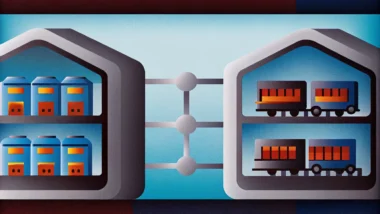
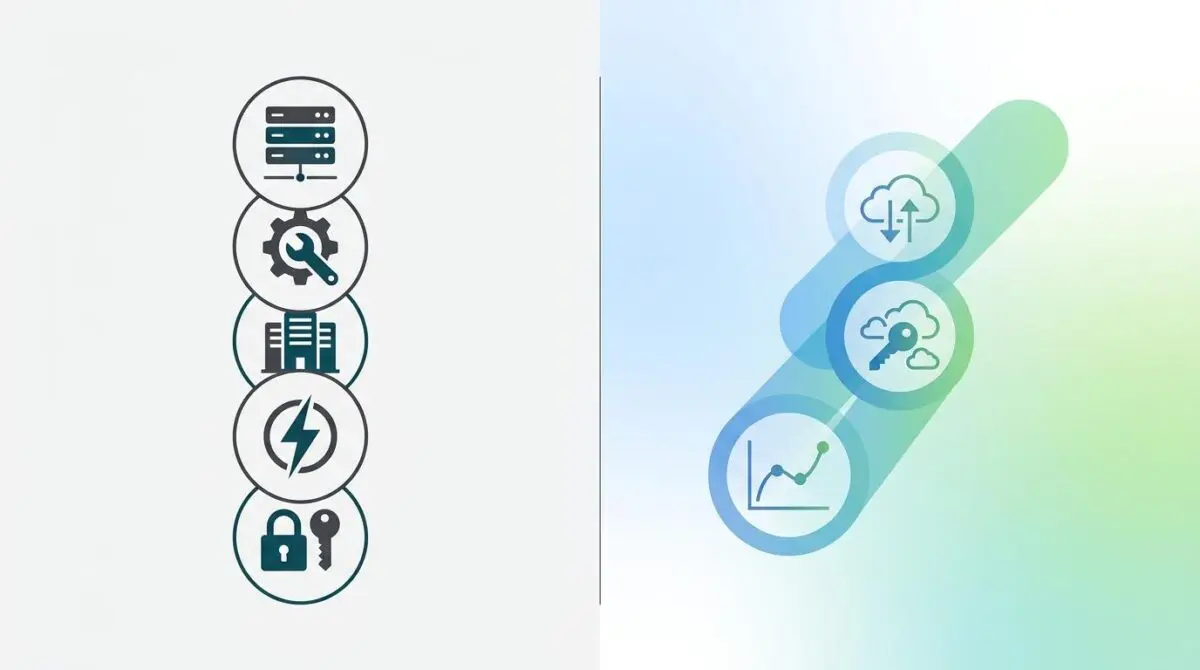
In its detailed breakdown, Cohere separates costs into capital and operational expenditures. Ownership includes chips, servers, storage; renting includes cloud instances, tokens, power. Utilization is the key factor: owned hardware becomes cheaper when used continuously. The report cites a Lenovo analysis showing an 8-GPU server pays for itself in under four months against on-demand cloud pricing.
Cohere also highlights model efficiency techniques like mixture-of-experts (MoE) and low-bit quantization that maximize throughput and reduce costs on owned hardware.
The Hidden Costs of Token Economics
Token price is not unit economics. The real cost is the system that produces the token. Teams expanding context windows or adding retrieval loops can dramatically alter cost profiles. The report notes that 96% of organizations deploying generative AI faced higher-than-expected costs, per an IDC InfoBrief commissioned by DataRobot.
Strategic Analysis: The Ownership Advantage
Recent developments reinforce Cohere’s thesis. The Nemotron Challenge from NVIDIA distills five proven AI reasoning workflows from over 5,000 Kagglers, offering enterprises blueprint to optimize reasoning costs. Meanwhile, NVIDIA’s NeMo workflow automates agent-led RL research, reducing the cost of experimentation. And NVIDIA Cosmos 3 achieves 93% accuracy via one-day vision model post-training, demonstrating that rapid fine-tuning on owned infrastructure can dramatically lower training expenses.
These innovations align with Cohere’s argument that model efficiency and ownership go hand in hand. As NVIDIA reports, Blackwell-class systems deliver 50x more tokens per megawatt than previous generations, cutting cost per token by 35x. This makes ownership increasingly attractive for sustained, high-volume workloads.
Cohere’s analysis, combined with these real-time research data points, suggests that enterprises should strategically own and rent AI infrastructure based on workload patterns. For always-on inference, owned hardware can be up to 18x cheaper than APIs. For bursty training, cloud still wins. The key is disciplined cost attribution and utilization management.
Conclusion & Future Outlook
Enterprises must move beyond token pricing to understand true AI TCO. Ownership provides predictability, control, and cost advantages for sustained workloads. With NVIDIA’s latest advancements in reasoning workflows and model post-training, the case for owning AI infrastructure grows stronger. Companies that master the balance of owning and renting will gain a competitive edge in the AI-driven economy.
Staying ahead in the rapidly shifting landscape of AI requires precision. To future-proof your digital strategy and scale effortlessly, you need a foundation built on precision. Optimize your site with advanced speed engineering, secure your infrastructure in high-performance hosting environments, and streamline your entire workflow through autonomous AI pipelines. If you are ready to elevate your systems, Connect with Andres at Andres SEO Expert to build your ultimate architecture.
Frequently Asked Questions
What is the total cost of ownership (TCO) for AI systems beyond token pricing?
Beyond token pricing, AI TCO includes hidden infrastructure costs such as servers, chips, storage, power, and operational expenses. Token-based pricing is just the tip of the iceberg; the real cost lies in the entire system that produces each token, including retries, agentic loops, tool calls, and retrieval steps.
Why do enterprises often face higher-than-expected AI costs?
According to an IDC InfoBrief commissioned by DataRobot, 96% of organizations deploying generative AI experienced higher-than-expected costs. This is because teams often focus only on token pricing while ignoring the multiplied consumption from expanding context windows, multiple model calls, and agentic workflows. A single user request can trigger a chain of operations that dramatically inflates token usage without visible product changes.
How does owning AI hardware compare to renting cloud instances in terms of cost?
Ownership becomes significantly cheaper when utilization is high. For example, a Lenovo analysis shows an 8-GPU server pays for itself in under four months compared to on-demand cloud pricing. For always-on inference, owned hardware can be up to 18x cheaper than APIs. However, for bursty training workloads, cloud renting remains more cost-effective. The key factor is utilization: owned infrastructure is economical for sustained, high-volume workloads.
What techniques can reduce AI inference costs on owned hardware?
Model efficiency techniques such as mixture-of-experts (MoE) and low-bit quantization maximize throughput and reduce costs on owned hardware. Additionally, NVIDIA’s Blackwell-class systems deliver 50x more tokens per megawatt than previous generations, cutting cost per token by 35x. These innovations make ownership increasingly attractive for sustained workloads.
How do expanding context windows and agentic loops affect token consumption?
Expanding context windows, adding retrieval loops, and increasing agentic steps can dramatically alter cost profiles. Each step—prompt, response, retrieval, agent step, tool call, retry—multiplies token consumption. Teams may not realize that even small product changes can lead to exponential growth in token usage, as a single user request triggers a chain of operations.
When should enterprises choose to own versus rent AI infrastructure?
Enterprises should strategically own and rent based on workload patterns. For always-on inference, owned hardware can be up to 18x cheaper than APIs. For bursty training, cloud still wins. The ideal approach is disciplined cost attribution and utilization management: own for sustained, high-volume workloads; rent for variable or short-term demands. Mastering this balance provides predictability, control, and a competitive edge.