Key Takeaways
- Voice AI progress is specialized; no single model excels in all capabilities.
- Models are stronger at speaking than listening, missing critical paralinguistic cues.
- Traditional benchmarks overestimate real-world performance, especially in noisy environments.
- Human evaluation remains irreplaceable for assessing subjective voice quality.
Beyond WER: Real World VoiceEQ Benchmarks the Soul of Voice AI
Today, HumeAI unveiled Real World VoiceEQ, a comprehensive benchmark designed to measure the human quality of voice interactions. Unlike traditional metrics focused on word error rate and latency, this benchmark evaluates how well voice AI systems recognize emotion, tone, and context — the invisible layers of human communication that transcripts miss. Built from over 1 million human ratings across diverse demographics and environments, it ranks more than 40 leading voice models across 15+ evaluation dimensions.
Table of Contents
The Benchmark: Methodology and Metrics
Real World VoiceEQ evaluates both proprietary and open-source voice models across automatic speech recognition (ASR), text-to-speech (TTS), speech-to-speech (S2S), and speech understanding tasks. The benchmark includes 785,000 TTS ratings and 48,000 STS ratings, making it one of the largest human evaluations of voice AI conducted to date.
All evaluations were conducted using Kairos, HumeAI’s voice-native evaluation platform. The same infrastructure allows frontier AI labs and enterprises to run custom evaluations, identify failure modes, generate human preference data, and improve models via reinforcement learning.
HumeAI’s Real World VoiceEQ benchmark covers more than 60 metrics across 15+ dimensions, including emotional understanding, speaker consistency, expressiveness, robustness to noise and accents, and conversational intelligence. By breaking down performance into specialized capabilities, HumeAI aims to provide a more nuanced view of voice model quality than traditional aggregate scores.
Key Findings: Specialization, Listening Gap, and Benchmark Limitations
Specialized Progress: No Single Best Model
HumeAI’s results reveal that voice AI progress is becoming increasingly specialized. No system configuration ranked among the top five across all eight capability groups in TTS evaluations. One model may excel at precise pronunciation for technical terms but fail to produce emotionally expressive speech, while another sounds natural but struggles with accuracy. This underscores the importance of evaluating capabilities independently rather than collapsing them into a single score.
Speaking vs. Listening: A Critical Gap
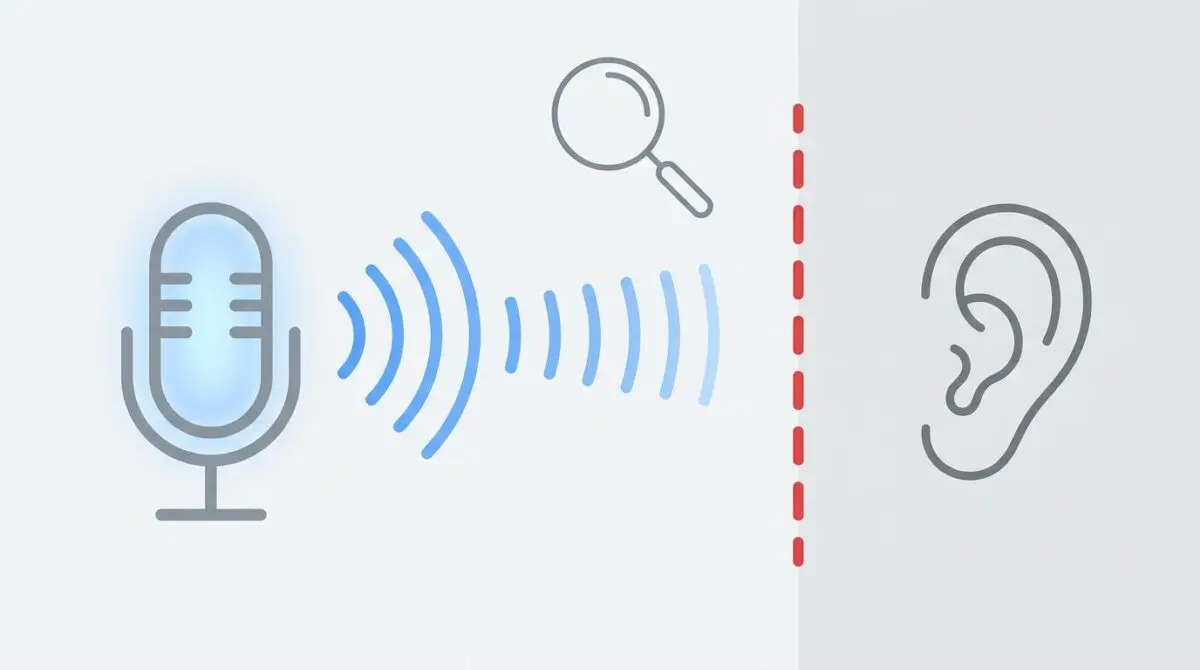
Speech-to-Speech models showed the widest variation. While some systems recognized emotion well, they often failed to respond appropriately. HumeAI found that many models remain largely transcript-driven, ignoring paralinguistic cues such as tone, pacing, hesitation, and emphasis. These cues are critical for interpreting confidence, uncertainty, sarcasm, and empathy in real conversation. For instance, a confident ‘Yes’ versus a hesitant ‘…yes…’ have identical transcripts but vastly different meanings — yet most current voice AI cannot distinguish them.
Benchmark Limitations: Overestimation and Real-World Failure
Traditional benchmarks near saturation do not reflect real-world conditions. HumeAI observed that word error rates on noise-backed speech were roughly four times higher than on music-backed speech, showing how a single background-audio score can hide true failure modes. Moreover, the research indicates that some models may be over-optimized for established benchmarks, even reproducing known errors in reference transcripts.
Human evaluation remains essential. When comparing leading speech-language models (SLMs) with trained human raters, agreement was highest on objective tasks like pronunciation accuracy but dropped significantly on subjective judgments such as whether a voice fit a role or maintained consistent identity. Automated evaluators are not yet a substitute for human listeners for tasks requiring acoustic perception and social interpretation.
Strategic Implications: Human-Grounded Metrics and Industry Trends
The launch of Real World VoiceEQ comes at a critical juncture for the voice AI industry. As voice interfaces become dominant in customer support, healthcare, education, and personal assistants, the inability of current models to fully understand human communication poses a bottleneck. HumeAI’s benchmark provides a necessary corrective to the industry’s over-reliance on narrow technical metrics.
This focus on human quality aligns with broader trends in AI efficiency and specialization. Recent work from Cohere on hardware-aware dynamic speculation demonstrated a 23% inference speedup for large language models, emphasizing the need for efficient deployment without sacrificing quality. Similarly, NVIDIA’s one-day vision model post-training approach achieved 93% accuracy by leveraging agent skills, illustrating how specialized techniques can rapidly improve model capabilities. These developments, coupled with HumeAI’s findings, suggest that the future of voice AI lies in a combination of efficient architectures, specialized models, and human-centered evaluation frameworks.
The recognition that voice AI systems must listen as well as they speak will drive demand for richer training data, multi-modal understanding, and reinforcement learning from human feedback. Companies that invest in these areas will have a competitive advantage as users increasingly expect natural, empathetic interactions.
Conclusion: The Path to Truly Human Voice AI
Real World VoiceEQ marks a significant step toward measuring what truly matters in voice AI: the ability to communicate like a human. By exposing the gaps between benchmark performance and real-world experience, HumeAI challenges the industry to broaden its definition of success. Speed and accuracy are table stakes; understanding and expression are the differentiators.
As voice becomes AI’s primary interface, the models that succeed will be those that can listen, adapt, and respond with genuine human quality. HumeAI’s benchmark provides the tools to measure that progress, and the insights to guide it.
Staying ahead in the rapidly shifting landscape of AI requires precision. To future-proof your digital strategy and scale effortlessly, you need a foundation built on precision. Optimize your site with advanced speed engineering, secure your infrastructure in high-performance hosting environments, and streamline your entire workflow through autonomous AI pipelines. If you are ready to elevate your systems, Connect with Andres at Andres SEO Expert to build your ultimate architecture.
Frequently Asked Questions
What is Real World VoiceEQ?
Real World VoiceEQ is a comprehensive benchmark from HumeAI that measures the human quality of voice interactions. Unlike traditional metrics like word error rate, it evaluates how well voice AI systems recognize emotion, tone, and context, using over 1 million human ratings across diverse demographics and environments, covering more than 40 voice models and 15+ evaluation dimensions.
How is Real World VoiceEQ different from traditional voice AI benchmarks?
Traditional benchmarks focus on narrow technical metrics like word error rate and latency, often saturating and not reflecting real-world conditions. Real World VoiceEQ measures human quality by evaluating emotional understanding, speaker consistency, expressiveness, robustness to noise and accents, and conversational intelligence, using large-scale human ratings instead of automated metrics alone.
What are the key findings of the Real World VoiceEQ benchmark?
The key findings include: no single model excels across all capabilities (specialization is the norm); a critical gap exists between speaking (ASR/TTS) and listening (speech understanding); many models ignore paralinguistic cues like tone and pacing; and traditional benchmarks overestimate real-world performance, with word error rates varying drastically depending on background noise type.
Why is there a gap between speaking and listening in voice AI?
Many voice AI models are largely transcript-driven, ignoring paralinguistic cues such as tone, pacing, hesitation, and emphasis. For example, a confident ‘Yes’ versus a hesitant ‘…yes…’ have identical transcripts but vastly different meanings. Current systems often fail to interpret confidence, uncertainty, sarcasm, or empathy, creating a gap between accurate speech recognition and true understanding.
What are the limitations of current voice AI benchmarks highlighted by HumeAI?
HumeAI found that traditional benchmarks near saturation do not reflect real-world conditions. Word error rates on noise-backed speech were roughly four times higher than on music-backed speech, showing how a single background-audio score hides failure modes. Also, some models are over-optimized for benchmarks, even reproducing known transcript errors. Human evaluation remains essential for subjective tasks like voice fit and identity consistency.
What does HumeAI’s benchmark mean for the future of voice AI?
The benchmark emphasizes that speed and accuracy are table stakes, while understanding and expression are the differentiators. Future voice AI systems must listen as well as they speak, driving demand for richer training data, multi-modal understanding, and reinforcement learning from human feedback. Companies investing in human-centered evaluation frameworks will have a competitive advantage as users expect natural, empathetic interactions.
How can voice AI improve human-like communication?
To improve human-like communication, voice AI must move beyond transcript-driven processing to incorporate paralinguistic cues like tone, pacing, hesitation, and emphasis. This requires richer training data, multi-modal understanding, and human evaluation frameworks that measure emotional recognition and appropriate response. As highlighted by Real World VoiceEQ, specialized models optimized for human quality will lead to more natural, empathetic interactions.