

Key Takeaways
- RAG excels for dynamic knowledge access; fine-tuning for behavior consistency.
- Hybrid architectures combine both for optimal production performance.
- Tools like n8n enable seamless orchestration of RAG and fine-tuned models.
The Great AI Architecture Debate of 2026: RAG and Fine-Tuning Converge
For years, teams building production LLM applications faced a binary choice: retrieval-augmented generation or fine-tuning. But the question is no longer which to pick. As of July 2026, the winning strategy is a hybrid architecture that blends both approaches, orchestrated by automation platforms designed for scale. The engineering team at n8n, a leader in workflow automation, published a definitive guide today that spells out when each method shines and how to combine them effectively.
Table of Contents
How RAG and Fine-Tuning Actually Work in Automation Pipelines
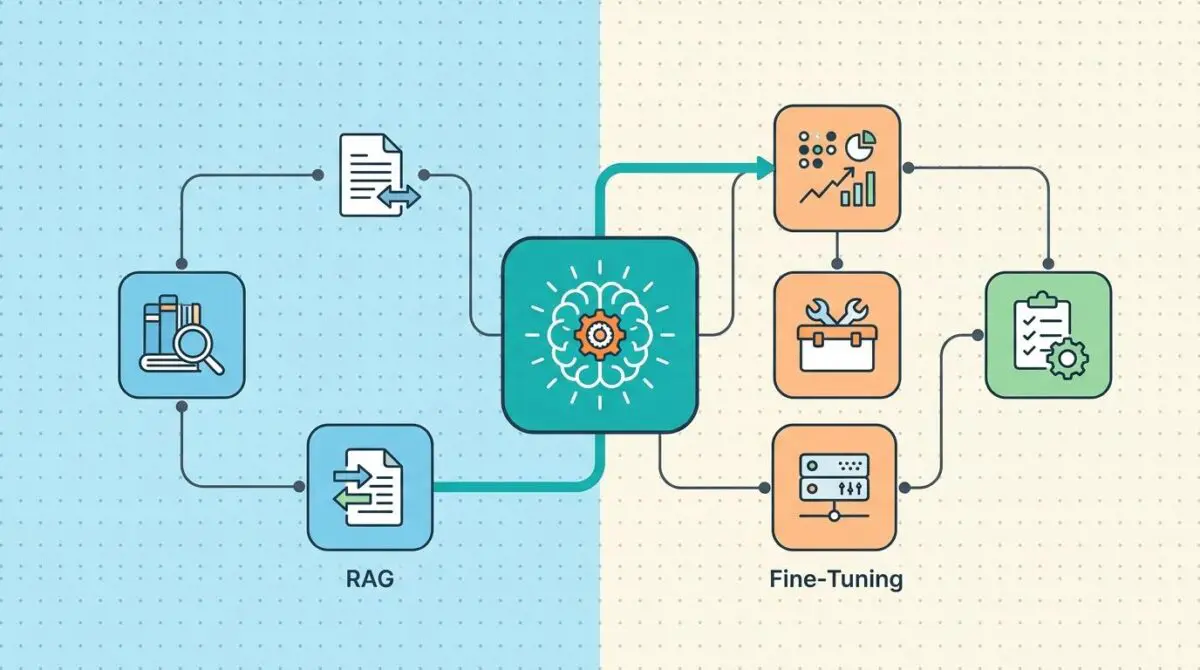
RAG gives an LLM access to external knowledge at runtime by retrieving relevant context from databases or documents. Fine-tuning changes the model itself by training it on domain-specific examples. The core difference is where adaptation occurs: outside the model for RAG, inside the model for fine-tuning.
RAG is ideal for applications requiring frequent updates, source traceability, or large knowledge bases. Fine-tuning shines when consistency, tone, or specialized reasoning is needed. However, as n8n points out, even behavioral tasks can often be achieved via RAG with few-shot prompting, making RAG the default starting point for most teams.
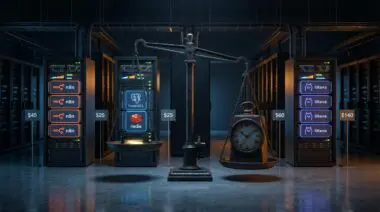
Cost and latency tradeoffs further clarify the choice. RAG front-loads costs into retrieval infrastructure and adds latency per request, but keeps the base model unchanged. Fine-tuning requires significant upfront investment in data preparation and training, but can reduce runtime overhead, especially with smaller open-weight models hosted on self-managed infrastructure.
According to n8n’s definitive guide, retrieval quality often demands advanced techniques like hybrid sparse-dense search and re-ranking. Fine-tuning, on the other hand, risks degrading model performance if training examples are not carefully curated. Both paths require deliberate engineering, but neither is a silver bullet.
Market Implications: The Hybrid Shift in Automation Workflows
The real story unfolding in 2026 is the convergence of these techniques. Recent publications from the n8n ecosystem, including analyses on AI agent auto-build workflows and comparisons with tools like Claude Code and Gumloop, indicate a clear trend: automation platforms are becoming the control plane for hybrid LLM orchestration.
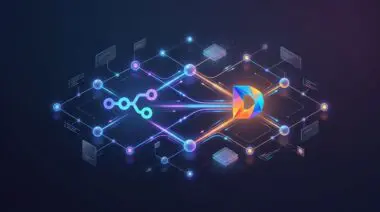
In the original guide, n8n illustrates how a customer support assistant can benefit from fine-tuning for brand voice while relying on RAG to pull the latest product documentation. This pattern is now standard in production deployments. The ability to route requests conditionally between RAG pipelines, direct model calls, and fine-tuned endpoints is exactly what modern automation workflows demand.
Moreover, researchers are exploring retrieval-augmented fine-tuning (RAFT), which trains models to better utilize retrieved context. This blurring of boundaries suggests that the next wave of AI automation will treat RAG and fine-tuning not as alternatives, but as complementary capabilities within a unified orchestration layer.
Strategic implications for automation professionals: investing in a flexible workflow architecture that can ingest knowledge, fine-tune local models, and switch between them dynamically is no longer optional. Platforms like n8n are already providing these building blocks, and the market is responding with increasing demand for hybrid solutions.
Building the Future: Orchestrating RAG and Fine-Tuned Models at Scale
The debate between RAG and fine-tuning has resolved into a collaborative model. For most production use cases, start with RAG because it is easier to update and experiment with. Add fine-tuning when you need consistent behavior that RAG alone cannot deliver. The most resilient systems use both, with clear separation between stable knowledge (fine-tuned) and dynamic knowledge (RAG).
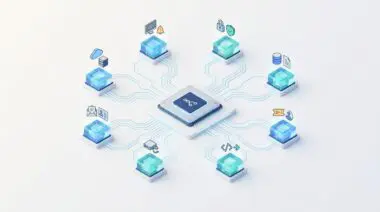
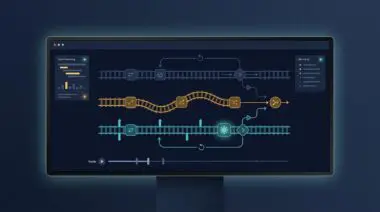
Orchestration is the missing piece that ties these layers together. With n8n, teams can design pipelines that ingest documents, generate embeddings, retrieve context, and call fine-tuned models—all within a single visual workflow. Conditional branching and execution history provide the observability needed to iterate rapidly.
Staying ahead in the rapidly shifting landscape of Automations requires precision. To future-proof your digital strategy and scale effortlessly, you need a foundation built on precision. Optimize your site with advanced speed engineering, secure your infrastructure in high-performance hosting environments, and streamline your entire workflow through autonomous AI pipelines. If you are ready to elevate your systems, Connect with Andres at Andres SEO Expert to build your ultimate architecture.
Frequently Asked Questions
What is the difference between RAG and fine-tuning?
RAG (Retrieval-Augmented Generation) gives an LLM access to external knowledge at runtime by retrieving relevant context from databases or documents, adapting outside the model. Fine-tuning changes the model itself by training it on domain-specific examples, adapting inside the model.
When should I use RAG vs fine-tuning?
RAG is ideal for applications requiring frequent updates, source traceability, or large knowledge bases. Fine-tuning shines when consistency, tone, or specialized reasoning is needed. However, RAG is the default starting point for most teams because even behavioral tasks can often be achieved via RAG with few-shot prompting.
Can RAG and fine-tuning be combined?
Yes, the winning strategy in 2026 is a hybrid architecture that blends both approaches. For example, a customer support assistant can benefit from fine-tuning for brand voice while relying on RAG to pull the latest product documentation. Orchestration platforms like n8n enable conditional routing between RAG pipelines, direct model calls, and fine-tuned endpoints within a single workflow.
What is retrieval-augmented fine-tuning (RAFT)?
RAFTRetrieval-Augmented Fine-Tuning is an emerging technique that trains models to better utilize retrieved context. It blurs the boundaries between RAG and fine-tuning, suggesting that future AI automation will treat them as complementary capabilities within a unified orchestration layer.
How do automation platforms like n8n help with hybrid LLM orchestration?
Platforms like n8n provide visual workflows that can ingest documents, generate embeddings, retrieve context, and call fine-tuned models—all within a single pipeline. They offer conditional branching and execution history for rapid iteration, acting as the control plane for hybrid LLM orchestration.
What are the cost and latency tradeoffs between RAG and fine-tuning?
RAG front-loads costs into retrieval infrastructure and adds latency per request but keeps the base model unchanged. Fine-tuning requires significant upfront investment in data preparation and training but can reduce runtime overhead, especially with smaller open-weight models hosted on self-managed infrastructure.
What is the recommended starting point for production LLM applications?
Start with RAG because it is easier to update and experiment with. Add fine-tuning when you need consistent behavior that RAG alone cannot deliver. The most resilient systems use both, with clear separation between stable knowledge (fine-tuned) and dynamic knowledge (RAG).