Key Takeaways
- DharmaOCR achieved a 0.925 benchmark score, beating Mistral OCR4 (0.798) and Unlimited-OCR (0.7587) on Portuguese OCR.
- Supervised fine-tuning and Direct Preference Optimization concentrate model capacity on the target domain, reducing errors and text degeneration.
- Specialization proves structurally superior even against newer architectures, validated by industry trends in AI reliability and efficiency.
Specialized Training Outflanks Newer Architectures in OCR Benchmark
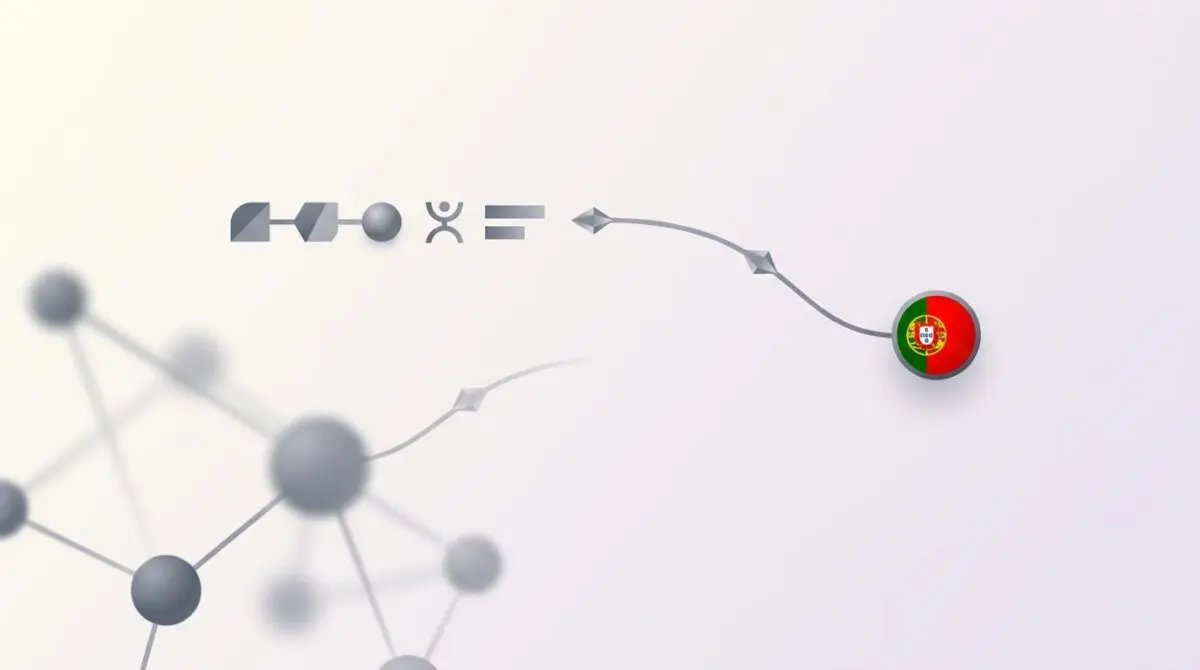
In a decisive validation of domain specialization, DharmaOCR, a model engineered exclusively for Brazilian Portuguese optical character recognition, has outperformed newer, more resource-intensive generalist models Mistral OCR4 and Unlimited-OCR on a targeted benchmark. The evidence, published by the Dharma-AI team on July 16, 2026, demonstrates that directed training can overcome architectural generational gaps.
Table of Contents
The Mechanism Behind DharmaOCR’s Advantage
DharmaOCR’s training pipeline comprises two critical stages. First, supervised fine-tuning on a broad collection of Portuguese-language files concentrates the model’s representational capacity on the specific vocabulary, syntax, and document structures of Brazilian Portuguese. Second, Direct Preference Optimization teaches the model to select coherent full extractions over competing outputs, suppressing text degeneration under visual difficulty.
This approach ensures that all available parameters are devoted to the target domain. In contrast, generalist models must distribute their capacity across multiple languages, diluting performance on any single one. The result is a structural advantage that persists even as architectures improve.
As reported by the Dharma-AI team, on their benchmark DharmaOCR scored 0.925, while Mistral OCR4 and Unlimited-OCR achieved 0.798 and 0.7587 respectively. Examples reveal systematic errors in multilingual models on Portuguese-specific names and phrases, such as mistranscribing ‘Chico Buarque’ as ‘Chico Barque’ or ‘chico bique.’
Strategic Implications: A Validation of Domain Focus
This outcome is not an isolated case. Recent industry developments underscore the same principle. IBM Research’s study on model routing exposes hidden cost and latency traps in generalist systems, while Ai2’s Shippy blueprint demonstrates how reliability in critical domains demands targeted design. NVIDIA DeepStream 9.1 introduces agentic skills specialized for multi-camera tracking, further illustrating the trend toward domain-adapted AI.
These examples confirm that specialization is not a compromise but a strategic lever. As the AI field advances, the structural logic remains: finite resources yield higher per-task performance when concentrated. DharmaOCR’s continued lead against newer architectures is a concrete demonstration that domain depth beats breadth in applications where language or context specificity is paramount.
Looking Ahead: The Enduring Power of Specialization
The Dharma-AI team acknowledges that future models may eventually surpass current performance, but the principle holds. Better tools expand what specialization can achieve, not reverse its logic. For enterprises requiring reliable, high-accuracy OCR in Portuguese, DharmaOCR currently offers the most robust solution.
Staying ahead in the rapidly shifting landscape of AI requires precision. To future-proof your digital strategy and scale effortlessly, you need a foundation built on precision. Optimize your site with advanced speed engineering, secure your infrastructure in high-performance hosting environments, and streamline your entire workflow through autonomous AI pipelines. If you are ready to elevate your systems, Connect with Andres at Andres SEO Expert to build your ultimate architecture.
Frequently Asked Questions
What is DharmaOCR?
DharmaOCR is a specialized optical character recognition (OCR) model engineered exclusively for Brazilian Portuguese. It uses supervised fine-tuning and Direct Preference Optimization to focus all its parameters on Portuguese-language documents, achieving high accuracy on names, syntax, and document structures.
How does DharmaOCR perform compared to newer generalist models like Mistral OCR4?
On a targeted benchmark, DharmaOCR scored 0.925, while Mistral OCR4 achieved 0.798 and Unlimited-OCR scored 0.7587. This demonstrates that domain-specific training can overcome architectural generational gaps, as specialization concentrates model capacity on a single language.
What types of errors do generalist models make on Portuguese text?
Generalist models systematically mistranscribe Portuguese-specific names and phrases. For example, they misread ‘Chico Buarque’ as ‘Chico Barque’ or ‘chico bique,’ whereas DharmaOCR accurately recognizes such terms due to its focused training on Brazilian Portuguese.
Why does specialization outperform general models in OCR tasks?
Specialization ensures that all available model parameters are devoted to the target domain (e.g., a single language). Generalist models must distribute capacity across multiple languages, diluting performance on any one. This structural advantage persists even as architectures improve.
What are the strategic implications of DharmaOCR’s performance?
The result validates domain focus as a strategic lever. Examples from IBM Research, Ai2’s Shippy, and NVIDIA DeepStream show the same trend: targeted design yields higher reliability and efficiency in critical domains. For enterprises needing high-accuracy OCR in Portuguese, specialization offers the most robust current solution.
Can future general models surpass specialized ones like DharmaOCR?
While future models may eventually achieve higher absolute performance, the principle remains that specialization beats breadth for domain-specific tasks. Better tools expand what specialization can achieve, not reverse its logic. For now, DharmaOCR provides the best option for Portuguese OCR.
How can businesses leverage specialized AI like DharmaOCR?
Businesses can adopt specialized models to improve accuracy, reduce errors, and lower operational costs in language-specific or domain-critical applications. Connecting with experts like Andres (at Andres SEO Expert) can help build architectures that integrate such precision AI for scalable digital strategies.