Key Takeaways
- Every AI agent gets a durable virtual filesystem and shell across both isolates and containers.
- Isolate-first design scales horizontally to millions of agents, reserving containers for full Linux tasks.
- AI SDK-compatible tools steer agents to the cheapest compute path, reducing container reliance below 10%.
Table of Contents
Agents Need a Real Computer, Not a Container
The Cloudflare engineering team has released technical details of @cloudflare/computer, an open-source library that gives every AI agent its own virtual computer. The early preview, available now, attacks a structural bottleneck that emerges the moment agentic systems leave the prototype phase and start scaling.
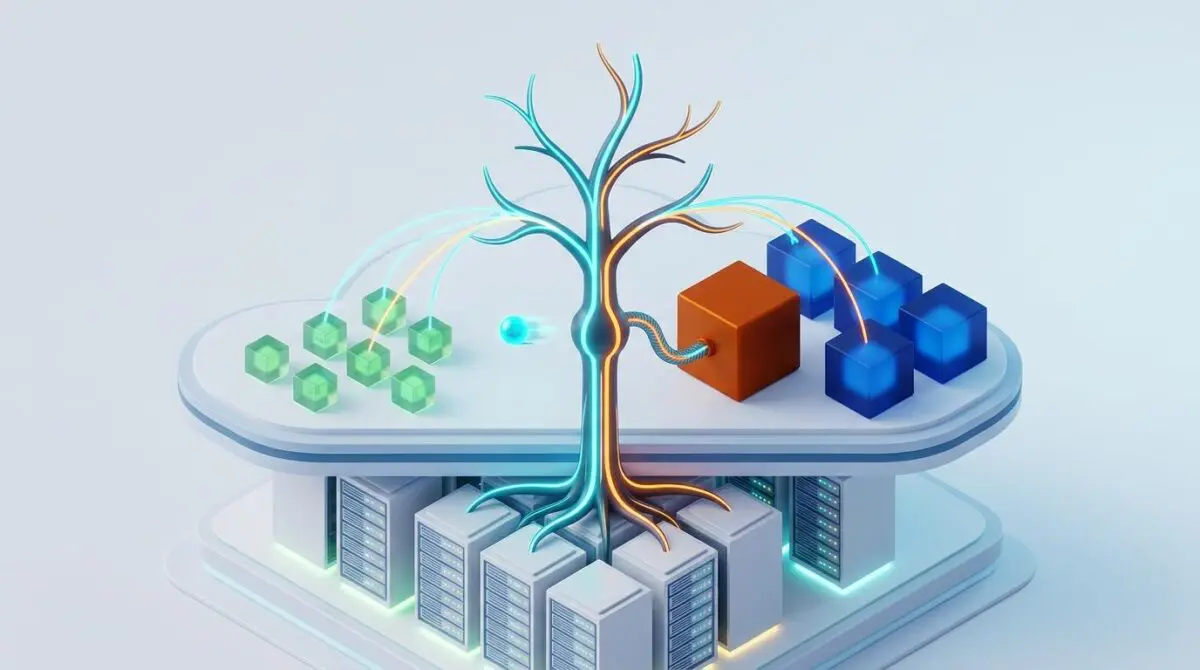
Assigning a dedicated container to each user session is physically impossible when the world demands hundreds of millions of concurrent agents. @cloudflare/computer replaces that model with a durable filesystem and a runtime that dynamically routes work between ultra-lightweight V8 isolates and fully featured Cloudflare Containers, picking the right execution layer for each task.
The agent gets a primed workspace backed by SQLite, populated from git repositories or cloud storage. Every tool the model needs — read, write, edit, ls, and exec — operates against that filesystem, with all operations gated and audited so the agent’s paper trail is never lost.
How a Virtual Filesystem Bridges Isolates and Containers
The Cloudflare engineering team describes how a Workspace instance, which any Durable Object can spin up, holds the filesystem and coordinates execution backends. The same API, exec(string, options), works across isolates and containers, so the agent never has to understand where its commands are actually running.
Isolate-based execution uses just‑bash to translate shell commands into JavaScript inside a dynamic Worker. Here the filesystem is available directly via bindings, with zero network hops and single‑digit‑millisecond cold starts.
When a task demands a full Linux userland — npm, native binaries, test runners, audio processing — the system escalates to a container backend. Cloudflare Containers attach via FUSE, mounting the workspace filesystem so changes are instantly synced back to the durable store.
The AI SDK‑compatible toolkit exposes tools whose descriptions guide the agent toward the cheapest, fastest path. Frontier models prove remarkably good at working in the isolate until they truly need the container, thanks to explicit cost‑aware reasoning baked into each tool’s description.
Under the hood, the Workspace class ships with a node:fs‑compatible wrapper, allowing third‑party JavaScript libraries to consume the virtual filesystem without modification. A developer preparing the agent’s environment can clone repositories, write bug‑report files, and seed data through the workspace API before the model even begins its loop.
Why Horizontal Scaling Is the Only Path for Agentic AI
The compute math is unforgiving. Every major cloud and hyperscaler combined cannot provision a container for every user of every company if agents become ambient infrastructure. The industry’s desperate scramble for CPU capacity, not just GPU, is a direct reflection of that ceiling.
Cloudflare made an out‑of‑consensus bet on isolates almost a decade ago when Workers launched. Isolates are not containers; they are lightweight sandboxes inside already‑running V8 processes, spawning in under 5 milliseconds compared to the 100 to 1,000 milliseconds typical of container cold starts.
Workers bill only for CPU time — actual instruction execution — not wall‑clock waiting. An agent that spends most of its time waiting for external APIs or database queries incurs no compute cost during those pauses. That economics profile aligns perfectly with the bursty, I/O‑heavy nature of agent loops.
Durable Objects, introduced nearly six years ago, extended the same horizontal scaling promise to stateful workloads. They encourage sharding into millions of tiny objects instead of centralizing coordination, exactly the pattern that hundreds of millions of autonomous agents demand. Work done in an isolate stays in an isolate until heavyweight primitives become unavoidable.
@cloudflare/computer aggressively applies that philosophy. The agent harness runs inside a Durable Object — infinitely scalable horizontally — and calls a container only as a tool. The attached container provides vertical scale when Linux binaries or more than 128 MB of memory are genuinely required, without bloating the default fast path.
Internal platform architecture reinforces this stance. Bound resources like D1 databases, KV stores, and other Workers connect through bindings, not public‑internet network calls. Co‑located service calls routinely complete in 0.1 to 0.5 milliseconds, and bindings eliminate Server‑Side Request Forgery attack surfaces by design because internal services are never addressable as URLs.
The 330‑plus data centres that blanket more than 100 countries give every isolate a global cold‑start profile measured in single digits. Smart Placement optionally shifts execution closer to backend resources, slashing round‑trip latency without any region‑selection gymnastics. That combination of instant global presence and zero‑copy bindings is what makes the isolate‑first default viable for agents that must feel responsive without bankrupting the compute budget.
Redefining Agent Infrastructure for the Next Million Concurrent Workloads
Agents that build, test, and deploy JavaScript applications, generate documentation, or drive browsers inside isolates already exist inside Cloudflare’s own fleet. The goal of @cloudflare/computer is to push the container‑dependency needle below 10 percent, relegating full Linux environments to a minority of specialised steps while isolates handle everything else.
The package’s open‑source release marks a practical experiment in collapsing two compute tiers into a single abstraction that the model itself can navigate. As the preview matures, the industry will learn whether giving agents a real computer — with a filesystem, shell, tools, and runtime‑aware steering — finally closes the gap between what agentic software promises and what infrastructure can actually deliver.
For teams building autonomous agent platforms, the ability to select the right compute for each task mirrors the optimisation required in high‑scale web operations. Andres SEO Expert’s programmatic SEO and AI automation services transfer that same efficiency‑driven mindset to content generation pipelines and API‑powered publishing systems. To understand the engineering principles behind high‑velocity, low‑latency infrastructure, explore the work of Andres SEO Expert. When you are ready to discuss how your digital presence can handle millions of agent‑driven requests, reach out to Andres.
Frequently Asked Questions
What is @cloudflare/computer?
@cloudflare/computer is an open-source library from Cloudflare that gives every AI agent its own virtual computer, with a durable filesystem and a runtime that dynamically routes work between ultra-lightweight V8 isolates and fully featured Cloudflare Containers.
How does @cloudflare/computer bridge isolates and containers?
It uses a Workspace instance that holds the filesystem and coordinates execution backends. The same exec API works across isolates and containers, so the agent never needs to know where its commands run. Isolate execution uses just-bash in a dynamic Worker, while tasks needing a full Linux userland escalate to a container backend via FUSE mounting.
Why can’t AI agents rely on containers for scaling?
Every major cloud and hyperscaler combined cannot provision a container for every user if agents become ambient infrastructure. Container cold starts take 100 to 1,000 milliseconds, while isolates spawn in under 5 milliseconds, making horizontal scaling with containers impractical for hundreds of millions of concurrent agents.
What are the benefits of isolate-based execution for agents?
Isolates are lightweight sandboxes inside already-running V8 processes, with single-digit-millisecond cold starts and zero network hops when accessing the filesystem. Workers bill only for CPU time, not wall-clock waiting, which aligns well with the bursty, I/O-heavy nature of agent loops.
How does the virtual filesystem work with containers?
When a task demands a full Linux userland, the system escalates to a container backend. Cloudflare Containers attach via FUSE, mounting the workspace filesystem so changes are instantly synced back to the durable store.
What is the role of Durable Objects in agent infrastructure?
Durable Objects extend horizontal scaling to stateful workloads by encouraging sharding into millions of tiny objects. In @cloudflare/computer, the agent harness runs inside a Durable Object, making it infinitely scalable horizontally, and calls a container only as a tool when heavyweight primitives are required.
How does Cloudflare reduce container dependency below 10 percent?
The agent harness runs in an isolate by default, using the virtual filesystem and shell tools for most steps. Containers are called only as a tool for specialized tasks that need Linux binaries or more than 128 MB of memory, pushing the container-dependency needle below 10 percent.