




Key Takeaways
- n8n’s generate-reflect-refine loop treats every agent output as a provisional draft, routing it through a critique stage before any user-facing release.
- Self-correction is not an automatic reliability upgrade — without an external evaluation signal, models can preserve or amplify hallucinations across extra passes.
- Fixed iteration ceilings, quality thresholds, and loop-rate telemetry turn reflection from a design choice into a measurable automation control system.
Table of Contents
A Three-Stage Correction Loop Is Reshaping Production Agent Reliability
The engineering team at n8n has published a detailed technical guide on the reflection pattern, one of four core agentic AI design strategies for production automation.
Released on September 11, 2026, the guide maps a three-stage generate-reflect-refine loop that lets AI agents critique their own drafts, flag errors, and revise outputs before delivery.
For automation teams running customer support agents, data pipelines, or retrieval-augmented workflows, the pattern offers a direct mechanism to improve correctness and logical consistency.
But as n8n’s guide makes clear, the operational reality is more nuanced: reflection loops add token costs, latency, and the risk of self-reinforcing hallucinations unless bounded by strict stopping criteria.
Inside the Generate-Reflect-Refine Architecture
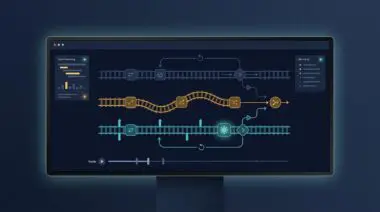
The reflection pattern treats every agent output as a provisional draft, not a finished answer. It routes the draft into a critique stage before any user-facing response is released.
That critique stage can be handled by the same model, a separate model, or an external tool such as a search engine or database lookup.
Each pass asks whether the response satisfies explicit evaluation criteria: policy compliance, factual accuracy, logical completeness, and safety guardrails.
The critique is then appended to the original draft and fed back into the generative model for refinement.
This loop must have a fixed iteration ceiling or a quality threshold. Otherwise the agent can burn tokens, add latency, and degrade output quality by over-iterating.
The workflow automation platform positions this as a conditional branching problem. Generation, reflection, and refinement become separate nodes or sub-workflows that can be visually tracked and adjusted.
That visual control matters because it lets automation engineers swap models, inspect intermediate outputs, and measure token consumption without rebuilding the entire pipeline.
Three variations create distinct reliability and cost profiles
- Single-model self-reflection — the same model generates and critiques, which is simpler but risks self-preference bias and missed hallucinations.
- Multi-agent reflection — a second agent with a different reasoning path reviews the first draft, mimicking peer review and catching errors the original model overlooks.
- Tool-augmented reflection — external lookup systems validate factual claims, improving accuracy but only as reliable as the data sources they query.
When the reflection pattern earns its compute cost
Reflection makes the most sense when response quality outranks speed, when outputs can be checked against verifiable criteria, and when single-pass drafts frequently contain errors.
It is a poor fit for time-sensitive tasks, high-volume cost-constrained flows, or systems where first-pass quality already meets business requirements.
Why Self-Correction Alone Cannot Guarantee Production Stability
A September 10 preprint survey from Duke University researchers Mia Lassiter and Brinnae Bent frames self-reflection as an external algorithm that asks an LLM to assess its own predictions and produce a better prompt for the same model.
Their work places plan reflection inside a broader five-dimension framework: environmental interaction, learning and adaptation, autonomy, goal-directed behavior, and temporal coherence.
Production telemetry gets sharper when teams track action validity rate, loop rate for repeated or oscillating steps, and plan adherence against a reference plan.
That reframes the reflection pattern from a qualitative design choice into a measurable automation control system.
Peer-reviewed research published in PLOS Complex Systems on August 18 reaches a related conclusion: production-level agentic pipelines still face output instability, scalability gaps, and system integration issues.
The PLOS study highlights that hallucinations in core models persist largely because models are trained on task-focused datasets rather than actual operational conditions.
This is the critical tension for automation teams. A reflection loop may correct simple errors, but it cannot fix a model that confidently invents references from its own internal knowledge.
Research on intrinsic self-correction reinforces that risk. In controlled studies, models frequently failed to improve reasoning without external feedback and sometimes degraded their answers after additional review passes.
That finding argues against treating self-reflection as an automatic reliability upgrade. It works best when there is a concrete evaluation signal such as a failing test, an invalid reference, or a missing source.
Without that signal, the loop can preserve and even amplify errors rather than eliminate them.
The production guide adds an important operational caveat: stopping criteria must be set to prevent indefinite refinement and runaway token consumption.
For automation engineers, the implication is clear. Reflection belongs inside a bounded orchestration layer, not as a free-running cognitive process.
The Automation Layer That Separates Reliable Agents From Costly Loops
The reflection pattern is not a magic cure, but as a bounded correction loop with measurable evaluation signals, it is now one of the most practical reliability tools available to automation teams. For teams building bounded agentic workflows that need to scale without runaway token costs, programmatic SEO and AI automation is how Andres SEO Expert approaches execution — contact us.
Frequently Asked Questions
What is the reflection pattern in AI agents?
The reflection pattern is an agentic AI design strategy where an agent treats its first output as a provisional draft, critiques it against criteria like policy compliance, factual accuracy, logical completeness, and safety guardrails, then revises before delivery.
How does the generate-reflect-refine loop work?
The agent generates a draft, a critique stage evaluates it, and the critique is appended to the draft and fed back to the model for refinement. The loop needs a fixed iteration ceiling or quality threshold to avoid extra token costs, latency, and over-iteration.
What are the three variations of reflection in AI automation?
Single-model self-reflection uses the same model to generate and critique. Multi-agent reflection uses a second agent with a different reasoning path. Tool-augmented reflection uses external lookups such as search engines or databases to validate factual claims.
When does the reflection pattern justify its compute cost?
Reflection earns its compute cost when response quality outranks speed, outputs can be checked against verifiable criteria, and single-pass drafts frequently contain errors. It is a poor fit for time-sensitive tasks, high-volume cost-constrained flows, or systems where first-pass quality already meets business requirements.
Why can self-correction alone fail in production AI agents?
Self-correction can fail because models may not improve reasoning without external feedback and can even degrade answers after additional review passes. Hallucinations can persist when models confidently invent references from internal knowledge rather than actual operational conditions.
What stopping criteria prevent runaway reflection loops?
Stopping criteria should include a fixed iteration ceiling, a quality threshold, or a concrete evaluation signal such as a failing test, an invalid reference, or a missing source. Without these, the loop can burn tokens, add latency, and amplify errors instead of eliminating them.
How can teams measure reflection loop reliability?
Teams can track action validity rate, loop rate for repeated or oscillating steps, and plan adherence against a reference plan. These metrics turn reflection from a qualitative design choice into a measurable automation control system.