



Key Takeaways
- Cloudflare’s resource-scoped Worker permissions are now generally available, letting teams grant a teammate or AI agent access to a single Worker instead of a whole account.
- Four roles — Metadata Read-Only, Content Read-Only, Editor, and Admin — apply at Developer Platform, product, or single-resource scope, so CI/CD tokens and agent credentials keep a limited blast radius.
- Cloudflare plans to extend the same roles and scopes to D1, R2, and KV, making this the default least-privilege pattern for AI agent infrastructure.
Table of Contents
Resource-Scoped Worker Permissions Arrive for AI Agent Teams
Cloudflare’s engineering team announced that resource-level access controls for Workers are now generally available, giving teams the ability to grant a teammate or AI agent access to a single Worker instead of an entire account.
The rollout introduces four new roles — Metadata Read-Only, Content Read-Only, Editor, and Admin — usable at Developer Platform, product, and resource scopes.
The trigger is straightforward: as AI agents move into build and debug workflows, broad credentials become the shortest path to an unplanned production change.
After all, the last thing you want is for an agent to make a change in production, just because it was granted more access than it needs.
That framing drives the platform’s shift toward a permission model that mirrors how developers actually deploy, debug, and review code.
The Four Roles That Redefine Worker Access
The new authorization matrix condenses access control into four operational postures.
- Metadata Read-Only — exposes settings, metrics, logs, and traces while keeping source code and product content hidden.
- Content Read-Only — allows Worker code or database content to be read, but not modified or deployed.
- Editor — permits content writes and settings updates, but blocks resource creation and deletion.
- Admin — grants full control over a single Worker, including deletion, without extending access to other account resources.
Each role can be applied at three scopes.
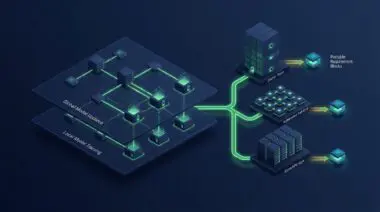
At Developer Platform level, a permission covers all Developer Platform resources; at product level, it applies to every resource of one type; at resource level, it narrows to one specific Worker.
For example, a Metadata Read-Only policy scoped to one Worker returns logs and traces only for that Worker.
The same role at platform scope would expose metadata across the full Developer Platform estate.
That distinction is what turns least privilege from a compliance phrase into a deployable control.
As announced by Cloudflare, the controls are available today for all customers through the Cloudflare dashboard, API, or Terraform.
How the Roles Handle CI/CD and Durable Objects
A CI/CD workflow can receive an Editor token scoped to one Worker.
If that token is exposed, the blast radius stays limited to deploys on that Worker; deletion and cross-account access remain blocked.
Routes and Custom Domains require both Editor access to the Worker and Workers Routes permission for the zone, preventing a deploy credential from silently redirecting production traffic.
Durable Objects inherit access from the Worker that implements them.
Metadata Read-Only reveals observability data, while direct Data Studio access requires Editor because it can query and modify stored data.
Improved Permission Errors and Legacy Migration
Denied API calls now return a link to the relevant documentation instead of a bare 403 response.
That helps both humans and agents identify the exact required permission without widening scope.
Legacy Workers roles remain functional with no deprecation date, but Cloudflare recommends moving to the new roles because only they support resource-level granularity.
Least Privilege Becomes the Default Operating Model for AI Infrastructure
The Worker authorization update lands against a broader security shift in which identity, not the network edge, is the primary perimeter.
Vendor-neutral cloud IAM research consistently identifies stolen credentials, misconfigured trust, or overprivileged roles as the top root cause of cloud breaches — not unpatched servers or zero-days.
That risk is amplified by scale.
Modern cloud estates now carry non-human identities at ratios between 45 to 1 and 100 to 1 relative to human users.
AI agents are the fastest-growing slice of that non-human population, and their tool permissions are only as safe as the credentials they inherit.
Best-practice guidance for agent identity is converging on three controls: per-agent scoped credentials, logged tool-invocation trails, and human approval gates for high-impact actions.
Cloudflare’s four role tiers map directly onto that model.
They give an agent enough access to debug, read, deploy, or manage one resource — but nothing else.
The official Cloudflare One documentation frames Zero Trust as the assumption that threats can exist both inside and outside the network, with every request authenticated and authorized based on identity and context.
Worker-level granular authorization applies that principle to the development plane, where code changes and deployment credentials create risk that a network-only zero-trust boundary cannot fully contain.
What Cloudflare Will Carry Across D1, R2, and KV
Worker-level access is only the first surface; Cloudflare plans to extend the same roles and scopes to D1 databases, R2 buckets, and KV namespaces, making this the authorization pattern AI teams will inherit across the full developer platform. For operators building scoped AI agent pipelines that need to scale, programmatic SEO AI automation is how Andres SEO Expert applies that same least-privilege discipline — talk to the team.
Frequently Asked Questions
What are Cloudflare’s new resource-scoped Worker permissions?
Cloudflare now offers generally available resource-level access controls for Workers, letting teams grant a teammate or AI agent access to a single Worker rather than an entire account. Permissions can be assigned through the Cloudflare dashboard, API, or Terraform, and they apply at three scopes: Developer Platform, product, or an individual resource.
What are the four new Cloudflare Workers roles?
The authorization matrix adds four roles: Metadata Read-Only (settings, metrics, logs, traces), Content Read-Only (read code or database content without modifying or deploying), Editor (content writes and settings updates, but no creation or deletion), and Admin (full control over one Worker, including deletion). Each role can be scoped narrowly to a single Worker.
What is the difference between resource, product, and Developer Platform scope?
Developer Platform scope covers all Developer Platform resources, product scope applies to every resource of one type, and resource scope narrows to one specific Worker. For example, a Metadata Read-Only policy scoped to one Worker returns logs and traces only for that Worker, while the same role at platform scope exposes metadata across the entire Developer Platform estate.
How do resource-scoped permissions reduce risk for AI agents and CI/CD pipelines?
A CI/CD workflow can receive an Editor token scoped to a single Worker, so if that token is exposed the blast radius stays limited to deploys on that Worker, with deletion and cross-account access blocked. This mirrors best practice for agent identity: per-agent scoped credentials, logged tool invocations, and human approval gates for high-impact actions.
Do Durable Objects and Custom Domains inherit Worker permissions?
Durable Objects inherit access from the Worker that implements them. Metadata Read-Only reveals their observability data, while direct Data Studio access requires Editor because it can query and modify stored data. Routes and Custom Domains require both Editor access to the Worker and Workers Routes permission for the zone, preventing a deploy credential from silently redirecting production traffic.
Do legacy Cloudflare Workers roles still work?
Yes. Legacy Workers roles remain functional with no deprecation date announced. However, Cloudflare recommends migrating to the new roles because only the new Metadata Read-Only, Content Read-Only, Editor, and Admin roles support resource-level granularity. Denied API calls now also return a documentation link instead of a bare 403 response.
Will Cloudflare extend these roles to D1, R2, and KV?
Cloudflare plans to extend the same roles and scopes to D1 databases, R2 buckets, and KV namespaces, making resource-level authorization the pattern AI teams inherit across the full developer platform. Worker-level access is the first surface, with broader storage and database products following the same least-privilege model.