



Executive Summary
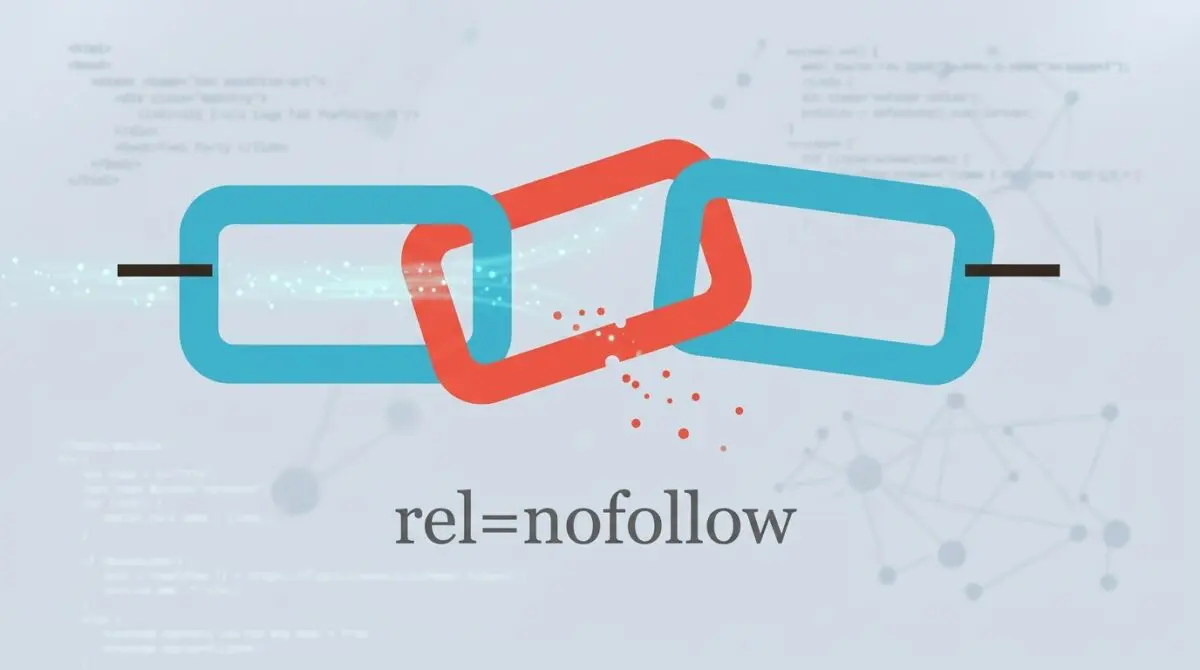
- The rel=”nofollow” attribute is a technical instruction that prevents search engines from passing PageRank or anchor text authority to a destination URL.
- Since 2019, Google has transitioned from treating nofollow as a strict directive to a “hint,” allowing its algorithms to potentially use the link for discovery and signal analysis.
- Strategic implementation of nofollow is mandatory for paid content and user-generated sections to avoid search engine penalties and maintain a natural link profile.
What is Nofollow Link?
A nofollow link is a hyperlink that contains the rel=”nofollow” attribute within its HTML source code. This attribute serves as a technical signal to search engine crawlers, instructing them not to transfer link equity—commonly referred to as PageRank—from the linking page to the destination page. Originally introduced in 2005 as a collaborative effort by Google, Yahoo, and MSN, the primary objective was to combat comment spam and discourage manipulative link-building practices that artificially inflated search rankings.
From a technical perspective, a standard link is written as <a href=”https://example.com”>Link Text</a>, which search engines treat as a vote of confidence. By adding the nofollow attribute, the tag becomes <a href=”https://example.com” rel=”nofollow”>Link Text</a>. In 2019, Google expanded this framework by introducing more specific attributes: rel=”sponsored” for paid or incentivized links and rel=”ugc” for user-generated content. While these are now the preferred attributes for their respective use cases, the original nofollow attribute remains a valid catch-all for any link where an endorsement is not intended.
The Real-World Analogy
Imagine you are a high-ranking government official giving a visitor directions to a local restaurant. Providing the directions is the link itself. However, as you give the directions, you hand the visitor a formal disclaimer stating, “I am providing these directions for informational purposes only; this does not constitute an official endorsement of the establishment’s quality or a guarantee of its services.” In this scenario, the disclaimer is the nofollow attribute. You are helping the user find what they need without putting your professional reputation or “authority” on the line for the destination.
Why is Nofollow Link Important for SEO?
Nofollow links are critical for maintaining the integrity of a website’s SEO architecture and its relationship with search engine algorithms. Their primary importance lies in compliance and risk mitigation. Google’s spam policies strictly require that any link involving a financial transaction, such as a sponsored post, advertisement, or affiliate link, must be qualified with a nofollow or sponsored attribute. Failure to do so can result in manual actions or algorithmic devaluations for participating in link schemes.
Furthermore, nofollow links play a vital role in link equity management. While the historical practice of “PageRank sculpting” (using nofollow on internal links to funnel authority to specific pages) is no longer effective, using nofollow on external links to untrusted or irrelevant sites prevents the “leakage” of your domain’s perceived authority. Additionally, a natural backlink profile must include a healthy mix of dofollow and nofollow links. A profile consisting exclusively of dofollow links appears inorganic to AI-driven search filters, whereas links from social media, news aggregators, and forums—which are almost always nofollow—provide the necessary signals of a legitimate, diverse digital footprint.
Best Practices & Implementation
- Use rel=”sponsored” for Monetization: Always apply the sponsored attribute to affiliate links, paid guest posts, and any link that exists because of a commercial agreement.
- Protect User-Generated Areas: Implement rel=”ugc” or rel=”nofollow” by default on all links within comment sections, forums, and guestbooks to deter spammers and protect your site’s authority.
- Avoid Internal Nofollowing: Do not use nofollow for internal navigation or to hide pages from crawlers. Use robots.txt or the “noindex” meta tag for proper crawl and indexation control.
- Maintain Topical Relevance: Use nofollow for external links that are necessary for user context but do not align with your site’s core topical authority or niche.
Common Mistakes to Avoid
One of the most frequent errors is the “blanket nofollow” approach, where developers configure a site to nofollow every outbound link. This prevents the site from participating in the web’s natural citation graph and can hinder the establishment of topical relevance. Another common misconception is believing that a nofollow link prevents a page from being indexed. If a crawler finds the URL through other sources or if the page has already been indexed, the nofollow attribute on a single link will not remove it from search results; only a noindex directive can achieve that.
Conclusion
The nofollow link is a fundamental tool for controlling link equity and ensuring regulatory compliance within the modern search ecosystem. Technical SEO professionals must treat it as a nuanced signal that balances user utility with search engine trust.